UK keeps minesweepers in Strait of Hormuz as blockade pressure grows
London kept minehunters in the Gulf while rejecting a U.S. blockade, widening the split over Hormuz and the fate of oil and gas flows.
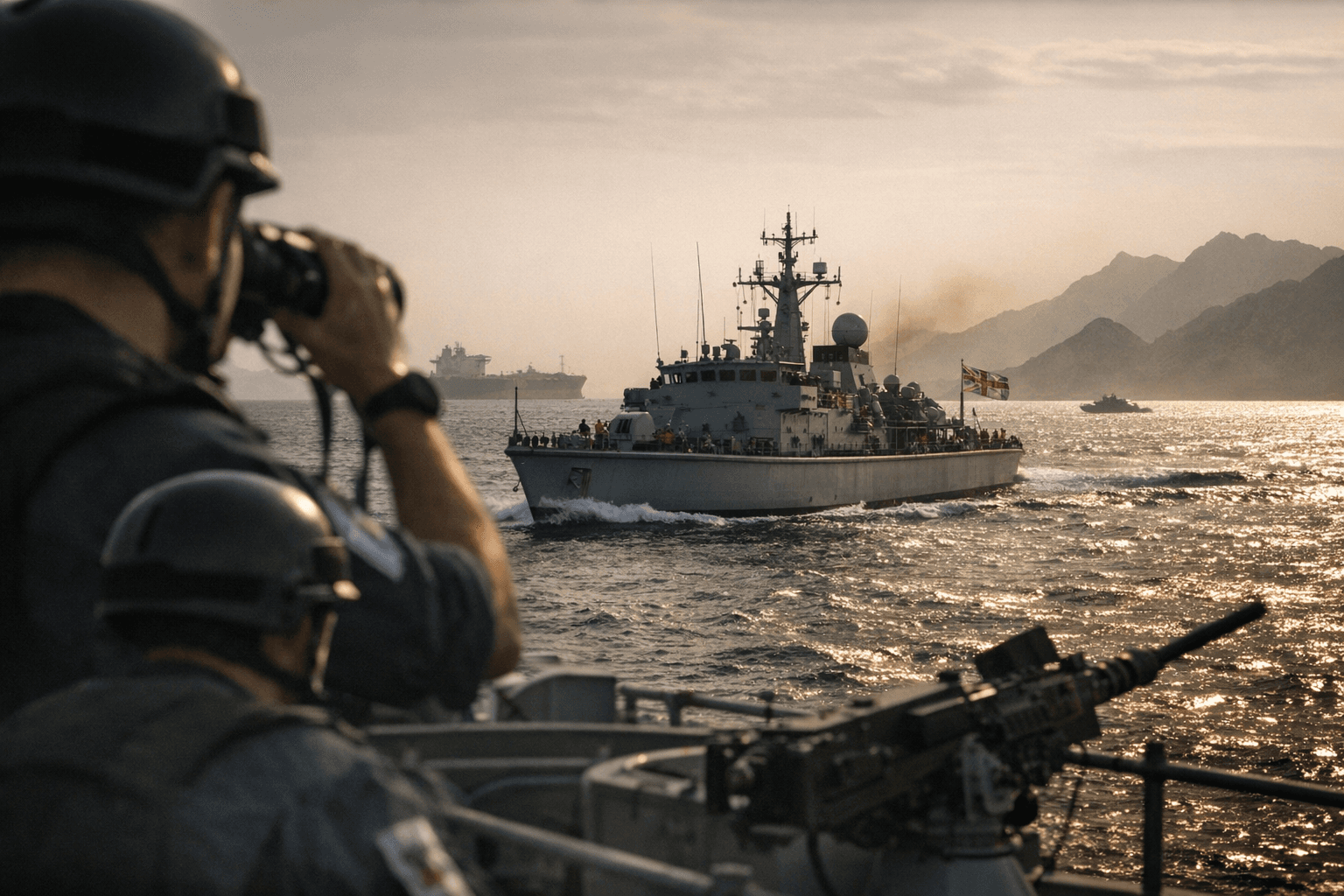
Shipping lanes, oil cargoes and power supplies are now colliding with allied red lines in the Strait of Hormuz, where Britain is keeping Royal Navy mine-sweepers and anti-drone capabilities in place but refusing to join Donald Trump’s planned U.S. blockade. The divide matters immediately for global markets: the strait carries around a fifth of the world’s oil and gas, and any divergence among partners over how to secure it risks sharper price swings, longer delays for tankers and new pressure on energy-importing economies.
A UK government spokesperson said Britain continued to support freedom of navigation and the opening of the strait, while insisting the waterway must not be subject to tolling. Downing Street said Keir Starmer and Emmanuel Macron agreed on the strategic importance of Hormuz for global trade and energy supplies, and on the need to work with a wide coalition of partners to protect freedom of navigation. That approach sits uneasily beside Trump’s pledge that the U.S. military would start “blockading any and all ships” entering or leaving the strait and would interdict vessels that had paid a toll to Iran. US Central Command later said American forces would not impede vessels transiting to and from non-Iranian ports.
London has already spent weeks trying to build a wider response rather than sign on to a direct blockade. On 19 March 2026, Starmer joined a joint statement with leaders including France, Germany, Italy, Japan and Canada condemning Iranian attacks on unarmed commercial vessels, civilian infrastructure and the de facto closure of the Strait of Hormuz. The statement called on Iran to stop laying mines and launching drone and missile attacks, warned that interference with shipping and global energy supply chains threatened international peace and security, and welcomed coordinated strategic petroleum reserve releases to steady markets.
That diplomacy was followed by military hedging. On 2 April 2026, Britain hosted talks with more than 40 countries and international organisations, and the chair’s statement called for the “immediate and unconditional” reopening of the strait. Foreign Secretary Yvette Cooper has said shipping through Hormuz must be toll-free. Defence Secretary John Healey has said the UK already had autonomous mine-hunting systems pre-positioned in the region, while reporting in March said the Royal Navy hoped to deploy Ariadne experimental robotic boats that had been 99% accurate in tests detecting dummy mines.
Britain’s posture reflects a long-standing Gulf role. The Royal Navy has maintained an almost continuous minesweeper presence in the Gulf and Arabian Sea for more than 40 years, including clearing explosives from the Kuwaiti coast after the 2003 Iraq war. Today, that legacy is being tested by a crisis that could still jolt oil prices, energy security and the credibility of allied guarantees in one of the world’s most dangerous chokepoints.
This article was produced by Prism’s automated news system from verified source data, official records, and press releases, then run through automated quality and moderation checks before publishing. The system is built and supervised by the people who set the standards it runs under. Read our full AI policy.
Did this article answer your question?