UK launches MenB vaccine drive after Kent outbreak and student deaths
Kent’s fast-moving MenB outbreak, which killed two students, triggered a one-off vaccine drive for Year 13 pupils and under-25s heading to university or college.

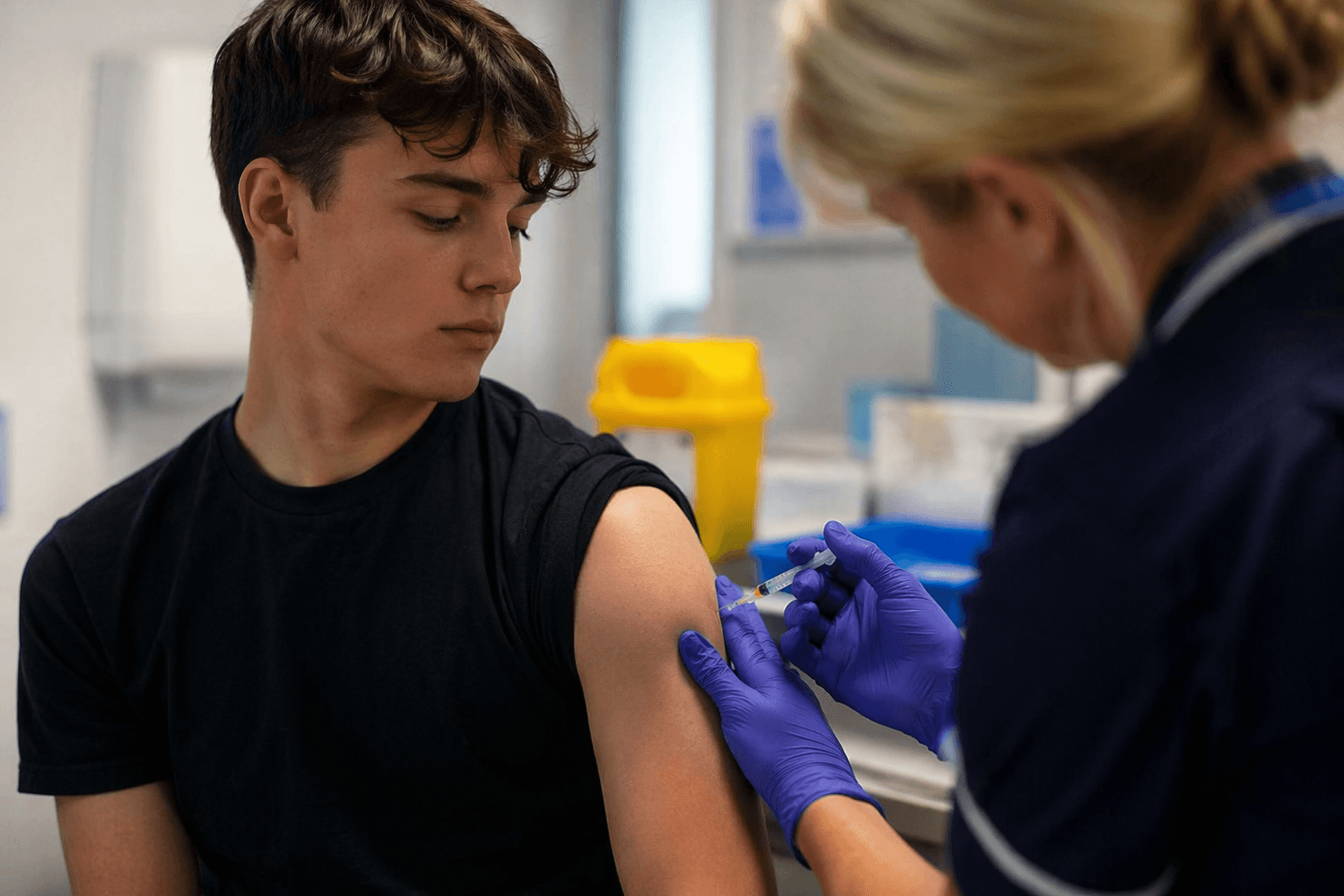
A one-off MenB vaccination drive will be offered to all Year 13 pupils and to under-25s starting university or residential further education for the first time this autumn, after the Kent outbreak showed how quickly meningococcal disease can move through schools, halls of residence and nightlife settings. First doses are due from July, with second doses in August, as officials move to protect teenagers and young adults at the point of highest immediate risk.
The decision follows the Kent outbreak, which the UK Health Security Agency described as the fastest-growing and largest ever seen in the UK. By 18 March, investigators had identified 15 confirmed and 12 probable cases of invasive meningococcal disease linked to Canterbury, Kent, with nine of the 15 confirmed cases caused by MenB. Two deaths occurred, and most of the patients were students from the University of Kent and sixth-form students from local secondary schools.
Health officials said the speed of the outbreak was highly unusual. UKHSA said 15 cases emerged within 48 hours, compared with the two to four cases over a longer period that most outbreaks involve. Some cases were linked to Club Chemistry nightclub in Canterbury, and the outbreak later extended to sixth-form students, close contacts and people who had visited the venue between 5 and 15 March.
MenB spreads through close and prolonged contact, including living in the same household, kissing, and sharing drinks or vapes. The disease can cause meningitis and sepsis, and it is fatal in around 10% of cases. Survivors can be left with life-changing disabilities, including amputations, hearing loss and brain damage, which is why officials have widened the response beyond the original campus clusters.
UKHSA first offered antibiotics and vaccination to about 5,000 students in Kent before extending the offer to everyone who had been given preventative antibiotic treatment. NHS England then told GP practices to vaccinate eligible students who had already gone home and could not reach campus clinics, treating the work as an essential service under GP contracts with a £10.06 item-of-service fee for each vaccination. International students under 25 are being advised to get their first dose in their home country where possible, while vaccination sites in Kent and Medway were due to be listed on the NHS website.
The vaccine being used is Bexsero, which requires two doses for protection. MenB has been part of the routine England childhood immunisation programme since 1 September 2015, and the second infant dose was moved earlier, from 16 weeks to 12 weeks, from 1 July 2025. Officials say the routine infant programme has already reduced disease among eligible children, but the new one-off campaign is aimed at older teenagers and young adults as the Kent outbreak raises fresh concern about transmission in close-contact settings.
This article was produced by Prism’s automated news system from verified source data, official records, and press releases, then run through automated quality and moderation checks before publishing. The system is built and supervised by the people who set the standards it runs under. Read our full AI policy.
Know something we missed? Have a correction or additional information?
Submit a Tip