UK Supreme Court backs parts of Legacy Act in Northern Ireland Troubles case
The court left the Legacy Act largely standing, preserving the shift to the ICRIR while families in 700 cases still wait for truth, inquests and trials.

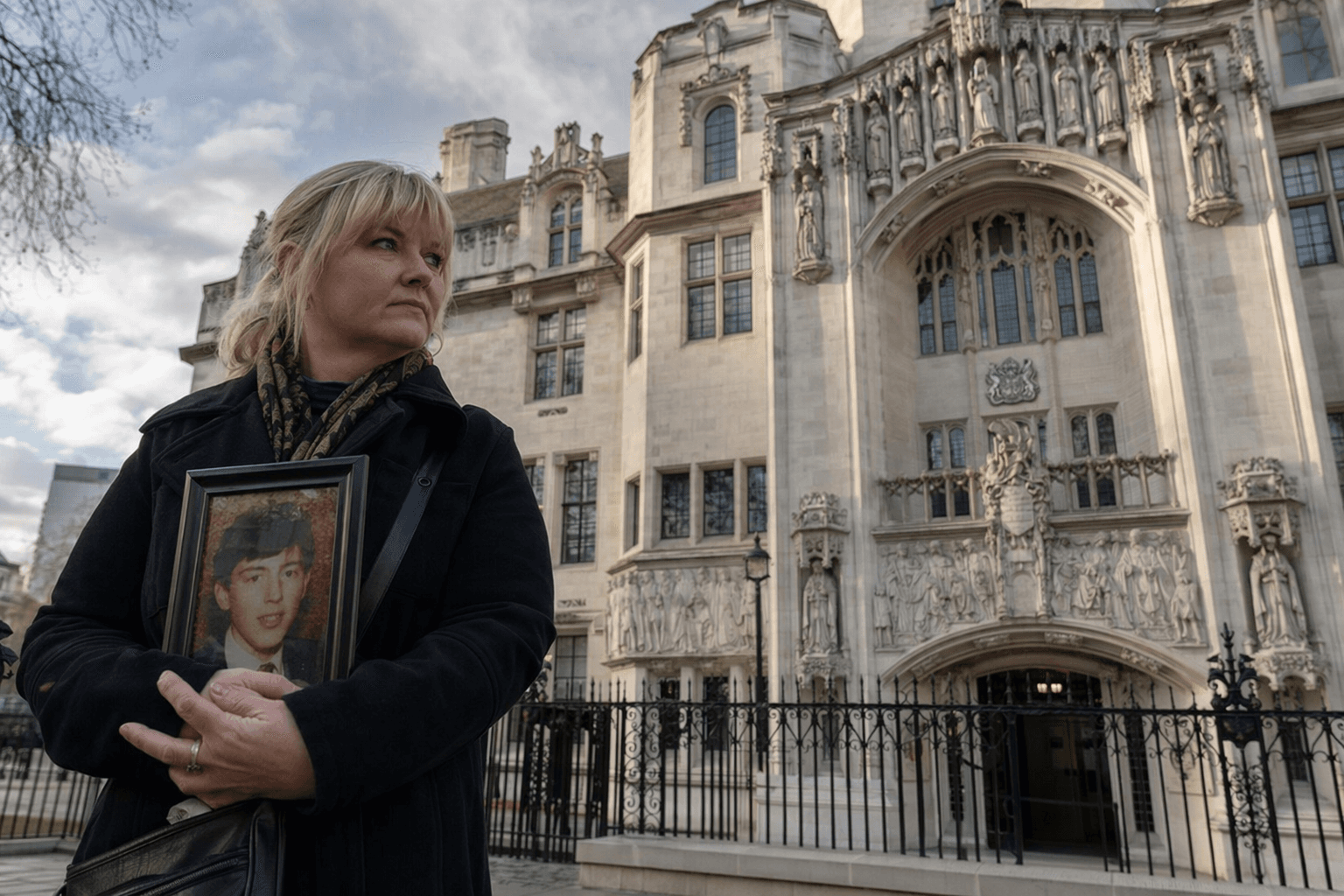
The UK Supreme Court has upheld key parts of the Northern Ireland Troubles legacy regime, handing the government a partial victory in a case that goes to the heart of how Britain handles the unresolved dead of the conflict. In the matter brought by Martina Dillon, John McEvoy, Brigid Hughes and Lynda McManus, judges in London said parts of the 2023 Legacy Act did not unlawfully diminish victims’ rights, even as the legal and political battle over the past remains far from finished.
The judgment, handed down on 7 May 2026 under the neutral citation [2026] UKSC 15, matters because the Troubles left more than 3,500 people dead and about 40,000 injured. Around 1,200 killings remain unsolved, while about 700 civil cases are still moving through the courts and fewer than 20 are approaching trial. Against that backdrop, the court said the appeal was the first ever to test whether primary legislation could be disapplied under Article 2(1) of the Windsor Framework.
The legacy law itself was approved by royal assent on 18 September 2023 and took effect for the main mechanisms on 1 May 2024. It replaced police investigations, the Police Ombudsman route and various inquests into Troubles deaths with the Independent Commission for Reconciliation and Information Recovery, or ICRIR. It was also designed to end future civil litigation and inquests, and to introduce a conditional immunity scheme for Troubles-related deaths. For families, the practical effect is plain: the older paths for a fresh police probe, a new Ombudsman investigation or a full inquest have largely been shut down and folded into the new commission.
The court heard the case over three days, from 14 to 16 October 2025, before Lord Reed, Lord Hodge, Lord Lloyd-Jones, Lord Hamblen and Lord Stephens. It also drew interventions from the Northern Ireland Human Rights Commission, the Equality Commission for Northern Ireland, Wave Trauma Centre, Amnesty International (UK), the Police Ombudsman for Northern Ireland, the Department of Justice and Coroners Service for Northern Ireland, and the Northern Ireland Veterans Movement. That breadth reflected how deeply the dispute cuts across victims, veterans, police oversight and human-rights law.

The ruling does not end the fight over the past. The Legacy Act was pushed through by the previous Conservative government despite opposition from Labour, all Northern Ireland parties, several victims’ groups and the Irish government, and the government has since said it intends to replace it with new legislation and information-sharing arrangements. What survives now is the core question that has haunted Northern Ireland since the Belfast Agreement on 10 April 1998: how to balance legal closure for a society shaped by decades of violence with the rights of families still seeking truth, accountability and answers.
This article was produced by Prism’s automated news system from verified source data, official records, and press releases, then run through automated quality and moderation checks before publishing. The system is built and supervised by the people who set the standards it runs under. Read our full AI policy.
Did this article answer your question?


