UK two-party vote falls to record low as multiparty era grows
Labour and the Conservatives won just 57.4% of the 2024 vote, the lowest combined share since 1922, as Reform and other parties exposed a broken fit with FPTP.
Britain’s voting system was built for a two-party contest, but voters no longer behave that way. The 2024 general election showed the mismatch sharply: Labour and the Conservatives together won just 57.4% of the vote, the lowest combined share since 1922, while parties and independents outside those two took a record 42.6%.
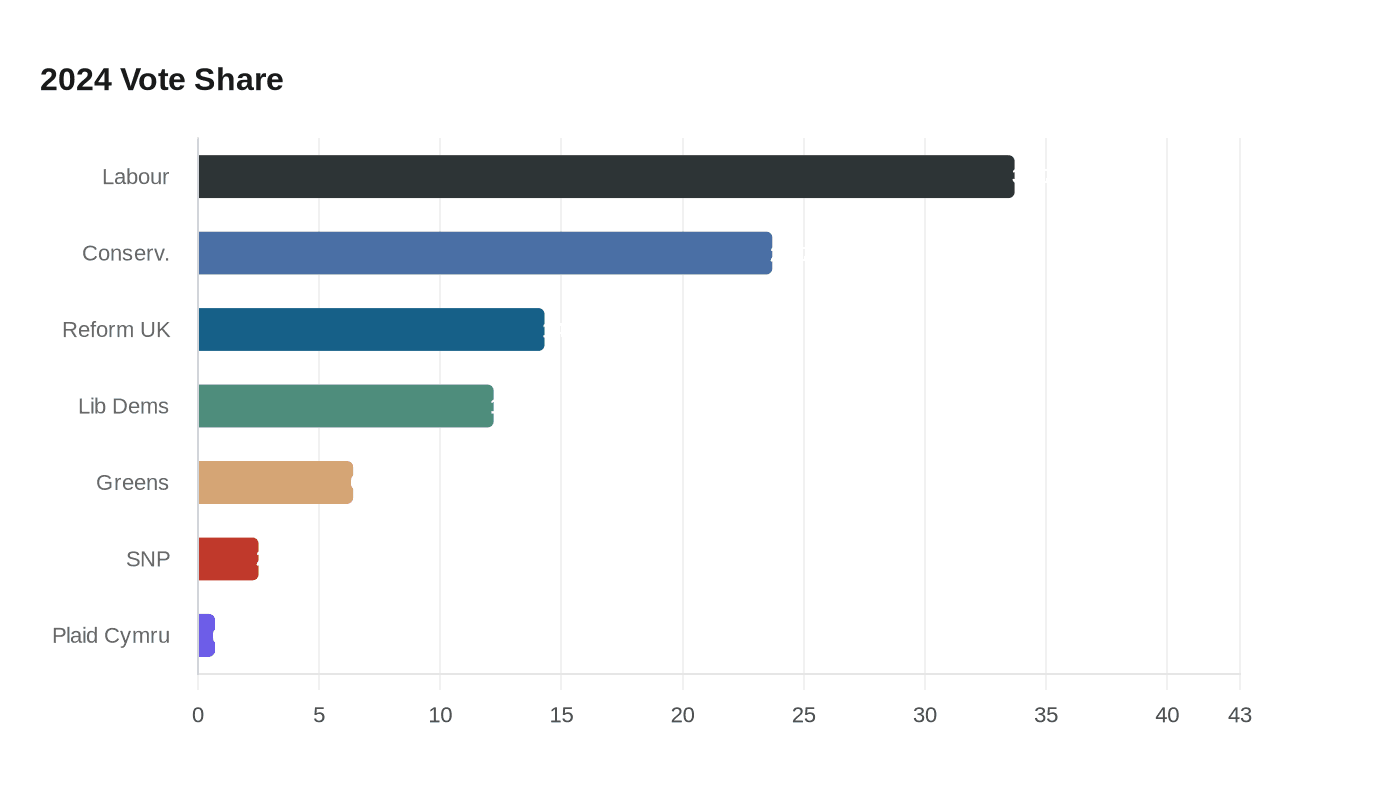
The seat tally was even starker. Labour won 33.7% of votes and 411 seats. The Conservatives took 23.7% and 121 seats. Reform UK won 14.3% of the vote but only 5 seats. The Liberal Democrats secured 12.2% and 72 seats, the Greens 6.4% and 4 seats, the Scottish National Party 2.5% and 9 seats, and Plaid Cymru 0.7% and 4 seats. Official Parliament results listed 48,224,212 registered electors, 28,809,340 valid votes and 116,253 invalid votes, underscoring the scale of participation behind the fragmented result.
That gap between votes and seats is the central distortion. First Past the Post can still hand sweeping parliamentary power to one of the two main governing parties, even when the electorate is moving in a more multiparty direction. Analysts and reform groups have argued that the system now rewards concentration of support and punishes spread-out backing, especially when voters divide their loyalties among Labour, the Conservatives, Reform UK, the Liberal Democrats, the Greens and nationalist parties. Tactical voting becomes more important, local contests become more volatile, and the map of British politics fragments constituency by constituency.
The pressure was visible again in the local elections held on May 8, 2026. Early results showed Labour suffering heavy losses while Reform made gains, and one of the clearest shocks came in Tameside, Greater Manchester, where Labour lost control for the first time in almost 50 years after Reform won all 14 seats Labour had been defending. Keir Starmer said he had no plans to step aside. Nigel Farage called the result a “historic shift” and said the Conservatives would “cease to be national party.”
The broader significance reaches beyond one election night. Britain is entering a multiparty era, but its Westminster rules still translate a dispersed electorate into a system designed for clear two-party accountability. Until that structural mismatch is addressed, the country will keep producing results that look less like a stable verdict and more like a stress test for the rules themselves.
This article was produced by Prism’s automated news system from verified source data, official records, and press releases, then run through automated quality and moderation checks before publishing. The system is built and supervised by the people who set the standards it runs under. Read our full AI policy.
Did this article answer your question?

