Ukraine’s drone chief Madyar forces Moscow to scale back Victory Day parade
Madyar’s drone campaign helped strip Moscow’s Victory Day parade of tanks and missiles, turning Putin’s biggest ritual into a security exercise.
.jpg&w=1920&q=75)
Robert Brovdi, better known by the call sign Madyar, has emerged as one of the most consequential figures in Ukraine’s war effort, and Moscow’s pared-back Victory Day parade showed why. As commander of Ukraine’s Unmanned Systems Forces, Brovdi sits at the center of a campaign built on cheap, fast and decentralized strikes that can reach deep into Russia and force the Kremlin to spend more to defend its own symbols than to project power.
Ukraine’s Ministry of Defence says the Unmanned Systems Forces are the world’s first dedicated military branch built around unmanned aerial, ground, surface and underwater systems. The branch can operate hundreds of kilometers beyond the front line, and the Center for Strategic and International Studies has said Ukraine created it to institutionalize rapidly evolving drone warfare. In practical terms, that has given Brovdi a new kind of battlefield influence: not through armored columns or artillery mass, but through persistent pressure on Russian air defenses, logistics hubs and public confidence.
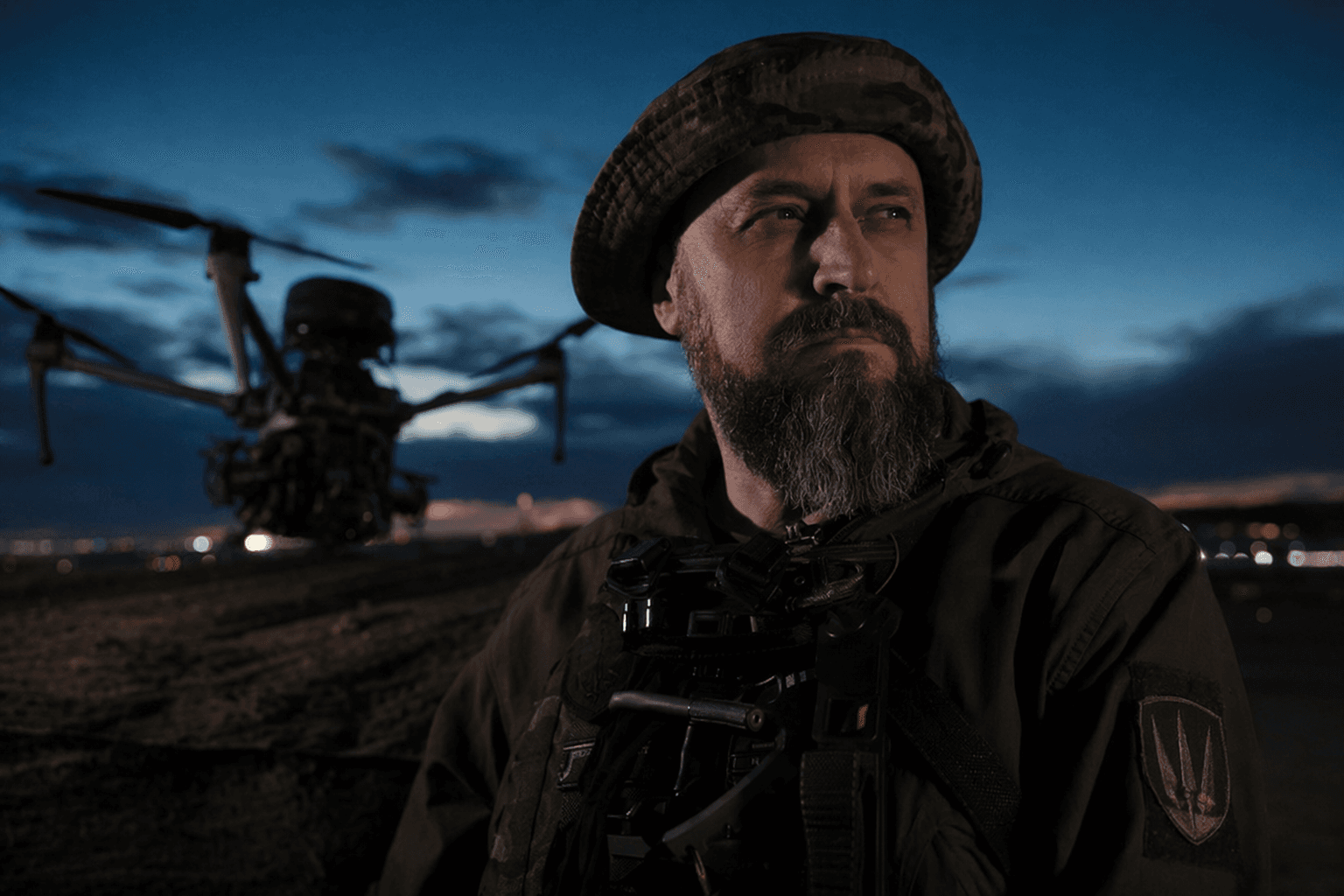
That pressure was visible in Moscow’s 2026 Victory Day preparations. The May 9 parade, marking the 81st anniversary of Nazi Germany’s defeat, was stripped down to marching troops, with no tanks or missiles expected to take part for the first time in about two decades. Politico said the Kremlin had already announced last month that no heavy military equipment would appear, underscoring how unusual the decision was for an event Vladimir Putin has long used to stage military strength and historical continuity on Red Square.
The security response was expansive. Russia said it shot down 347 Ukrainian drones overnight across 20 regions, including Moscow, in what Reuters described as Ukraine’s second-biggest aerial attack of the war so far. Nearly 100 flights in and out of Moscow’s three main airports were delayed or canceled by midday, and the Kremlin ordered mobile internet shut off for the commemorations, with reports of broader restrictions that could also affect satellite internet and SMS. The disruptions turned a choreographed state ritual into an air-defense and communications lockdown.
The political exchange around the parade made the stakes even clearer. Russia declared a unilateral ceasefire for May 8 and 9, while Volodymyr Zelenskyy said Russia had already broken it and that Ukraine would respond “in kind.” Moscow threatened a massive missile strike on Kyiv if Ukraine disrupted the parade, and Zelenskyy had already suggested on May 4 that Ukrainian drones could “buzz over Red Square.” For Putin, the scaled-down parade was more than a security adjustment. It was a public reminder that a commander like Madyar can force a larger military to defend its symbolism, absorb logistical strain and advertise vulnerability on the day it most wanted to display control.
This article was produced by Prism’s automated news system from verified source data, official records, and press releases, then run through automated quality and moderation checks before publishing. The system is built and supervised by the people who set the standards it runs under. Read our full AI policy.
Did this article answer your question?


