Ukrainian drones strike Russian oil refineries, Baltic Sea port overnight
Ukrainian drones hit two Russian refineries and a Baltic Sea export port, widening pressure on Moscow’s fuel network and the revenue stream that feeds the war.
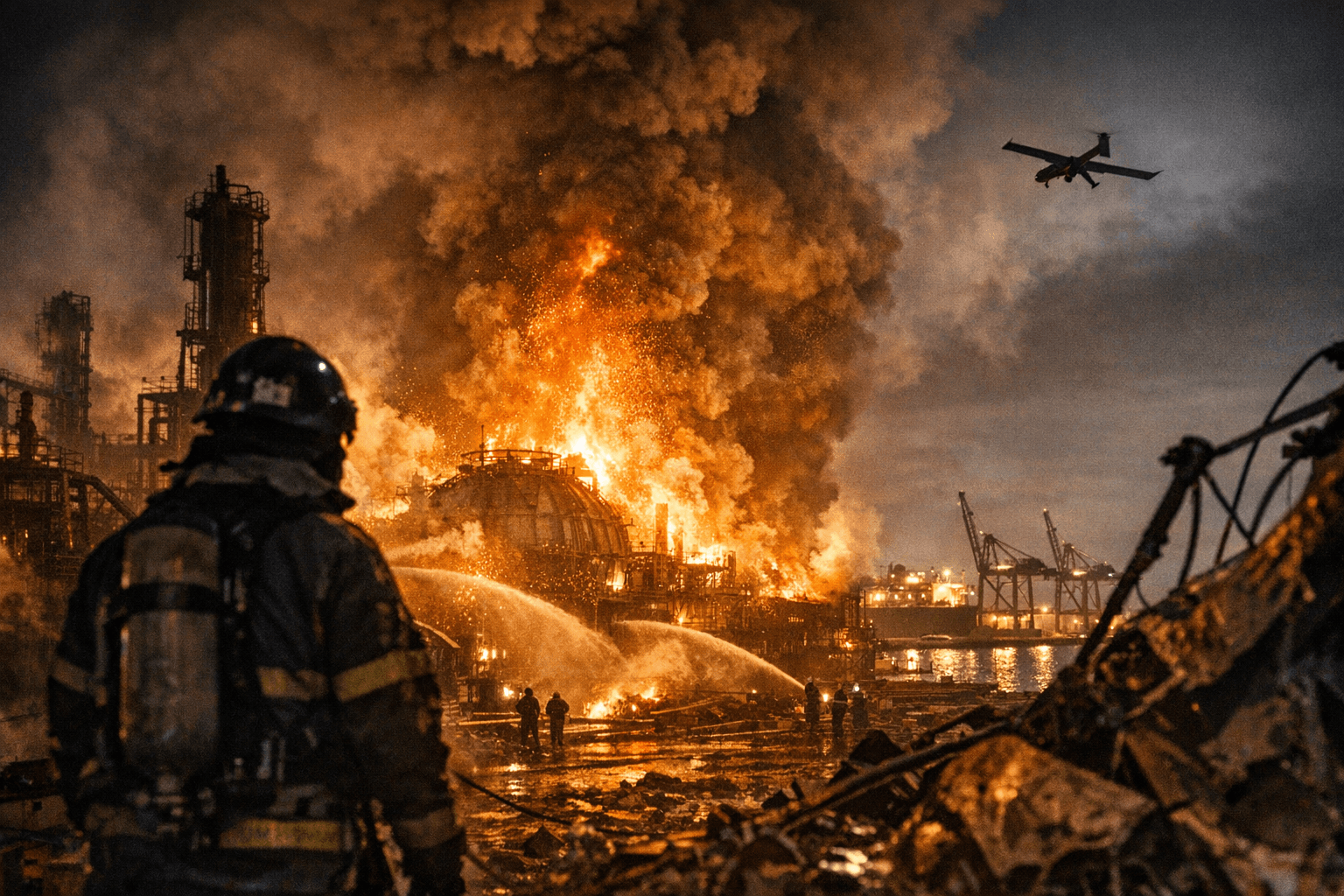
Ukraine’s drone campaign reached deeper into Russia’s fuel system overnight, striking two refineries in the Samara region and a Baltic Sea port that handles petroleum exports, a pattern that threatens not only battlefield supply lines but also the cash flow behind Moscow’s war effort.
In the Leningrad region, governor Alexander Drozdenko said air defenses shot down 27 drones overnight and that a fire at the Vysotsk port had been extinguished. The port’s Lukoil terminal moves fuel oil, naphtha, diesel fuel and vacuum gas oil, making it one of the country’s important export gateways for refined products. Industry reporting said the terminal exported almost 9 million tons of oil products in 2025, and the wider seaport also includes a Novatek LNG terminal with a capacity of 820,000 tons a year.
The Samara region came under pressure as well. Governor Vyacheslav Fedorishchev said industrial sites in Syzran and Novokuibyshevsk were hit. Both cities sit roughly 1,800 kilometers southeast of the Baltic port, underscoring how far the drones can reach. Rosneft says the Syzran refinery, part of its Samara group acquired in May 2007, has a crude distillation capacity of 8.5 million tons a year. Rosneft says the Novokuibyshevsk refinery, also acquired in 2007, began operations in 1951 and has a primary distillation capacity of 8.8 million tons a year.
The strikes matter well beyond the immediate fires. Russia’s refineries, storage sites and export terminals are central to the war budget, and repeated attacks can force repairs, disrupt product flows and unsettle buyers who depend on Russian fuel supplies. Even when damage appears limited, the effect can spread through shipping schedules, insurance calculations and confidence in the reliability of Russian exports.
Later, Ukraine’s General Staff said its forces struck four critical oil infrastructure sites deep inside Russian territory: the Syzran refinery, the Novokuibyshevsk refinery, the RPK-Vysotsk Lukoil-2 terminal in the Leningrad region and the Tikhoretsk oil pumping station in the Krasnodar region. Fires were reported at all four locations while damage assessments continued.
Taken together, the overnight attacks showed a clear strategy. Ukraine is not only targeting military hardware near the front. It is pressing the fuel infrastructure that keeps Russian forces moving, Russia’s exporters earning and the broader war economy functioning.
This article was produced by Prism’s automated news system from verified source data, official records, and press releases, then run through automated quality and moderation checks before publishing. The system is built and supervised by the people who set the standards it runs under. Read our full AI policy.
Did this article answer your question?