ULA Atlas V Launches 29 Amazon Kuiper Satellites in Record Payload Mission
Atlas V set its all-time payload record Friday, hoisting 29 Amazon Leo satellites totaling up to 18,800 kilograms into low Earth orbit from Cape Canaveral.
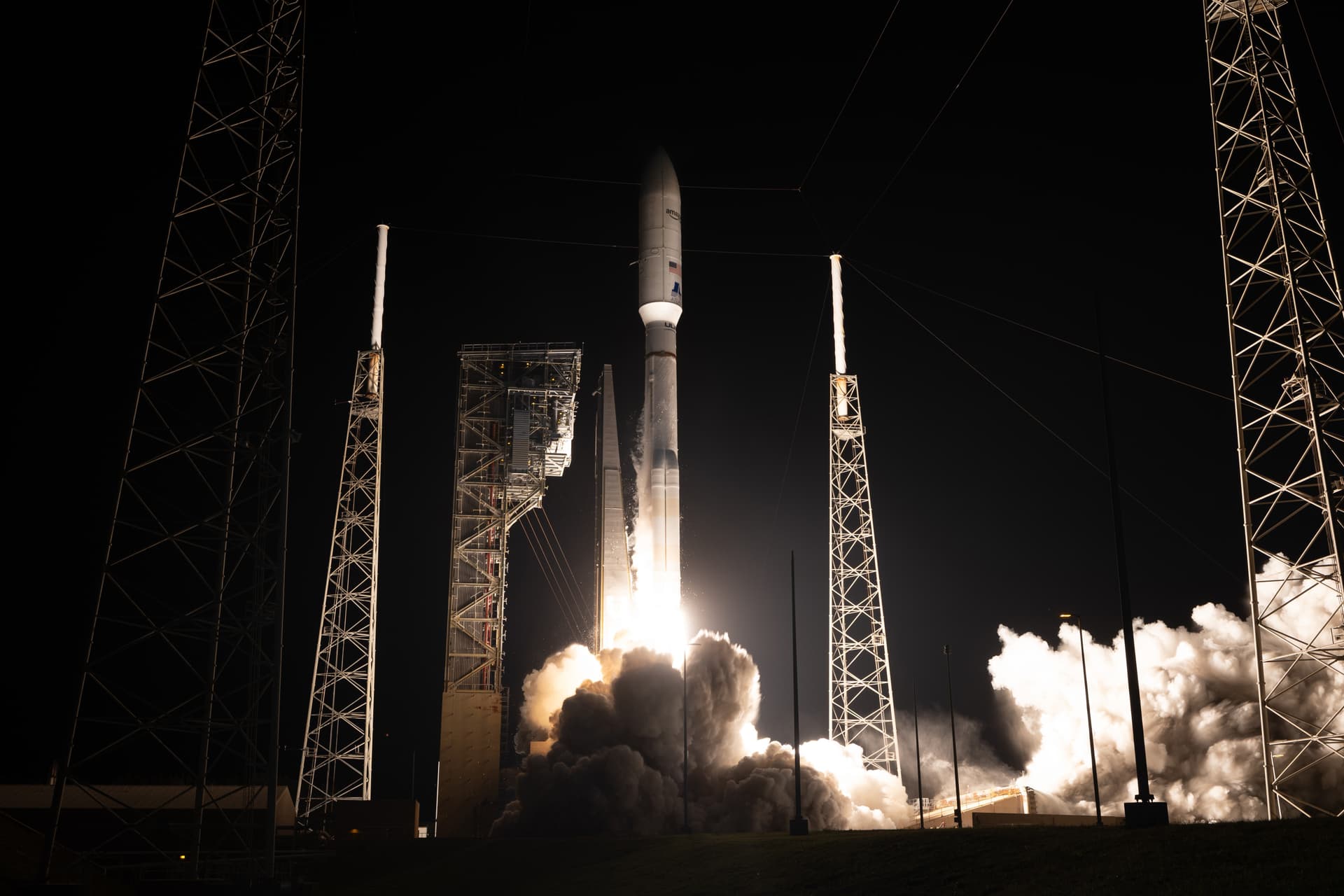
The heaviest payload ever loaded onto an Atlas V cleared Space Launch Complex-41 in the predawn hours Friday, when United Launch Alliance's Atlas V 551 carried 29 Amazon Leo satellites into low Earth orbit and set a new benchmark for the workhorse rocket's nearly two-decade career.
The LA-05 mission lifted off from Cape Canaveral Space Force Station at 1:45 a.m. EDT, within a 29-minute launch window, following a fully nominal countdown. The Centaur upper stage completed its burn sequence and deployed all 29 spacecraft into their targeted orbital plane without incident.
The combined mass of the satellite cluster, between 16,800 and 18,800 kilograms across 29 spacecraft, surpassed all previous Atlas V payload records. ULA engineers achieved the milestone through an upgraded four-tier dispenser system engineered in close collaboration with Amazon Leo teams, a configuration that increases per-launch throughput and compresses cost per satellite. ULA called LA-05 a record payload for Atlas V in a company release, citing the partnership with Amazon Leo as central to expanding what the vehicle could carry.
For Amazon, the flight is a concrete step toward fielding a globally competitive low-Earth-orbit broadband network, a program previously known as Project Kuiper. The company is working to build constellation density capable of serving underserved regions worldwide while competing against existing LEO broadband operators. Each batch deployment adds coverage, redundancy and capacity, and the 29 satellites from LA-05 move Amazon closer to the network scale required for planned customer-service rollouts.
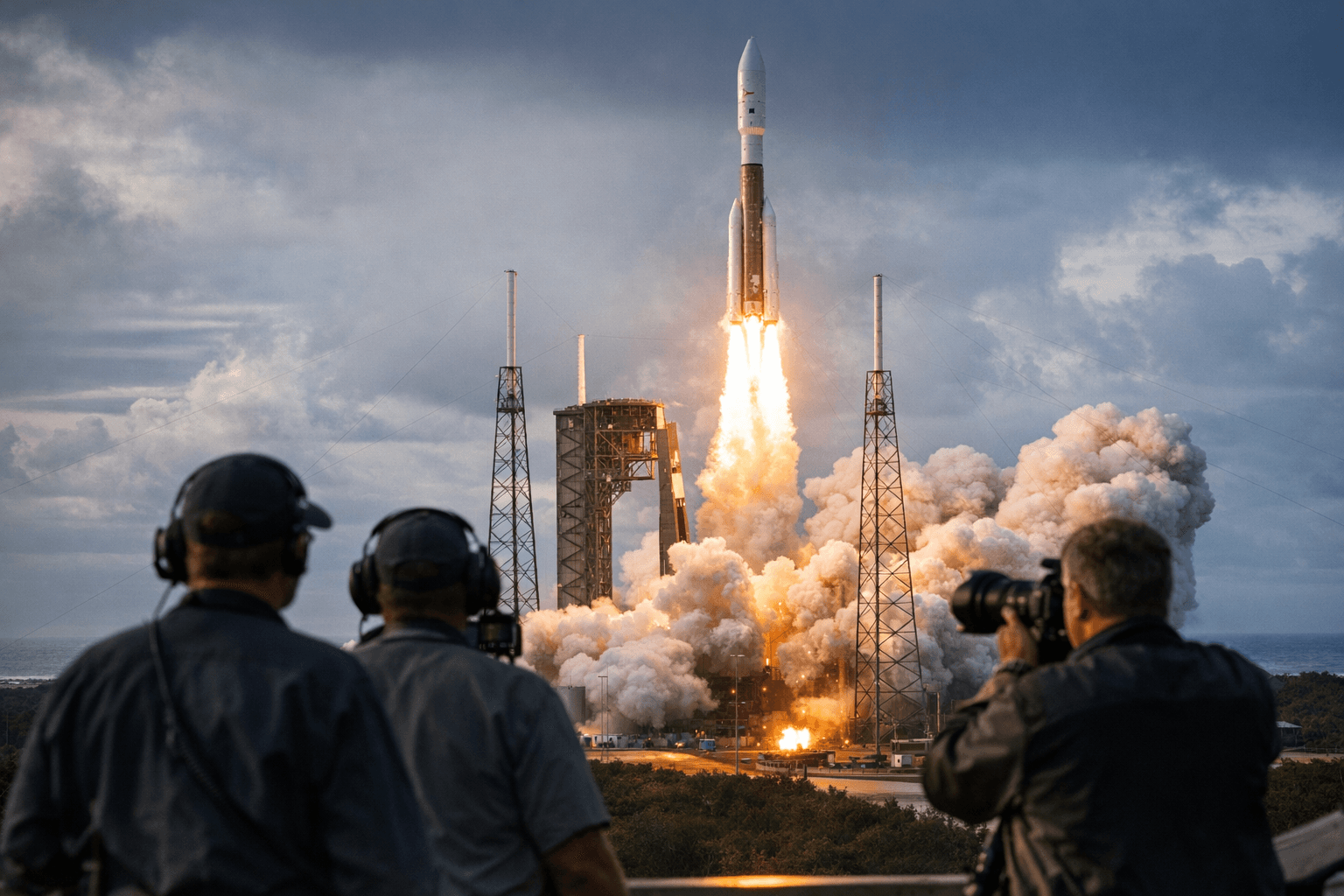
The mission also lands at a transitional moment for ULA. Three additional Atlas V launches remain under contract for Amazon's constellation before the vehicle is phased out in favor of Vulcan, ULA's next-generation rocket. The follow-on LA-06 mission is already scheduled for later in April, maintaining the compressed cadence Amazon needs to hit its deployment targets.
The broader satellite-internet market has become intensely competitive, with multiple established providers and new entrants building or operating constellations. LA-05 demonstrated that properly adapted legacy launch vehicles can still carry a significant share of that build-out, even as smaller launch companies and new reusable vehicles expand the available market. With Atlas V nearing retirement, each successful Amazon Leo flight both validates the engineering investment made to extend the rocket's capacity and strengthens the commercial case for Vulcan to inherit that relationship.
This article was produced by Prism’s automated news system from verified source data, official records, and press releases, then run through automated quality and moderation checks before publishing. The system is built and supervised by the people who set the standards it runs under. Read our full AI policy.
Did this article answer your question?


