Ultra-processed foods linked to higher dementia risk in older adults
Older Americans who ate the most ultra-processed foods faced a 58% higher dementia risk and a 46% higher risk of cognitive impairment in a U.S. cohort.

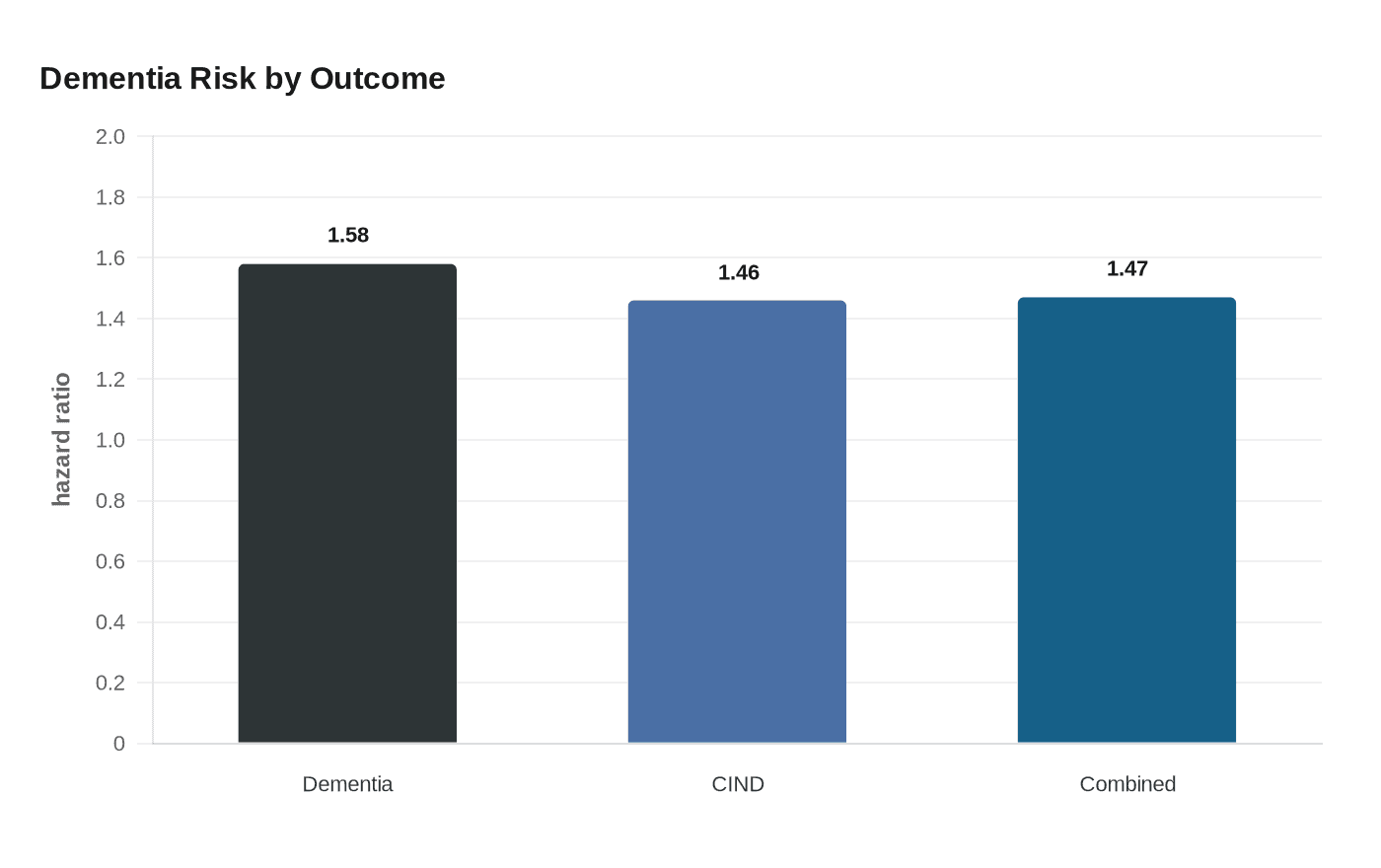
Older Americans who ate the most ultra-processed foods faced a sharply higher risk of dementia later in life, with the highest intake group showing a 58% higher hazard of dementia and a 46% higher risk of cognitive impairment with no dementia.
The study, published June 3, 2026 in the American Journal of Public Health, followed 5,370 older U.S. adults in the nationally representative Health and Retirement Study from 2013 to 2020. Participants’ diets were measured with a semiquantitative food frequency questionnaire from the 2013 HRS Health Care and Nutrition Study, then linked to later cognitive outcomes. Compared with people in the lowest quintile of ultra-processed food intake, those in the highest quintile had a hazard ratio of 1.58 for dementia, 1.46 for cognitive impairment with no dementia, and 1.47 for the combined outcome of cognitive impairment or dementia.
The pattern ran in the other direction for less processed diets. Higher intake of unprocessed or minimally processed foods was associated with lower risks of cognitive decline, reinforcing the idea that overall eating patterns may matter as much as any single ingredient. The paper did not prove ultra-processed foods cause dementia, but it added to a growing body of evidence linking diet quality and brain health.
In the study, ultra-processed foods were described as industrially produced foods and beverages with additives or modified ingredients, often high in saturated fat, sodium, sugar and energy density and low in fiber. The examples were familiar ones: sugar-sweetened beverages, breakfast cereals, pizza and other shelf-stable or ready-to-eat foods. The authors noted that ultra-processed foods account for more than half of energy intake among U.S. adults, giving the findings broad public-health relevance.
The new analysis builds on earlier evidence. A 2022 JAMA Neurology study followed nearly 11,000 dementia-free adults ages 35 to 74 and found that the highest ultra-processed-food consumers had up to a 28% faster rate of cognitive decline after eight years. Together, the studies suggest that the issue is not simply calories, but the dietary pattern that displaces more nutrient-dense foods over time. For older adults, the signal points to a straightforward strategy with long-term stakes: less packaged, shelf-stable food and more minimally processed choices may help protect cognitive health.
This article was produced by Prism’s automated news system from verified source data, official records, and press releases, then run through automated quality and moderation checks before publishing. The system is built and supervised by the people who set the standards it runs under. Read our full AI policy.
Know something we missed? Have a correction or additional information?
Submit a Tip