UN votes overwhelmingly to end U.S. blockade on Cuba
The UN again backed Cuba by 187-2-1 as blackouts, food shortages and migration pressure showed how the U.S. embargo reaches daily life.
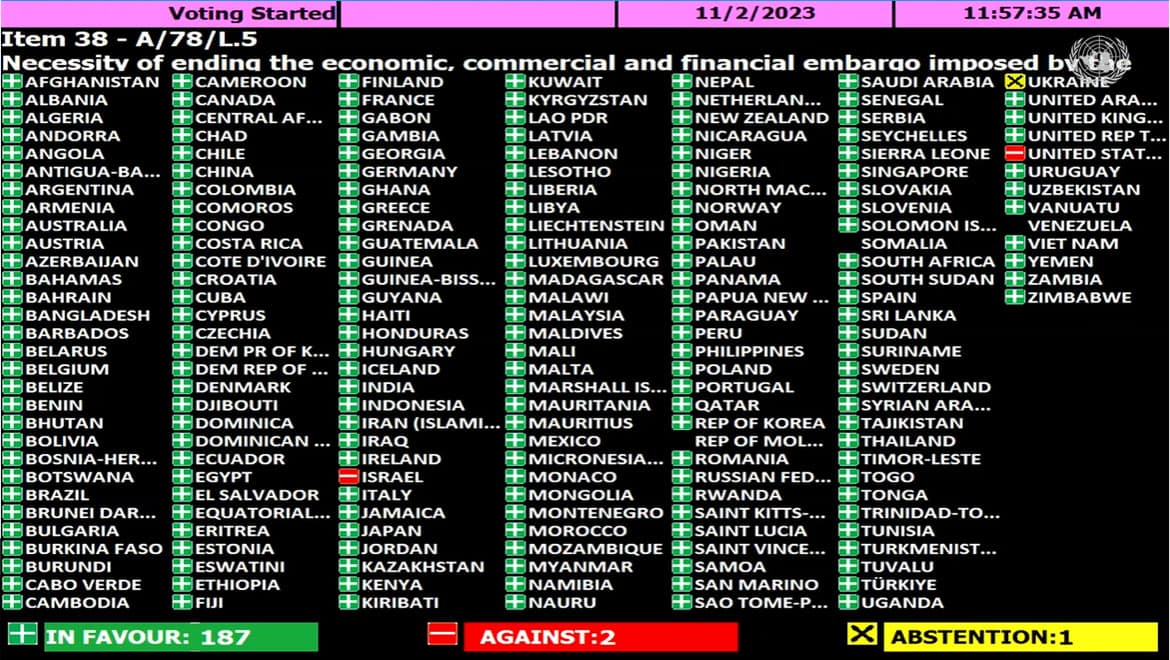
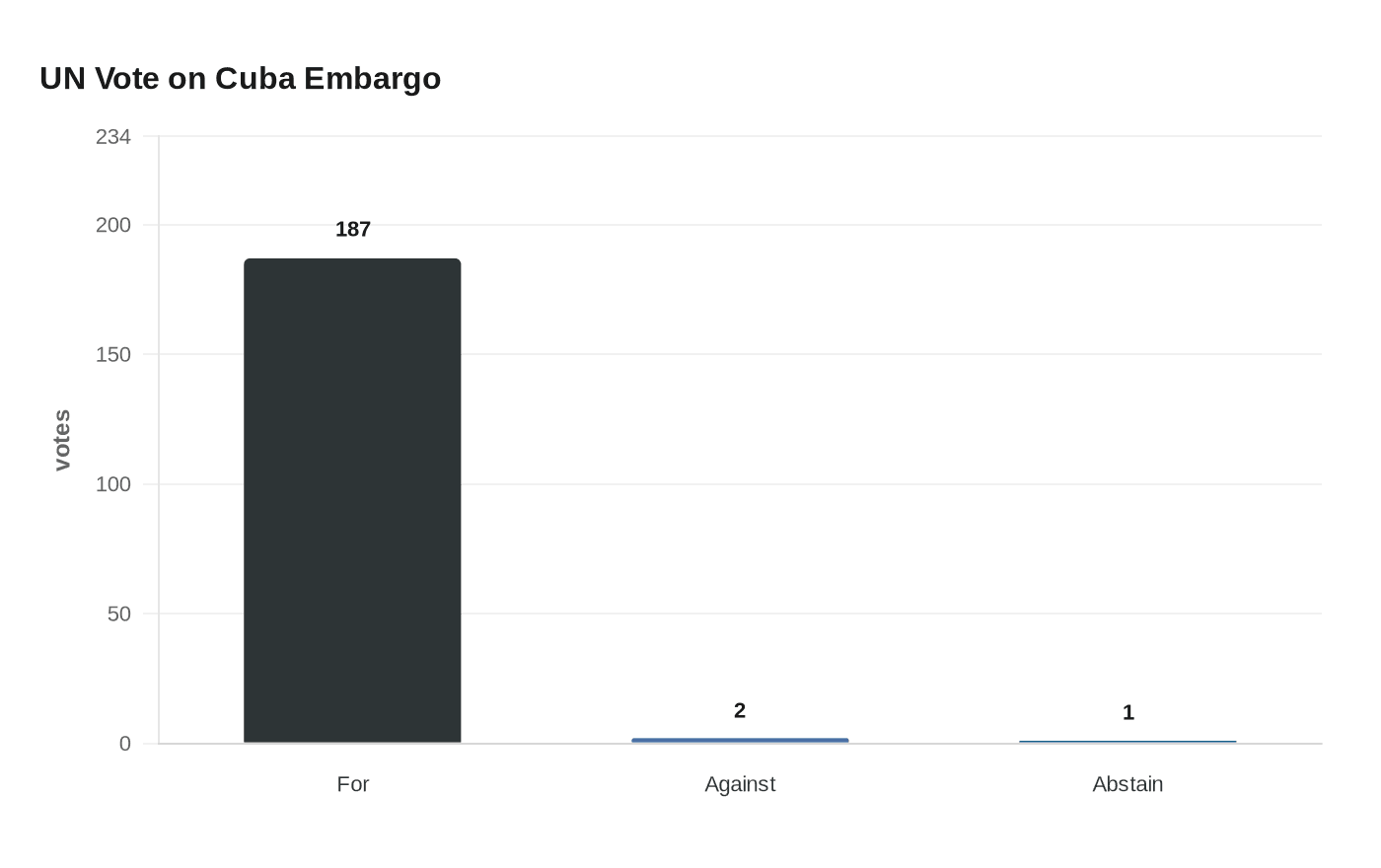
The United Nations General Assembly again delivered a near-unanimous rebuke of Washington, voting 187-2-1 to call for an end to the U.S. embargo on Cuba. The United States and Israel voted against the resolution in October 2024, while Moldova abstained, extending a pattern the UN says has continued every year since 1992.
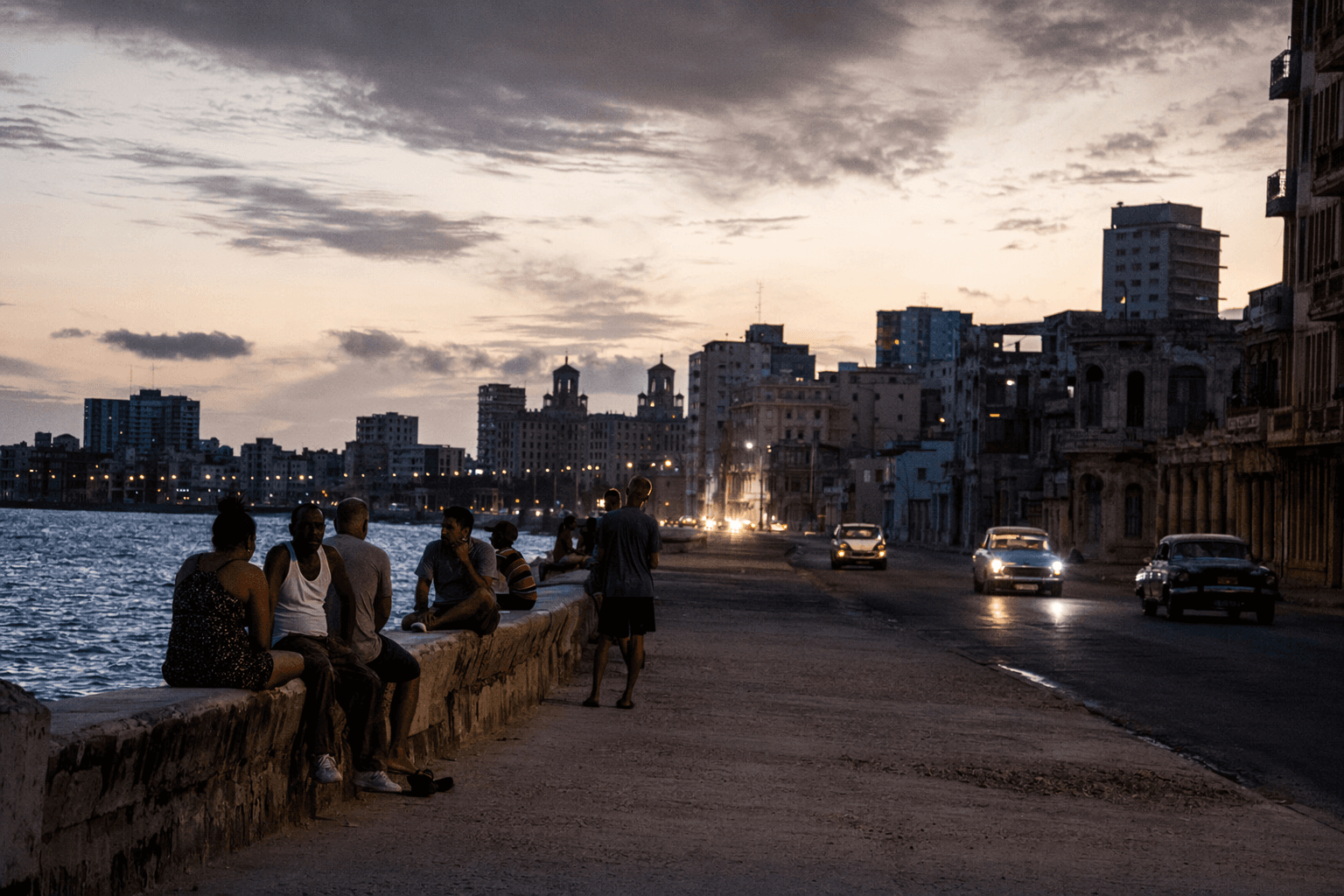
The vote landed with unusual force because the embargo is not an abstraction in Havana. Cuba has endured repeated nationwide and near-nationwide blackouts in 2024 and 2025, with some outages lasting 18 or 20 hours a day in parts of the island. That has meant spoiled food, strained water supplies and weakened internet and communications, all against a backdrop of shortages of food, medicine and fuel. Cuban officials have long argued that the sanctions deepen those hardships; U.S. officials have maintained that the embargo remains tied to the Cuban government’s own conduct.
The policy itself reaches back to February 1962, when President John F. Kennedy proclaimed the trade embargo, according to the State Department. Historical U.S. records say the embargo was made total, though certain foodstuffs, medicines and medical supplies were excepted on humanitarian grounds. U.S. historical documents also described Cuba’s economy as being in deep trouble, citing the embargo, a shortage of convertible foreign exchange and Cuban economic mismanagement. More than six decades later, the same framework still shapes the relationship between Washington and Havana.
The human cost has also fed migration politics. A U.S. academic overview cited 208,308 encounters with Cuban nationals nationwide in fiscal 2024, down from 224,607 in fiscal 2022. Reuters reported in March 2025 on Cubans reacting to shifting U.S. migration policy as expectations of an American opening gave way to frustration. Pew Research Center says Cubans are the third-largest Hispanic-origin group in the United States, making the migration debate a domestic political issue as well as a foreign policy one.
That combination of humanitarian pressure and political inertia is why the embargo persists. A U.S. president can shape Cuba policy through executive action and enforcement choices, but the broader sanctions regime has proved durable because it sits at the intersection of law, ideology and electoral politics. For now, the UN keeps voting to end it, and Washington keeps defending a policy that many other governments see as a blockade with everyday consequences.
This article was produced by Prism’s automated news system from verified source data, official records, and press releases, then run through automated quality and moderation checks before publishing. The system is built and supervised by the people who set the standards it runs under. Read our full AI policy.
Did this article answer your question?

