UNEP, Cuban Scientists Launch Blue Carbon Baseline Assessment in Cienfuegos
UNEP experts and Cuban scientists began a national baseline assessment of Cuba’s blue carbon in Cienfuegos to map coastal and marine carbon stocks and support conservation and climate action.
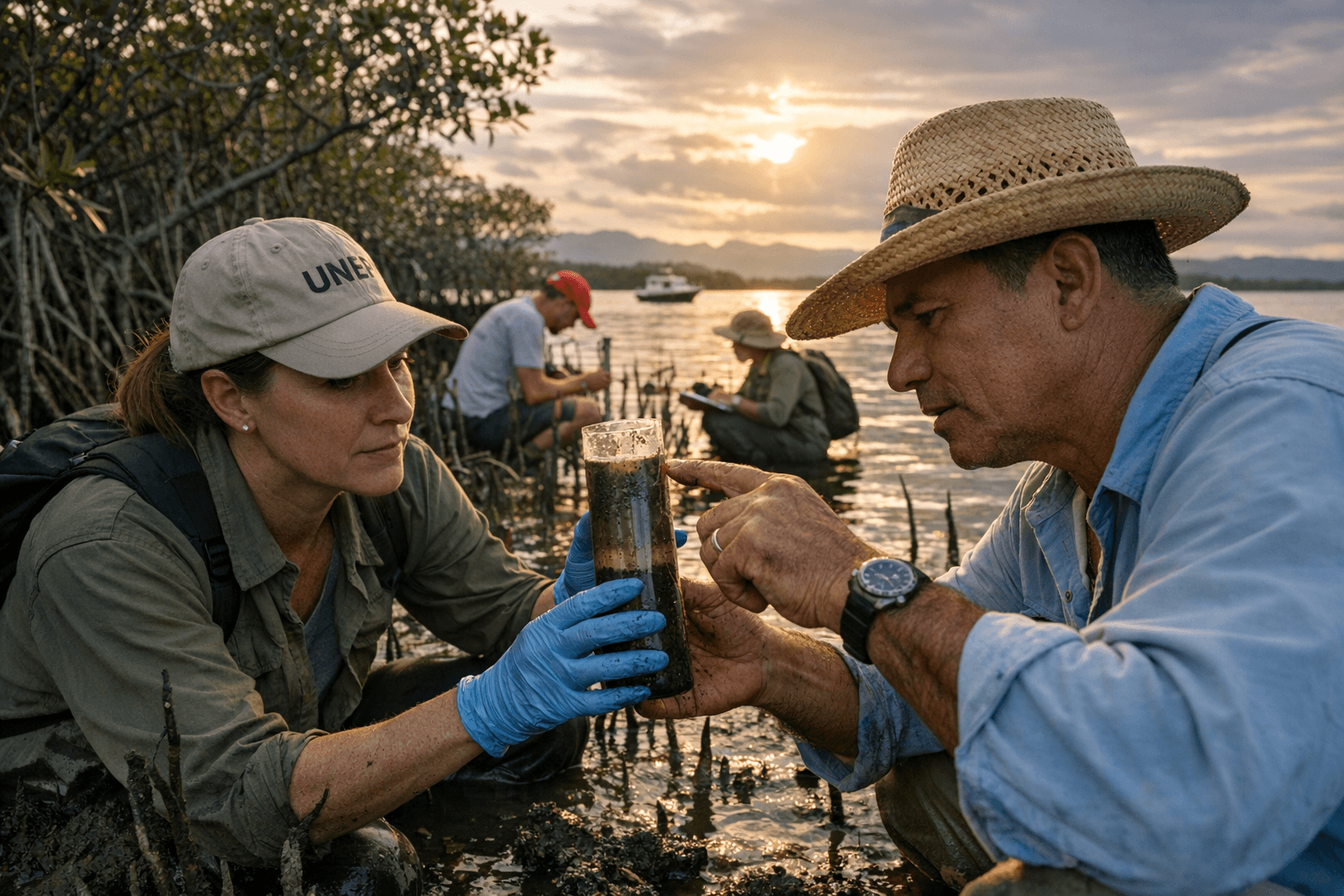
Experts from the United Nations Environment Programme (UNEP/PNUMA) visited the Center for Environmental Studies in Cienfuegos on January 21, 2026, to launch a national baseline assessment of Cuba’s blue carbon (carbono azul) resources. The mission, conducted in partnership with the Ministry of Science, Technology and Environment (CITMA) and local technical partners, aims to evaluate coastal and marine carbon stocks and produce baseline data that could support coastal conservation, climate mitigation projects, and potential carbon-market mechanisms.
The first-day meeting in Cienfuegos brought UNEP specialists together with researchers and technicians based at the Center for Environmental Studies to coordinate field sampling, data collection and the analytical framework for measuring carbon stored in coastal ecosystems. The baseline assessment targets key blue carbon reservoirs such as mangroves, seagrass beds and coastal sediments, establishing consistent methods and reference points that will make future monitoring comparable across provinces.
For coastal municipalities, the practical value is immediate. Baseline data provide the scientific basis to prioritize mangrove protection, plan restoration work, and demonstrate the climate mitigation benefits of conserving coastal habitats. That evidence can strengthen proposals for national and international funding, inform local land-use decisions, and underpin projects that increase shoreline resilience against storm surge and erosion while supporting fisheries and tourism livelihoods.
The collaboration brings together national policy authorities and local technical teams, reinforcing capacity within Cuban research centers to measure and report coastal carbon stocks. Producing an island-wide baseline is a first step toward integrating blue carbon into broader climate strategies and exploring carbon-market mechanisms that reward verified carbon sequestration. The data could also serve planners assessing trade-offs between coastal development and habitat protection.
CITMA’s involvement links this technical work to national environment and climate policy, while UNEP’s participation connects Cuban efforts to international standards and potential finance channels. Local technical partners will play a continuing role in fieldwork, data management and community engagement as the assessment progresses beyond Cienfuegos to other coastal zones.
For residents, fishers, municipal officials and conservation groups, the assessment offers a concrete source of information to support local conservation campaigns and project proposals. Expect subsequent updates as field surveys conclude and analytical teams compile the baseline report. That report will determine which coastal areas hold the most carbon value, where restoration or protection would deliver the greatest climate benefits, and how carbono azul might be integrated into Cuba’s climate and development planning.
Know something we missed? Have a correction or additional information?
Submit a Tip