United CEO downplays American merger rumors as White House doubts deal
Scott Kirby tried to cool merger chatter as the White House signaled skepticism about any United-American deal. American says such a tie-up would hurt competition and consumers.
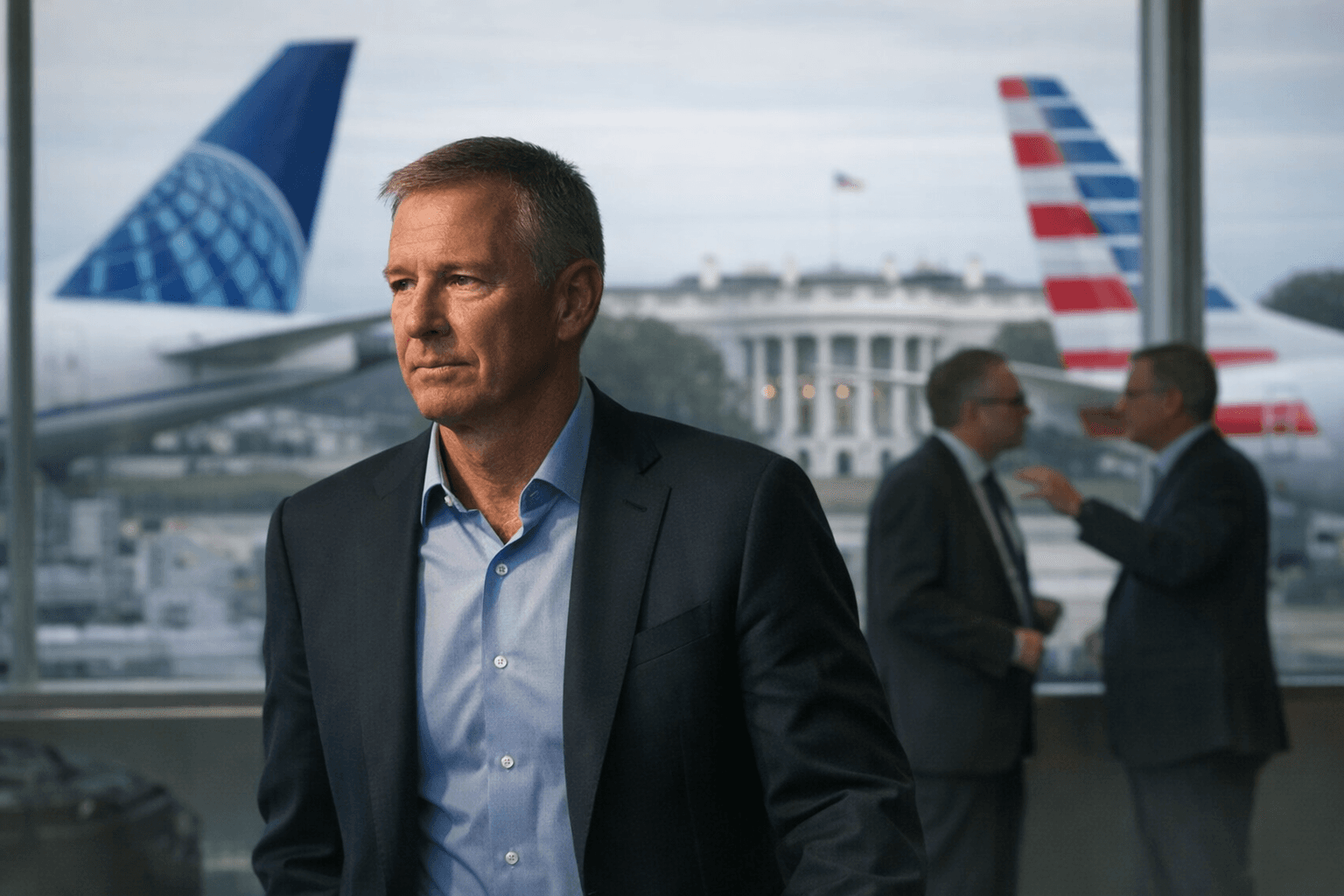
United Airlines chief executive Scott Kirby moved on April 22 to tamp down fresh speculation that his carrier could combine with American Airlines, even as the White House signaled doubt about any such deal. On United’s earnings call, Kirby said there had been too much press coverage about consolidation and that he would not comment specifically on the rumors, a signal that management wants the market focused on execution rather than takeover talk.
The financial backdrop helps explain why the rumors surfaced. United said first-quarter 2026 operating revenue reached a record $14.6 billion, up 10.6% from a year earlier, while adjusted earnings per share were $1.19. But the carrier also cut full-year 2026 EPS guidance to $7 to $11 from $12 to $14, citing higher jet fuel costs, a reminder that margins remain under pressure even as demand holds up.

American quickly drew a line. In an April 17 statement, the airline said it was “not engaged with or interested in any discussions regarding a merger with United Airlines,” and said such a combination would be negative for competition and consumers. The company said it remained focused on its strategic objectives, underscoring how sensitive any consolidation talk remains in an industry that has already been reshaped by major deals.
Those sensitivities are not theoretical. The Justice Department sued to block the 2013 US Airways-AMR transaction before allowing it to proceed with divestitures, and that deal helped reduce the number of major legacy carriers from four to three. United’s 2010 merger with Continental Airlines is also part of the backdrop, making any fresh combination instantly more consequential for fares, routes, and labor. More concentration would raise questions about service on overlapping city pairs, pricing power on busy domestic routes, and whether workers would gain leverage or face another round of integration risk.
Kirby has argued for years that U.S. airlines face structural disadvantages against large carriers in the Middle East and Asia, and he has pointed to product upgrades and technology as the basis for United’s growth. The company said premium revenue rose 14% in the quarter, loyalty revenue 13%, and Basic Economy revenue 7%, supporting Kirby’s case that segmentation and service investments can still deliver growth without a merger. United also said Star Alliance partnerships remain central to its global reach, a reminder that the industry’s next battleground may be alliances and product rather than outright consolidation. White House skepticism, along with Trump’s public opposition and Sean Duffy’s call for a stronger consumer case, suggests the antitrust climate around airlines is hardening just as carriers seek shelter from higher fuel costs.
This article was produced by Prism’s automated news system from verified source data, official records, and press releases, then run through automated quality and moderation checks before publishing. The system is built and supervised by the people who set the standards it runs under. Read our full AI policy.
Did this article answer your question?

