United flight turns back after Bluetooth device name triggers security response
A Bluetooth speaker with a threatening device name pushed United Flight 236 back to Newark, showing how quickly a prank can trip bomb-threat protocols.
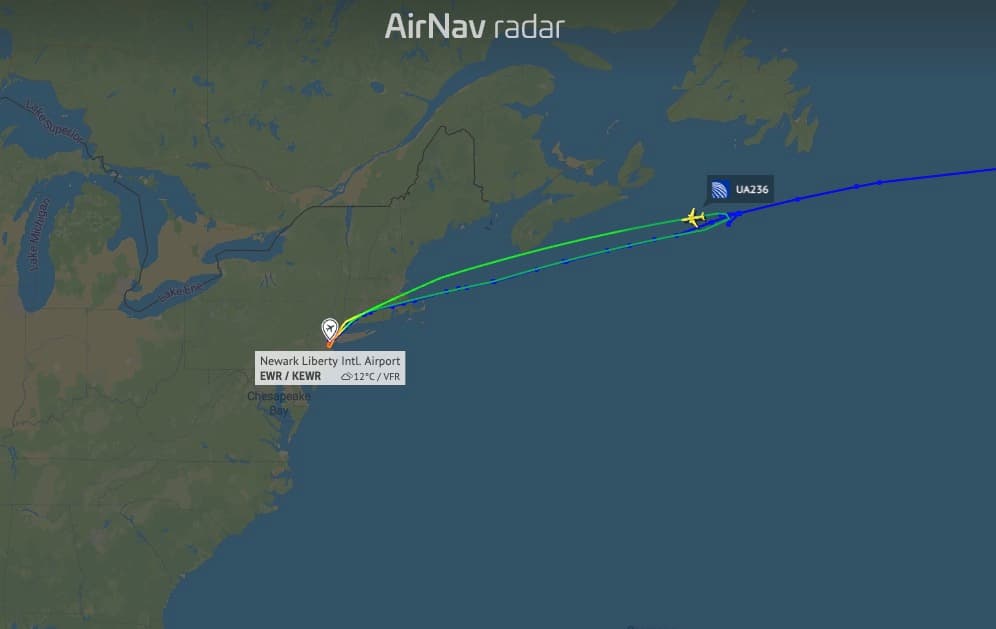
A discoverable Bluetooth device name that reportedly contained a four-letter profanity was enough to send United Flight 236 back to Newark, even though the problem was not the wireless signal itself. The Boeing 767 had departed Newark Liberty International Airport around 6 p.m. on May 30 with 190 passengers and 12 crew members bound for Palma de Mallorca, then returned to Newark at 9:37 p.m. after the crew treated the name as a security issue.
Passengers on board said the cabin crew repeatedly asked everyone to turn off Bluetooth devices. One passenger said the crew gave a one-minute warning and said two devices were still active. Air traffic control audio later described the concern as a passenger’s Bluetooth device having a “certain four-letter word” as its name, a detail that turned a routine in-flight nuisance into a potential threat assessment. United crew also consulted the airline’s operations center in Chicago before deciding to turn the aircraft around.
That response shows how aviation security draws a hard line around ambiguous digital signals. A prank device name may look absurd on its face, but if it can be read as a bomb reference, the safest move for the crew is to assume the message could matter. In this case, the reaction was not limited to the cockpit. After landing, passengers evacuated and the aircraft was searched by Port Authority police. Travelers were then re-screened by the Transportation Security Administration and U.S. Customs and Border Protection before boarding a replacement flight.
The substitute aircraft, flown with a new crew, departed early on May 31 and later reached Palma de Mallorca. The turnaround cost United a long delay, a second crew assignment and another full round of screening, all because of a name attached to a Bluetooth device. For airlines, that is the modern security calculation in the wireless age: a signal that may be meant as a joke can still trigger the same conservative procedures used for more serious threats.
The incident fits a wider pattern of disruptive wireless pranks on European flights, where provocative Wi-Fi or Bluetooth names have prompted security responses from airlines including Turkish Airlines and KLM. The lesson for carriers is clear. The threshold is not proof of danger, but whether a device name or network label can plausibly be read as one, forcing crews to choose between operational disruption and the risk of ignoring a threat that may not be a joke at all.
This article was produced by Prism’s automated news system from verified source data, official records, and press releases, then run through automated quality and moderation checks before publishing. The system is built and supervised by the people who set the standards it runs under. Read our full AI policy.
Know something we missed? Have a correction or additional information?
Submit a Tip