Universal school mindfulness works across personalities, trial finds
A large school trial found mindfulness programs benefit adolescents regardless of personality, with a small extra reduction in depression for less extraverted students at 26 weeks.
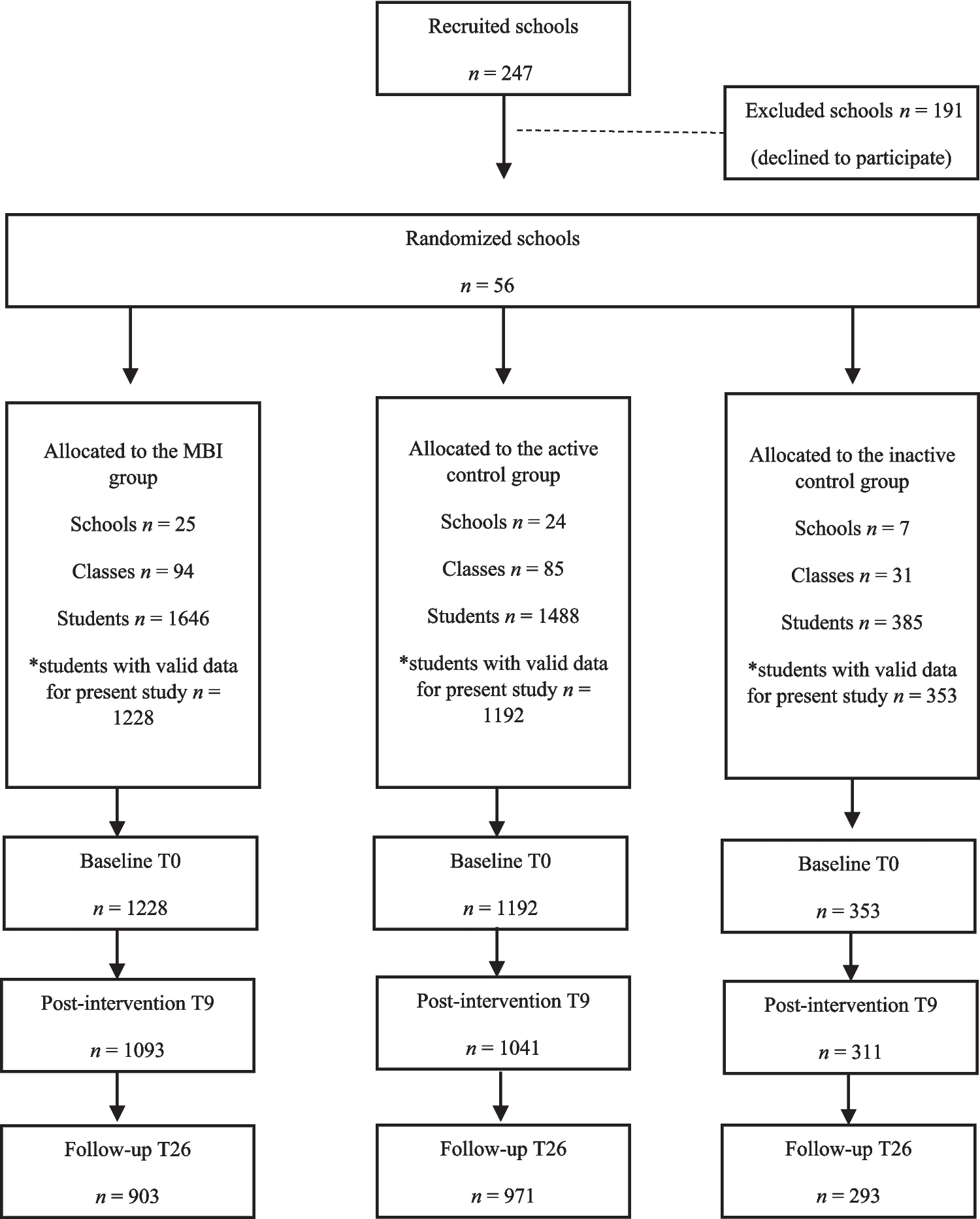
A large randomized trial of school-based mindfulness found that benefits were largely comparable across different five-factor personality profiles, offering practical reassurance for teachers and program planners rolling out universal interventions.
The cluster randomized controlled trial enrolled 2,773 Finnish students aged 12 to 15 and compared a 9-week mindfulness-based intervention called the.b program with an active 9-week relaxation control and an inactive usual-curriculum control. Researchers measured personality traits at baseline using the five-factor model and tracked depression, socio-emotional functioning, and resilience at baseline, immediately after the program and again at a 26-week follow-up.
Most analyses testing whether personality moderated outcomes were nonsignificant, indicating that traits such as neuroticism, conscientiousness, openness, agreeableness and extraversion generally did not change who benefited from the universal MBI. The only noteworthy interaction was small and exploratory: at 26 weeks, students who were lower in extraversion in the MBI arm showed slightly greater reductions in depressive symptoms compared with those in the active relaxation control (β = 0.31, 95% CI [0.002 to 0.63], p = 0.048). Effects did not differ by gender.
Because the trial randomized at the school-cluster level and used both an active control and an inactive control, the design strengthens confidence that observed differences are linked to the intervention rather than classroom or attention effects. Still, the lone moderation signal was modest and narrowly met statistical threshold, so the authors urge replication across other countries, age groups and program models before drawing firm conclusions about tailoring.

For schools and mindfulness facilitators, the takeaway is practical: universal, classroom-delivered MBIs can be implemented broadly without elaborate screening or personality-based selection. That reduces barriers for district-wide adoption and simplifies decisions about who gets training and resources. Focus can remain on program fidelity, teacher training, and offering accessible breathing and attention practices that fit typical school schedules.
Limitations to bear in mind include the exploratory nature of the extraversion finding and the need to test whether effects hold in more diverse cultural and socioeconomic contexts or with students who have clinical-level symptoms. Future work should track longer-term outcomes, probe mechanisms, and test whether adaptations improve engagement for different temperament profiles.
This trial moves the conversation from “who should get mindfulness” to “how we deliver it well.” Schools that want to start or scale programs can prioritize broad access and quality delivery now, while researchers work to refine which adaptations—if any—help specific subgroups down the road.
Sources:
Know something we missed? Have a correction or additional information?
Submit a Tip