US and Iran fail to reach deal after marathon Islamabad talks
After 21 hours in Islamabad, JD Vance said Iran rejected U.S. terms on nuclear limits, leaving uranium enrichment and the Strait of Hormuz unresolved.

Iran left Islamabad without accepting the U.S. terms after 21 hours of talks, and Vice President JD Vance said the outcome turned on Tehran’s refusal to give Washington the commitment it wanted on nuclear weapons. Vance said the United States sought an “affirmative commitment” that Iran would not pursue a nuclear weapon or the tools to quickly obtain one, then added that Iran chose “not to accept our terms.”
The meeting brought together Vance and Iran’s parliamentary speaker Mohammad Bagher Qalibaf in what was described as the highest-level U.S.-Iran engagement since Iran’s 1979 Islamic revolution. Vance stayed in frequent contact with President Donald Trump during the negotiations and also spoke with Secretary of State Marco Rubio, Treasury Secretary Scott Bessent and Adm. Brad Cooper, who leads U.S. Central Command. The talks were part of a wider effort to preserve a fragile ceasefire after weeks of regional fighting and U.S. and Israeli strikes on Iran on Feb. 28.
The substance of the dispute was narrower than the symbolism but just as combustible. Issues on the table included uranium enrichment and the Strait of Hormuz, two flashpoints that tie Iran’s nuclear program to the security of global shipping and the risk of a wider regional confrontation. Vance said the failure to reach agreement was “bad news for Iran much more than it’s bad news for the United States,” underscoring Washington’s view that Tehran has more to lose if diplomacy collapses.
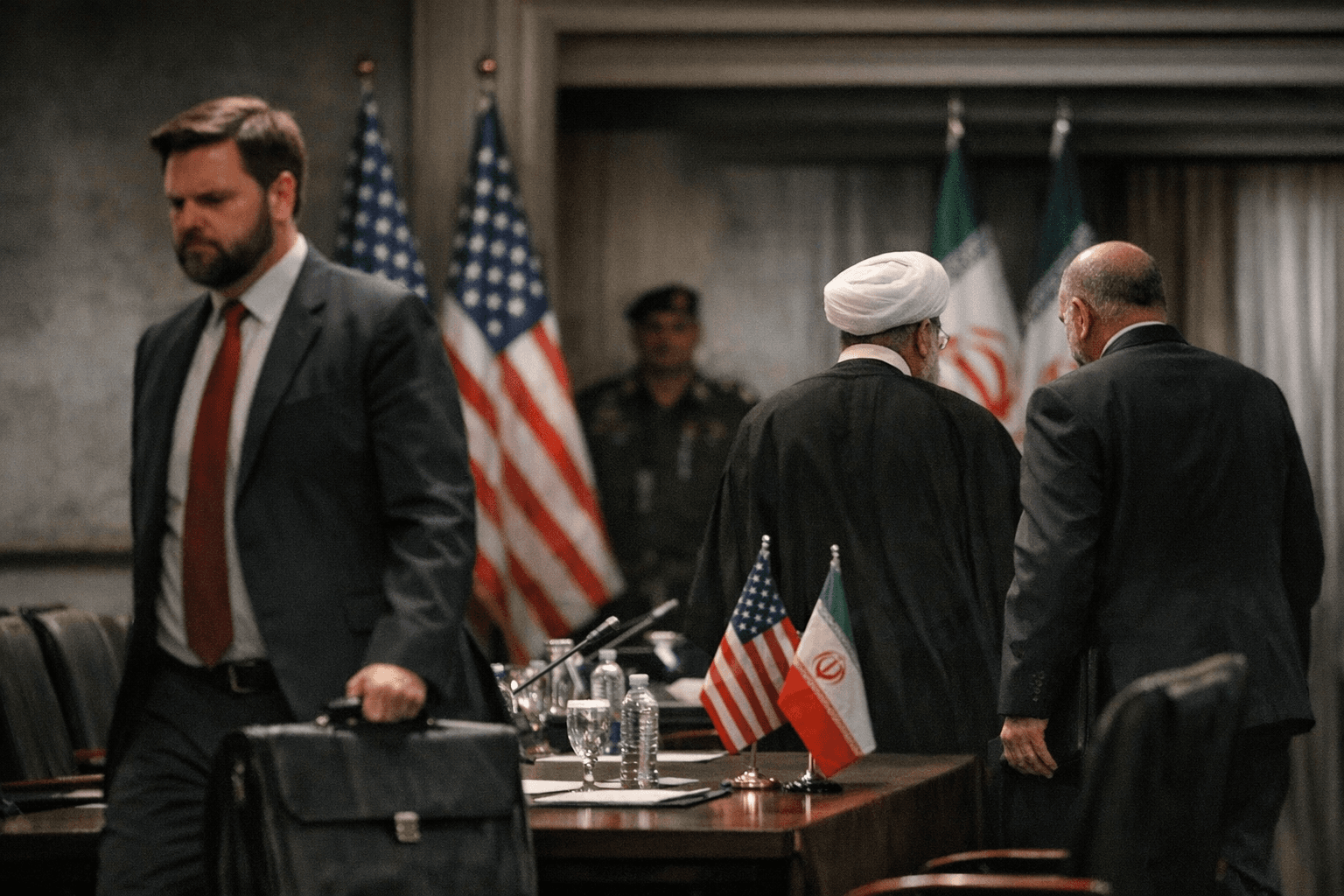
Iran’s response was that no one expected a deal in a single session. Foreign ministry spokesman Esmaeil Baghaei said the talks were intensive, while Iranian messaging urged Washington to avoid “excessive demands and unlawful requests.” Tasnim, a semi-official Iranian outlet, blamed the deadlock on U.S. “excessive demands” and said Iran’s delegation included Qalibaf, Foreign Minister Seyed Abbas Araqchi and Ali Baqeri. The standoff leaves both sides with fewer easy off-ramps: tighter sanctions enforcement, more pressure around proxy activity and renewed concern over maritime security in the Strait of Hormuz now sit closer to the center of the crisis.
Know something we missed? Have a correction or additional information?
Submit a Tip