U.S. and Iran pursue interim nuclear deal as talks hit deep mistrust
U.S. and Iranian negotiators narrowed talks to a temporary memorandum as Tehran refused zero-enrichment demands and inspectors still lacked access to a 400-kilogram uranium stockpile.
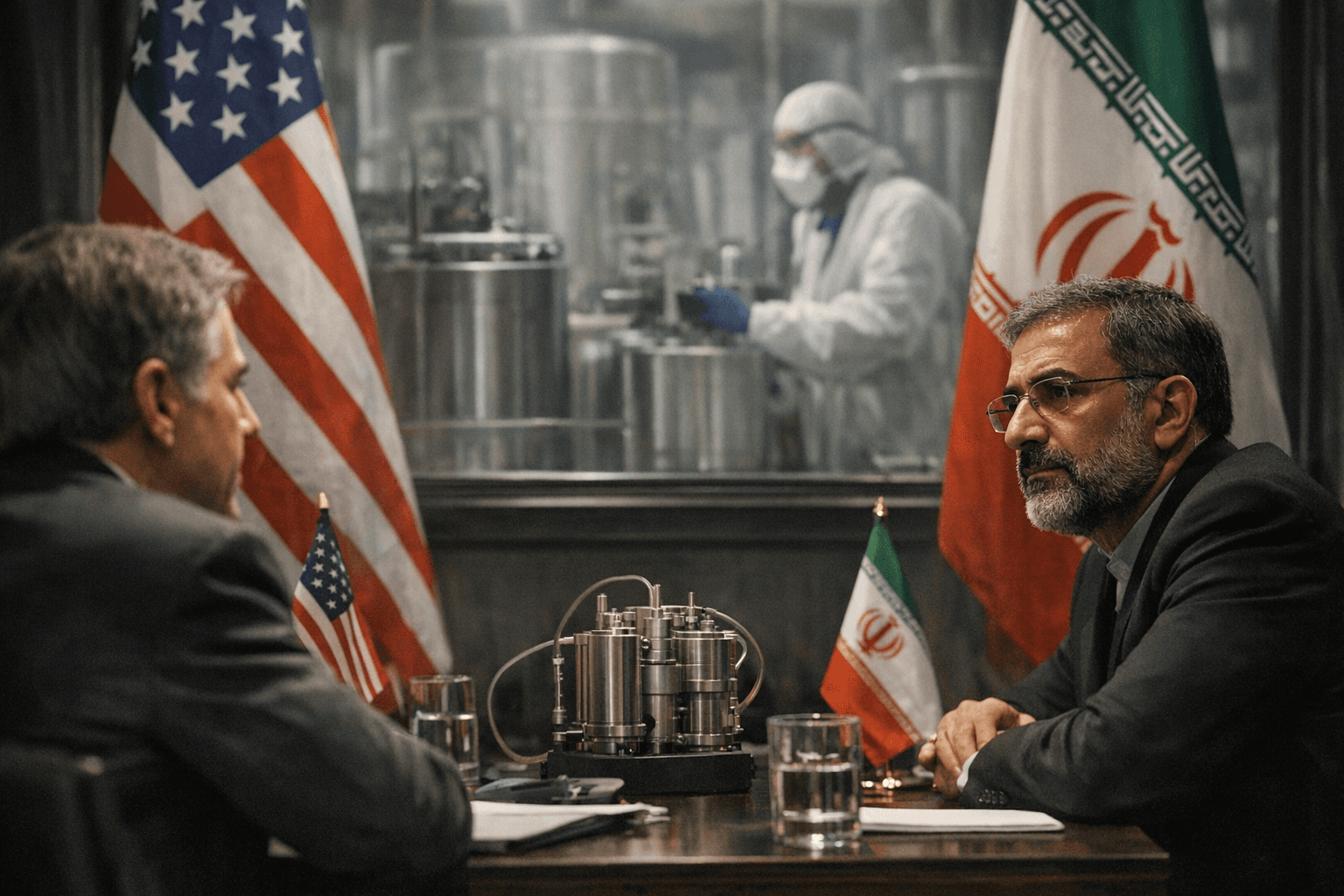
U.S. and Iranian negotiators entered a second round of nuclear diplomacy with sharply different clocks. Washington wanted visible, near-term restraint that could be sold as progress; Tehran appeared to be buying time, preserving leverage while refusing demands that would strip away its enrichment program.
The latest talks had already moved away from the idea of a sweeping peace accord. After an indirect first round in Oman in April 2025 produced a constructive exchange but no final agreement, both sides shifted toward an interim arrangement meant to prevent a return to conflict. The immediate obstacle remained Iran’s nuclear work, especially how any deal would handle enrichment, verification and sanctions relief without collapsing under domestic opposition in either capital.
The technical problem was already severe. Before the June 2025 conflict, the International Atomic Energy Agency said it had verified more than 400 kilograms of uranium enriched to 60 percent, a level far above what is needed for civilian power generation and close to the threshold that alarms proliferation experts. Rafael Grossi’s agency said its inspectors had remained in Iran through the conflict and were ready to return to nuclear sites to account for the stockpile and resolve safeguards questions. The agency’s board had also identified unresolved issues tied to undeclared locations and unreported nuclear material, making access a precondition for any durable understanding.
In public, U.S. officials, including Secretary of State Marco Rubio, framed the central aim as stopping Iran from obtaining a nuclear weapon or a militarized nuclear program. Iran’s leaders rejected zero-enrichment demands, saying they would not abandon what they describe as a sovereign right. Abbas Araghchi and other Iranian officials also said no date had been set for the next round because the two sides first needed to agree on a framework of understanding.
The mismatch in pace is now shaping the diplomacy itself. A short-term memorandum could freeze escalation and create space for technical talks, but a final settlement would still need expert-level negotiation and IAEA involvement. That is a sobering reminder of how long nuclear deals take: the Joint Comprehensive Plan of Action, finalized in Vienna on July 14, 2015, required almost two years to negotiate. For Washington, the pressure is to show results quickly; for Tehran, delay itself remains a form of leverage, and that imbalance may determine whether the next step is an agreement or another stalemate.
This article was produced by Prism’s automated news system from verified source data, official records, and press releases, then run through automated quality and moderation checks before publishing. The system is built and supervised by the people who set the standards it runs under. Read our full AI policy.
Did this article answer your question?