U.S. blockade of Iran ports enters second day, oil tops $100
Oil surged above $100 as the U.S. blockade of Iran's ports entered day two, with six merchant ships turning back from Hormuz. Lebanon-Israel talks opened as the war widened.
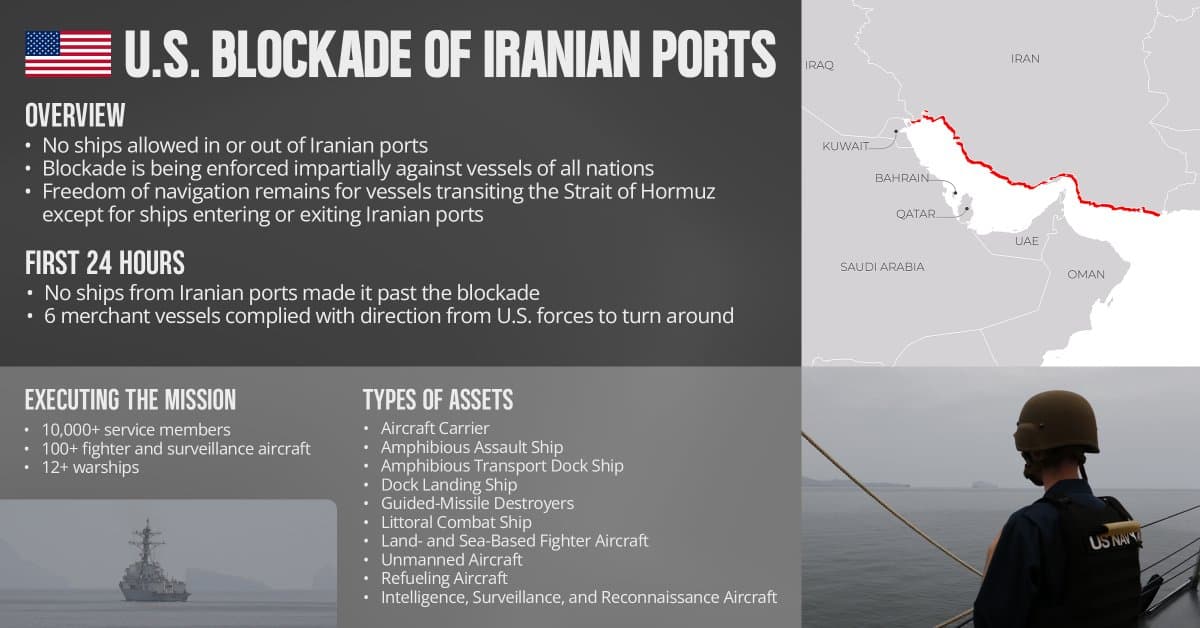
Oil prices pushed back above $100 a barrel as the U.S. blockade of Iran’s ports entered its second day, with no ships making it past the restrictions and six merchant vessels turning back. The pressure on Tehran has sharpened the risk around the Strait of Hormuz, the narrow waterway that carries about one-fifth of the world’s oil and gas supplies, and any sustained disruption would ripple far beyond the Gulf.
U.S. Central Command said the operation covers ships entering or leaving Iranian ports and coastal areas, including all ports on the Gulf and Gulf of Oman. More than 10,000 U.S. military personnel, more than a dozen warships and dozens of aircraft were enforcing the blockade, while humanitarian shipments of food, medical supplies and other essential goods were allowed subject to inspection. Even so, ship-tracking data showed some vessels still moving through the strait, a sign that the enforcement challenge is far from settled. Tehran has threatened to strike targets across the region and warned it could hit Gulf neighbors’ ports, while Pakistan has been trying to bring the sides back to talks after weekend U.S.-Iran peace negotiations broke down.
At the same time, Washington became the setting for a different test of whether diplomacy could slow the wider war. U.S. Secretary of State Marco Rubio hosted the first direct Lebanon-Israel talks in decades, bringing together Israeli Ambassador to the U.S. Yechiel Leiter and Lebanese Ambassador Nada Hamadeh Moawad at the State Department. U.S. officials described the meeting as preparatory, meant to create a framework for later negotiations. It was the first direct diplomatic engagement between the two countries since 1993, even though Lebanon and Israel remain technically at war and have no diplomatic relations.
The talks unfolded under fire. Hezbollah leader Naim Qassem called them “futile” and urged Lebanon’s government to withdraw, and the group said it launched a rocket barrage at the Israeli border towns of Kiryat Shmona and Manara shortly before the meeting began. Israeli strikes in south Lebanon continued during the discussions, and Israeli officials have said their ground operation aims to create a security zone extending to the Litani River, about 30 kilometers from the border. The Lebanese Health Ministry said at least 2,089 people have been killed, including 252 women, 166 children and 88 medical workers, and more than 1 million people have been displaced, a toll that makes the diplomatic opening look less like a ceasefire than a parallel track running beside a still-expanding war.
This article was produced by Prism’s automated news system from verified source data, official records, and press releases, then run through automated quality and moderation checks before publishing. The system is built and supervised by the people who set the standards it runs under. Read our full AI policy.
Did this article answer your question?


