U.S.-brokered trilateral talks convene in Abu Dhabi amid war and strikes
Envoys from Ukraine, Russia and the United States meet in Abu Dhabi to explore a negotiated end to the war, with territory and an energy ceasefire at the center.

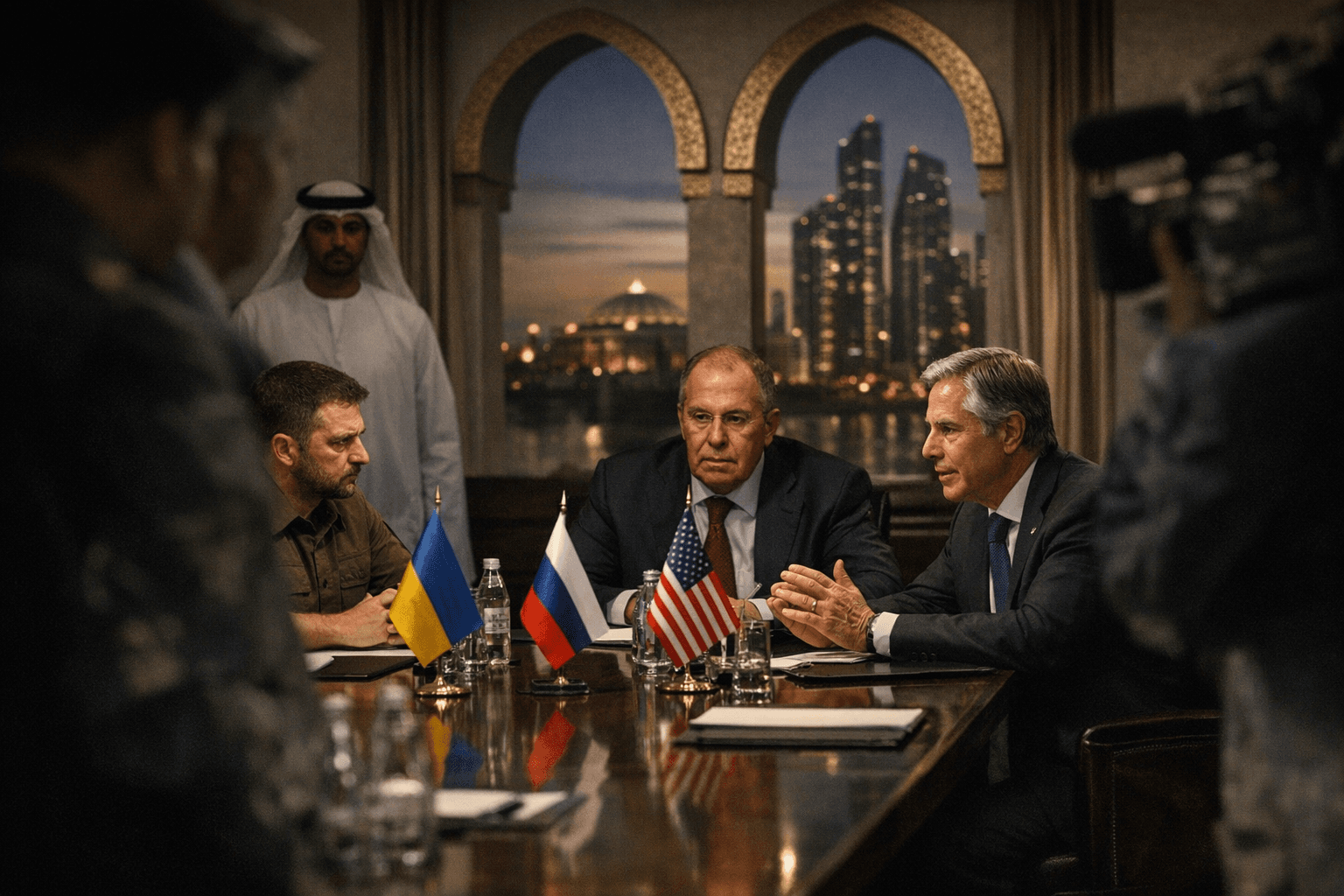
Envoys from Ukraine, Russia and the United States met in Abu Dhabi on Feb. 4 in a U.S.-brokered round of trilateral talks aimed at finding a path toward a negotiated end to the war in Ukraine. The session is the first known meeting attended by all three governments since Moscow launched its full-scale invasion nearly four years ago and is scheduled to continue into Saturday.
The Ukrainian delegation is led by Rustem Umerov, described by multiple outlets as Kyiv’s top negotiator and head of the National Security and Defence Council. BBC reporting names Kyrylo Budanov as “the head of Zelensky’s office” and David Arakhamia as a negotiator, and says Chief of the General Staff Andrii Hnatov was expected to join on Saturday. Russia’s delegation is led by Igor Kostyukov, identified by BBC as “General Igor Kostyukov, director of Russia’s GRU military intelligence agency,” while CNN refers to him as “Admiral Igor Olegovich Kostyukov, Main Intelligence Directorate chief.” The U.S. side is led by special envoy Steve Witkoff and includes Jared Kushner, who is identified as President Donald Trump’s son-in-law; Al Jazeera also lists Scott Bessent and White House adviser Josh Gruenbaum as U.S. participants.
Territorial control of Donbas remains the central stumbling block. Reporting across outlets notes Moscow’s longstanding demand that Ukraine cede control of Donetsk and Luhansk oblasts, including territory not under Russian control, a position Kyiv rejects. Kremlin aide Yuri Ushakov called recent talks with U.S. envoys “substantive, constructive and very frank,” and in CNN’s longer rendering said they were “exceptionally substantive, constructive, and, I would say, extremely frank and confidential.” U.s. officials told NBC News the Abu Dhabi talks were “productive” and would continue.
Energy and infrastructure ceasefires are a prominent item on the agenda. Kyiv negotiators and several outlets said the discussions will focus on a potential energy ceasefire and control over Donbas. Ukraine’s civilian energy system has come under sustained attack during one of the coldest winters in years, with ABC and the Associated Press reporting recent mass aerial attacks that killed a dozen miners in a bus and struck power networks, leaving many without heating, light and running water. Al Jazeera reported that Russian leader Vladimir Putin agreed to pause strikes on energy infrastructure until Sunday, but said the terms were unclear and Ukrainian and Russian accounts differed on duration.
Parallel bilateral diplomacy has complicated the optics. U.S. envoys, including Witkoff and Kushner, met Putin in Moscow late Thursday in talks described by Ushakov as frank and substantive. Minutes after that meeting began, Russia said it conducted a scheduled five-hour long-range bomber patrol over the Baltic Sea, an action CNN characterized as a likely show of force as diplomacy intensified. Separately, Russian investment envoy Kirill Dmitriev was reported to have held talks with U.S. officials in Miami and was expected to meet Witkoff on economic issues, signaling a parallel economic track to the security talks.
For markets and policy makers, the talks underscore two immediate risks: continued disruption of Ukrainian energy supply with wider effects for European energy markets, and enduring uncertainty over territorial commitments that would be required for any enforceable ceasefire or security guarantees. U.S. and European officials have floated the idea of “robust” security guarantees for Ukraine if a deal were struck, a point U.S. envoys have previously emphasized. But no source reported a written agreement or formal concessions, and participants warned it is too early to draw conclusions. The outcome of the Abu Dhabi round will shape whether diplomatic momentum can translate into a durable de-escalation or remain an interlude amid persistent fighting.
This article was produced by Prism’s automated news system from verified source data, official records, and press releases, then run through automated quality and moderation checks before publishing. The system is built and supervised by the people who set the standards it runs under. Read our full AI policy.
Did this article answer your question?


