U.S. charges Chinese pair in Myanmar scam compound fraud case
U.S. prosecutors tied two Chinese nationals to a Myanmar fraud factory that forced workers into crypto scams, widening a case with direct fallout for American victims.

U.S. prosecutors charged two Chinese nationals with running a Myanmar scam compound that investigators say forced workers to carry out cryptocurrency investment fraud against Americans, widening a case that reaches from a village in Myanmar to losses in the United States.
The criminal complaint in Washington accused Huang Xing Shan and Jiang Wen Jie of wire fraud conspiracy under 18 U.S.C. §§ 1343 and 1349. Prosecutors said Huang, also known as Ah Zhe, and Jiang, also known as Jiang Nan, managed Shunda Park in Min Let Pan village, Myanmar, from January 2023 through January 2026, before the site was seized in November 2025. The Justice Department said the compound was used for cryptocurrency investment fraud and that workers were forced to participate, making it less a call center than a coercive fraud factory.

Investigators said the case is built on a large evidentiary record. FBI agents reviewed thousands of electronic devices recovered from Shunda Park and interviewed former workers, allowing prosecutors to trace how the operation functioned and how victims were recruited and handled. Court records say the defendants are now in Thai government custody on immigration violations after being arrested in Thailand after relocating to another scam compound in Cambodia, a detail that leaves their transfer to the United States uncertain but underscores how mobile these networks have become.
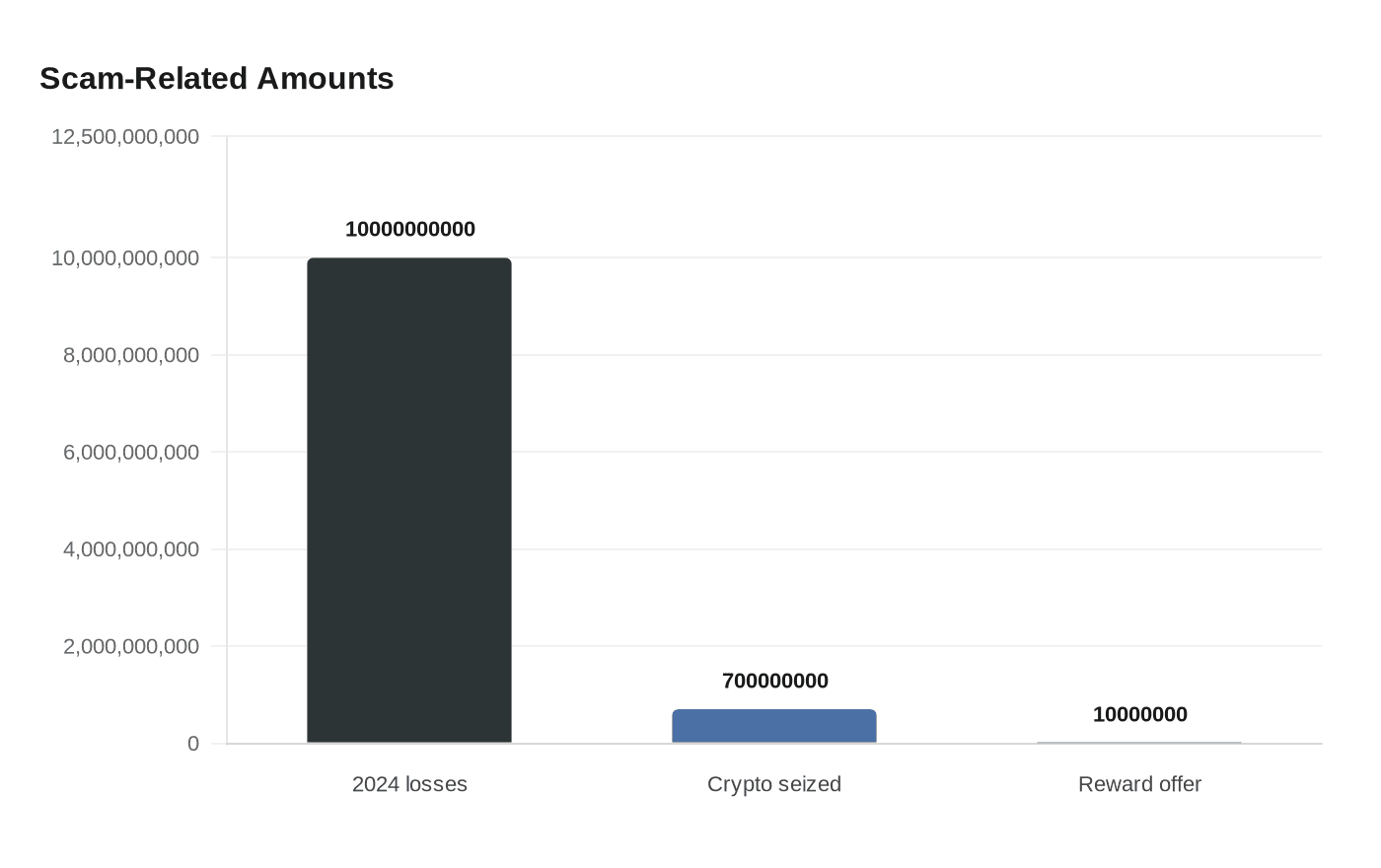
The charges came as the Justice Department’s Scam Center Strike Force, launched in November 2025, expanded its campaign against Southeast Asian fraud syndicates. On April 23, officials said the strike force’s latest actions included seizure of 503 fake investment websites, seizure of a Telegram recruitment channel, and restraint of more than $700 million in cryptocurrency tied to scam proceeds. The department said the effort was coordinated with the Treasury Department and the State Department.

The broader financial toll is already enormous. The U.S.-China Economic and Security Review Commission said Americans lost at least $10 billion to Southeast Asia-based scams in 2024, a figure that highlights how compound-based fraud operations in Myanmar, Cambodia and Thailand have become a direct American law-enforcement problem. On the same day, Treasury sanctioned Cambodian senator Kok An and 28 people and entities in his network, saying they controlled scam compounds and stole millions from U.S. victims. The State Department separately announced a reward offer of up to $10 million for information leading to the seizure or recovery of funds tied to the Tai Chang scam centers in Burma.
Reports on the November 2025 raid on Shunda Park say the compound operated under the protection of the Democratic Karen Benevolent Army and was discovered during clashes involving the Karen National Liberation Army. That backdrop helps explain why the networks have proved so durable: they combine armed protection, forced labor, encrypted recruitment and crypto laundering in a cross-border system that keeps reaching U.S. victims even after repeated crackdowns.
This article was produced by Prism’s automated news system from verified source data, official records, and press releases, then run through automated quality and moderation checks before publishing. The system is built and supervised by the people who set the standards it runs under. Read our full AI policy.
Did this article answer your question?

