U.S. consumer confidence rises unexpectedly in April despite war worries
Confidence rose to 92.8 even as consumers kept writing about prices, gas and war. The question is whether April’s lift reflects spending strength or a temporary mood shift.
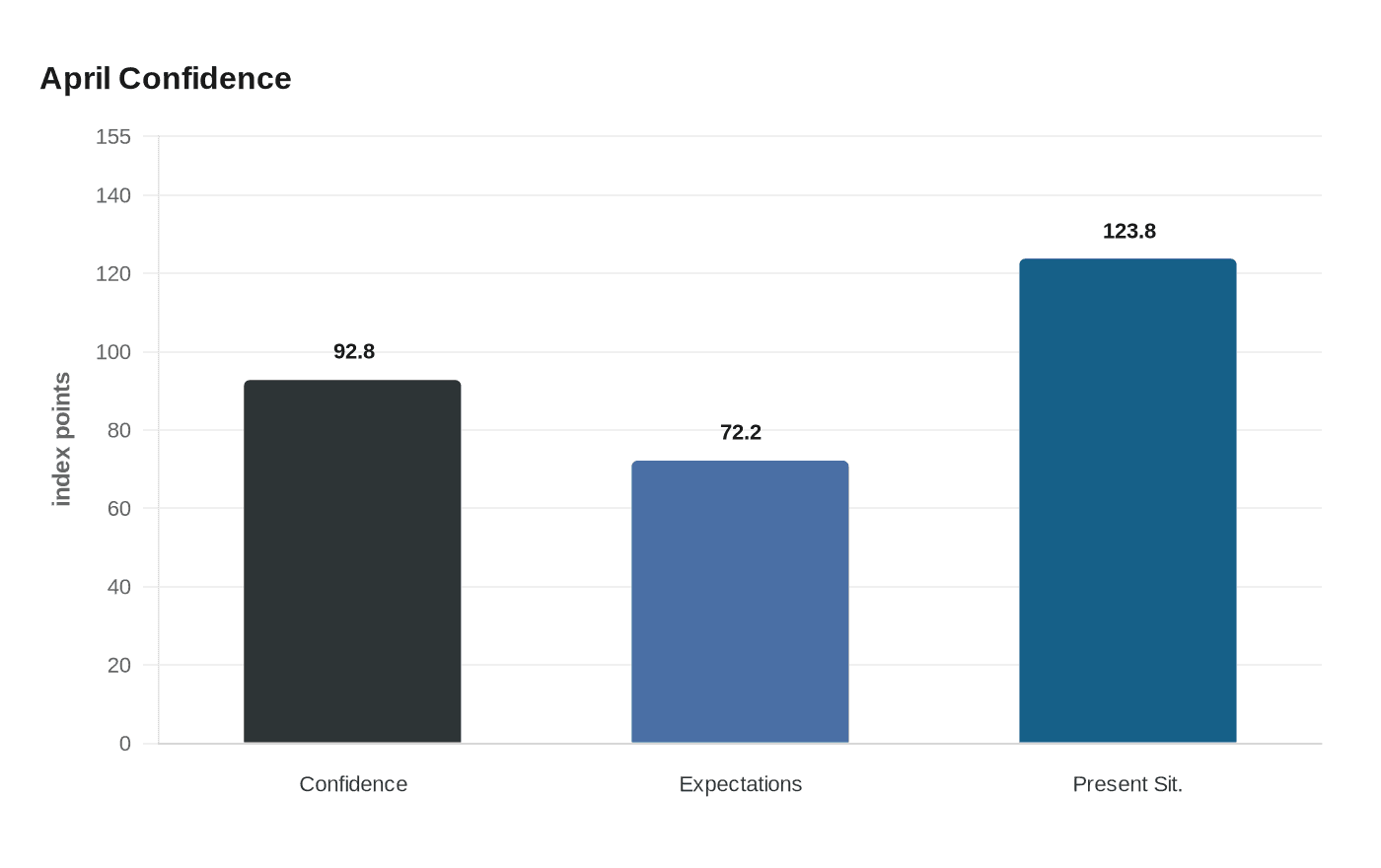
American consumers felt a little better in April, but the lift came with caveats. The Conference Board said its Consumer Confidence Index rose 0.6 points to 92.8, beating economists’ expectations for a drop to 89.0 and edging higher from a revised 92.2 in March.
The improvement did not look like a clean break from the strain households have been describing for months. The survey was conducted from April 1 to April 22, so it captured a temporary two-week ceasefire in the Middle East conflict that began on April 8, a period when stocks recovered and risk assets steadied. The Conference Board also said perceptions of the labor market improved, helping offset weaker views of business conditions.
Even so, the underlying tone remained wary. Dana M. Peterson, the group’s chief economist, said consumers’ write-in responses “continued to skew towards pessimism in April.” Comments mentioning prices, oil and gas, and war became more frequent than in March, underscoring how closely households are still tracking geopolitical risk and energy costs.
The split between the headline index and the written responses matters because consumer spending drives a large share of the U.S. economy. The Expectations Index rose 1.2 points to 72.2, while the Present Situation Index slipped 0.3 points to 123.8. The labor-market differential, the share saying jobs are plentiful minus the share saying jobs are hard to get, improved 1.4 points to plus 7.5 percent. That points to a labor market that still looks acceptable to consumers, even if their confidence in the broader economy is fragile.
The Conference Board said confidence remained low, with tariffs, inflation and ongoing war continuing to weigh on expectations for incomes, jobs and overall economic conditions. The April reading was still well above January’s 84.5, the lowest since 2014, but the Expectations Index remained below 80, a level often associated with recession warnings.
The broader price backdrop helps explain why the mood is so sensitive. The national average gasoline price stood at $4.18 a gallon, more than a dollar above pre-war levels, and March consumer prices rose 3.3 percent from a year earlier and 0.9 percent from February, the biggest monthly jump in nearly four years. For now, April’s confidence gain looks less like broad relief than a brief thaw inside a still-tense economic and geopolitical environment.
This article was produced by Prism’s automated news system from verified source data, official records, and press releases, then run through automated quality and moderation checks before publishing. The system is built and supervised by the people who set the standards it runs under. Read our full AI policy.
Did this article answer your question?