U.S. deploys additional destroyer to Middle East amid Iran standoff
U.S. officials sent the USS Delbert D. Black to reinforce a carrier strike group as Washington increases pressure on Iran; region braces for possible escalation.
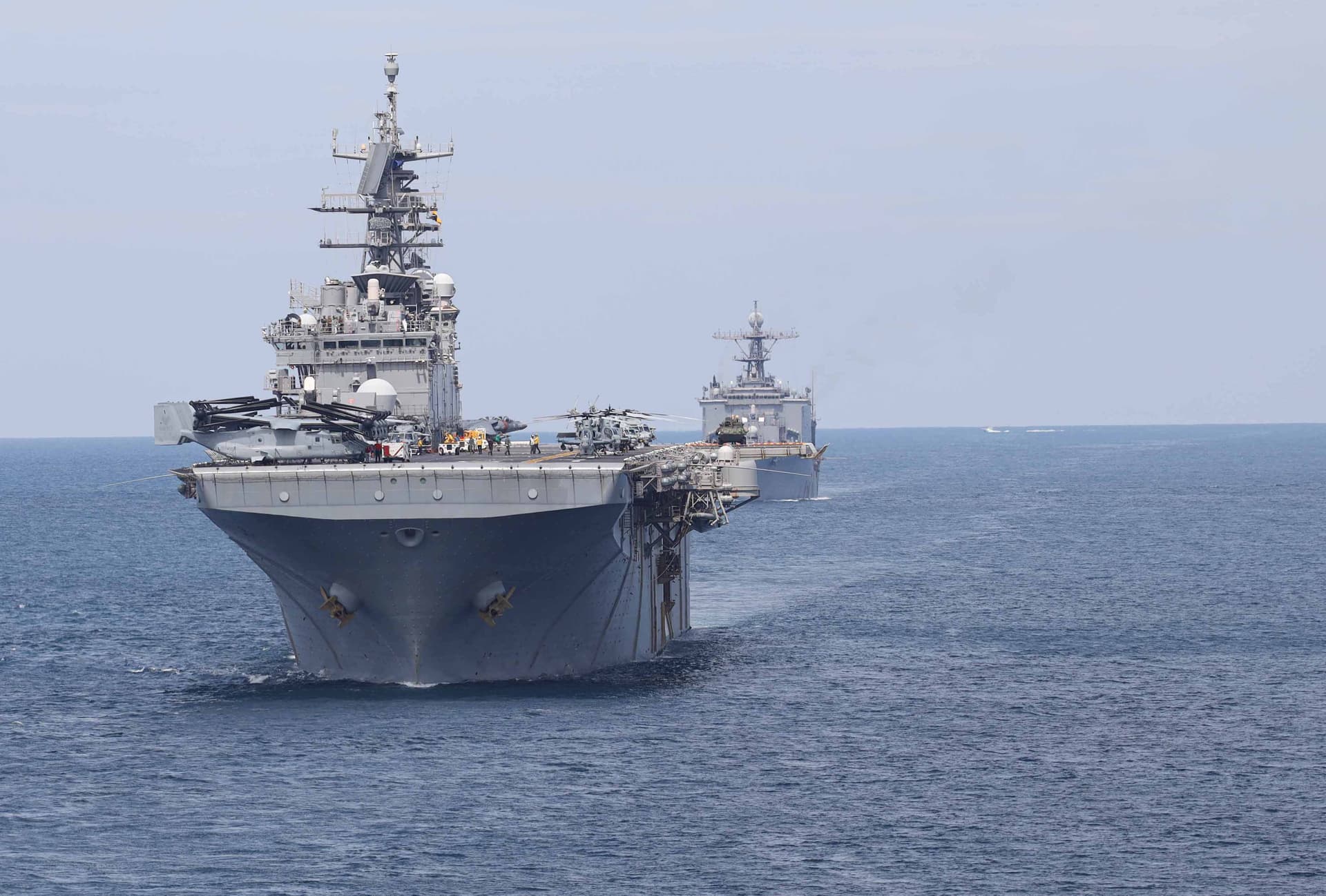
U.S. officials said an additional warship, the Arleigh Burke-class destroyer USS Delbert D. Black, was sent to the Middle East on Jan. 29 as Washington reinforced naval assets amid rising tensions with Iran. Ship-tracking data showed the destroyer transiting the Suez Canal toward the Gulf, part of a broader movement of U.S. maritime and air assets into the region.
The deployment comes alongside the nuclear-powered aircraft carrier USS Abraham Lincoln and several escort ships already operating nearby. CENTCOM described the carrier strike group as deployed “to promote regional security and stability,” and Pentagon officials said they were rapidly shifting force posture by sending a carrier strike group, advanced fighter squadrons and missile-defense batteries to deter further escalation. A U.S. official noted the carrier “hasn't appeared on tracking sites for more than a week,” even as planners repositioned forces in the Indian Ocean and the Arabian theatre.
Open-source ship- and flight-tracking feeds and analyst observations indicate at least 10 U.S. warships and dozens of military cargo flights have moved toward the region. Named surface combatants reported in the area include multiple Arleigh Burke-class destroyers, USS Frank E. Petersen Jr, USS Spruance, USS Michael Murphy, USS McFaul and USS Mitscher, as well as littoral combat ships such as USS Canberra, USS Tulsa and USS Santa Barbara. The destroyers can provide escort protection, ballistic-missile defense and land-attack options through Tomahawk cruise missiles, giving the strike group a wide range of responses.
President Donald Trump framed the buildup as precautionary and aimed at coercing diplomacy, telling reporters, “We have a massive fleet heading in that direction, and maybe we won’t have to use it.” Defense Secretary Pete Hegseth stressed the United States was prepared to use “all options” to prevent Iran from pursuing nuclear weapons while keeping space open for a diplomatic deal. A U.S. official also outlined three demands Washington has for Tehran: permanently ceasing uranium enrichment, limiting its ballistic missile stockpile, and ending support for the so-called Axis of Resistance, and said there was no sign Iran was prepared to accept those terms.

Tehran responded with public warnings. Abbas Araghchi, an Iranian foreign ministry official, wrote that Iran had its “fingers on the trigger” and that Iranian forces stood ready “to immediately and powerfully” counter any aggression. Analysts warn that Iran has spent recent years enhancing naval and short-range missile systems that are designed to threaten warships operating near its coast. “All of these in the south [of Iran] have been developed precisely to target U.S. warships,” analyst Vaez said. “And Iran didn’t use any of these capabilities in the 12-day war, so all of those capabilities are intact.” He cautioned that while the U.S. could prevail militarily, doing so “will come with the kind of price tag that so far the president has demonstrated he’s reluctant to pay.”
Regional dynamics complicate any military option. Saudi Crown Prince Mohammed bin Salman publicly ruled out allowing U.S. forces to use Saudi territory or airspace for an operation against Iran, removing a nearby logistics corridor. The current U.S. posture also reflects a steady buildup since 2024 to deter Houthi attacks in the Red Sea and to counter Iranian influence, with roughly 40,000 U.S. service members reported in the wider region by mid-2025.
Counts of ships and bases differ among tracking feeds and official statements, and U.S. commanders have not published a complete manifest. The movement of the USS Delbert D. Black underlines the immediate tactical shift; the broader strategic picture will depend on diplomacy, Tehran’s next moves and how regional partners balance deterrence with de-escalation.
This article was produced by Prism’s automated news system from verified source data, official records, and press releases, then run through automated quality and moderation checks before publishing. The system is built and supervised by the people who set the standards it runs under. Read our full AI policy.
Did this article answer your question?