U.S. destroyers begin mine-clearing mission in Strait of Hormuz
U.S. destroyers moved into the Strait of Hormuz to start clearing mines, opening a fight over a waterway that carries about one-fifth of global oil. The risk is immediate: fuel, freight and supply shocks.
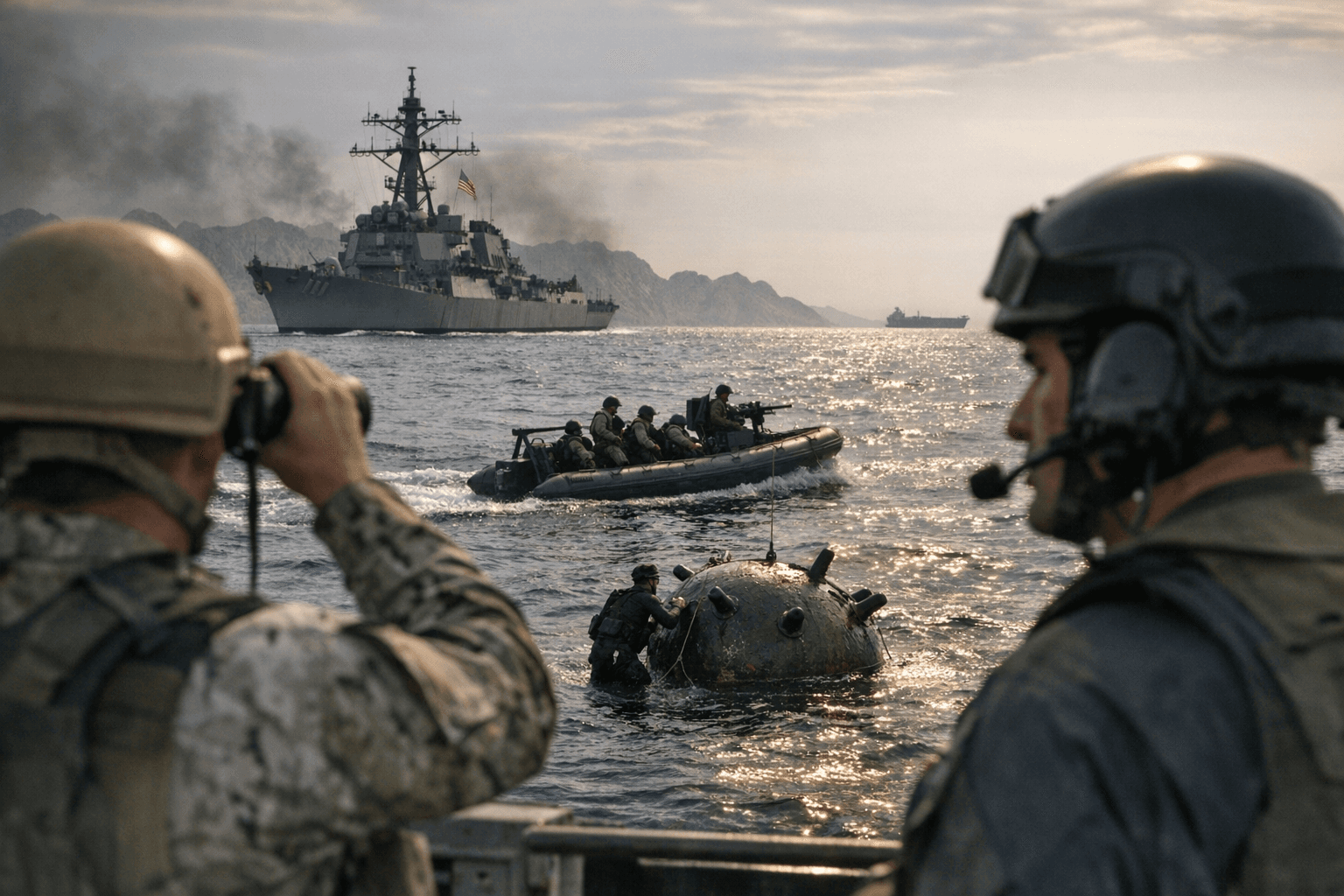
The Strait of Hormuz is where a regional military standoff becomes a global price shock. The narrow waterway carries roughly one-fifth of the world’s oil and a significant share of liquefied natural gas, so any mine threat there can ripple into gasoline costs, shipping schedules and supply chains far beyond the Gulf.
CENTCOM said two U.S. Navy guided-missile destroyers, USS Frank E. Petersen and USS Michael Murphy, transited the strait on April 11 and then operated in the Arabian Gulf as the United States began setting conditions to clear sea mines it said were laid by Iran’s Islamic Revolutionary Guards Corps. Adm. Brad Cooper said the United States was “establishing a new passage” and would share a “safe pathway” with the maritime industry. CENTCOM said additional forces, including underwater drones, would join the clearance effort in the coming days.
The mission is technically slow and politically volatile. U.S. officials assessed in late March that at least a dozen underwater mines had been placed in the waterway, including Iranian-made Maham 3 and Maham 7 types. Clearing them means finding and classifying each object before a ship or unmanned system can neutralize it, a process that keeps crews exposed to the very danger they are trying to remove. The Navy has also reorganized mine countermeasures in the region, relying on Littoral Combat Ships and unmanned and helicopter-borne systems rather than the old Avenger-class mine countermeasure ships. USNI News identified USS Canberra, USS Santa Barbara and USS Tulsa among the ships involved in that shift.
The transit itself was unusual. USNI News reported it was the first time American warships had crossed the strait since the U.S.-Israel offensive in Iran began on Feb. 28, 2026. Commercial traffic had already been badly disrupted, with passage through the strait all but halted during weeks of war and still running below normal even after a ceasefire, according to transit data reviewed by CBS News.
The diplomatic and military lines moved at the same time. Donald Trump said on Truth Social that the United States was clearing mines as “a favor” to countries dependent on the corridor and claimed Iran’s mine-laying ships had been destroyed. An Iranian military spokesperson from Khatam al-Anbiya Central Headquarters denied that U.S. vessels had entered the strait as described and said the initiative for passage was “in the hands of” Iran’s armed forces, while the IRGC vowed a “strong response” to military ships passing through the waterway. Talks in Islamabad involving Vice President JD Vance and Iranian officials added a parallel channel as the naval operation unfolded.
Hormuz has been here before. During Operation Earnest Will, the reflagged tanker Bridgeton struck an Iranian mine on July 24, 1987, and USS Samuel B. Roberts hit another on April 14, 1988. Those incidents showed how quickly mines can box in naval and commercial traffic, and why the next few days around Hormuz will be watched as closely in energy markets as in naval headquarters.
This article was produced by Prism’s automated news system from verified source data, official records, and press releases, then run through automated quality and moderation checks before publishing. The system is built and supervised by the people who set the standards it runs under. Read our full AI policy.
Did this article answer your question?


