U.S. destroys two Houthi missiles targeting Red Sea shipping
U.S. forces struck and destroyed two Houthi anti-ship missiles identified as imminent threats to merchant vessels and U.S. naval ships in the Red Sea corridor.
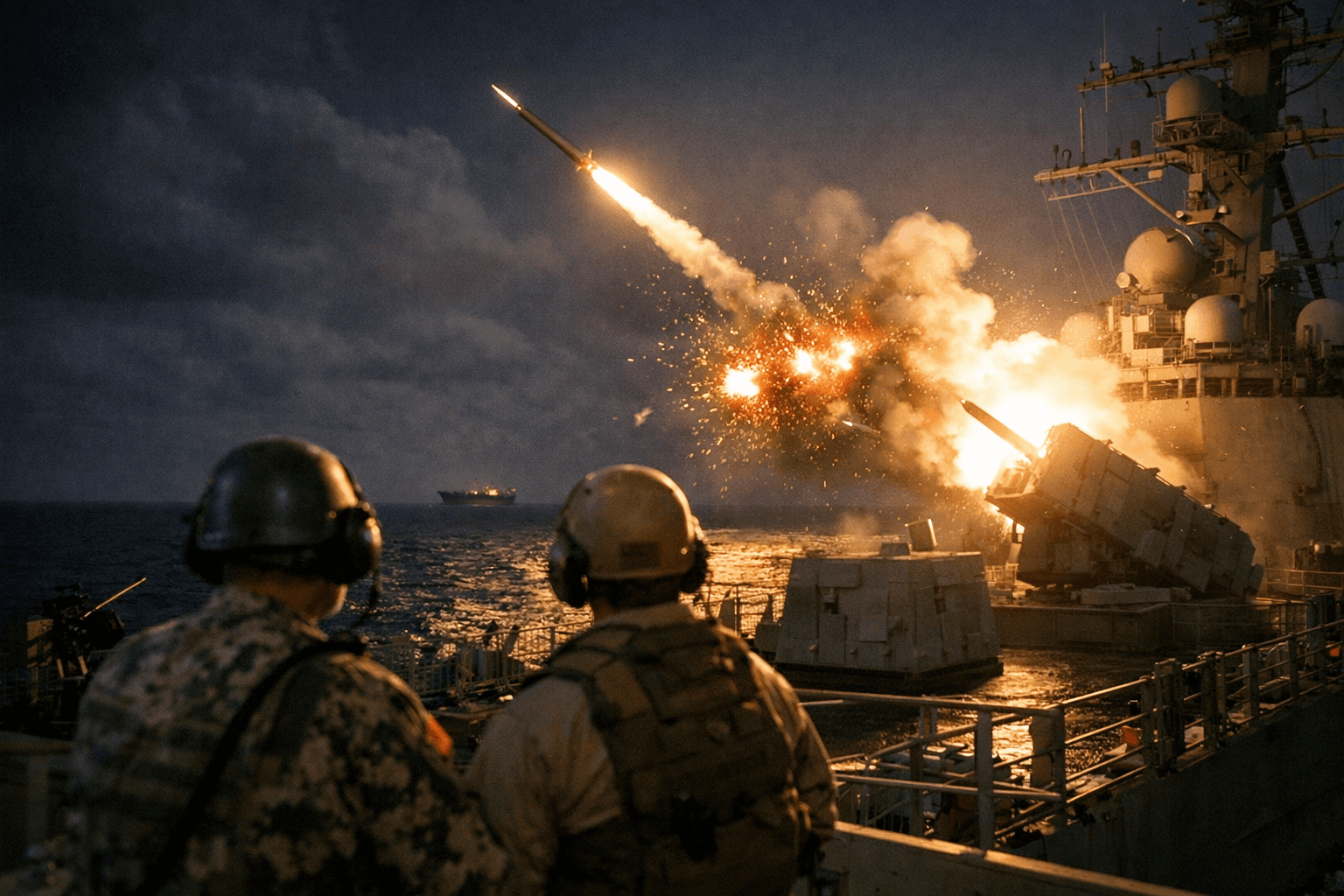
U.S. Central Command said U.S. forces struck and destroyed two anti-ship missiles in Houthi-controlled areas of Yemen after those weapons were assessed as imminent threats to merchant shipping and U.S. naval vessels transiting the Red Sea and Gulf of Aden corridor. The strikes followed intelligence and surveillance that flagged the missiles as poised to be launched against commercial traffic in one of the world’s busiest maritime chokepoints.
The operation underscores an intensifying effort by the United States to protect freedom of navigation and deter attacks on civilian shipping that have disrupted global supply chains in recent years. The Red Sea and Gulf of Aden form a vital transit route to the Suez Canal; any sustained threat in the corridor forces rerouting, raises insurance and fuel costs, and reverberates through international trade networks that link Europe, Asia and Africa.
Yemen’s Houthi movement has asserted that its actions are part of a campaign against vessels linked to states involved in the Gaza conflict, creating a fraught intersection between regional politics and commercial maritime security. The strikes are likely to inflame tensions in an already volatile region where proxy dynamics and maritime harassment have become recurrent features of broader geopolitical contests.
U.S. officials framed the action as a defensive measure to remove an immediate danger to seafarers and naval assets. By destroying missiles before they could be launched, the operation aimed to neutralize the specific threat while avoiding broader damage inside populated areas. Details on the weapons’ locations and the precise means used in the strikes were not disclosed, reflecting operational security and the sensitive environment in which the strikes took place.
The strikes will test diplomatic channels across the region. Neighboring states, international maritime organizations and shipping companies have pressed for coordinated action to keep commercial lanes open while urging restraint to prevent military escalation. International law recognizes the right of states to defend their vessels and those under their protection, but unilateral military measures in or near another country’s territory can raise complex legal and political questions, especially in fractured states such as Yemen.
Shipping industry groups have repeatedly warned that repeated incidents in the Red Sea could force permanent route changes around the Cape of Good Hope, imposing significant costs and delays. Those economic calculations feed into wider strategic concerns: prolonged instability in the corridor could amplify supply chain disruptions at a moment when many economies remain sensitive to energy and goods price shocks.
Washington’s action is likely to be followed closely by allies and rivals alike. The United States will face pressure to maintain security for international shipping while coordinating intelligence and patrols with partner navies to reduce the burden on unilateral strikes. Diplomats are expected to emphasize deescalation and renewed efforts to prevent weapons from being placed within reach of commercial routes.
For now, the strikes removed the immediate threat identified by U.S. forces. But the underlying dynamics that led to the deployment of anti-ship missiles in Houthi-held territory persist, leaving the Red Sea corridor vulnerable unless broader political solutions and multilateral security measures can take hold.
This article was produced by Prism’s automated news system from verified source data, official records, and press releases, then run through automated quality and moderation checks before publishing. The system is built and supervised by the people who set the standards it runs under. Read our full AI policy.
Did this article answer your question?


