U.S. diplomats skeptical of National Rally economic plans, Reuters says
U.S. officials found National Rally’s economic pitch thin, deepening doubts that its market-friendly makeover is more branding than governing skill.
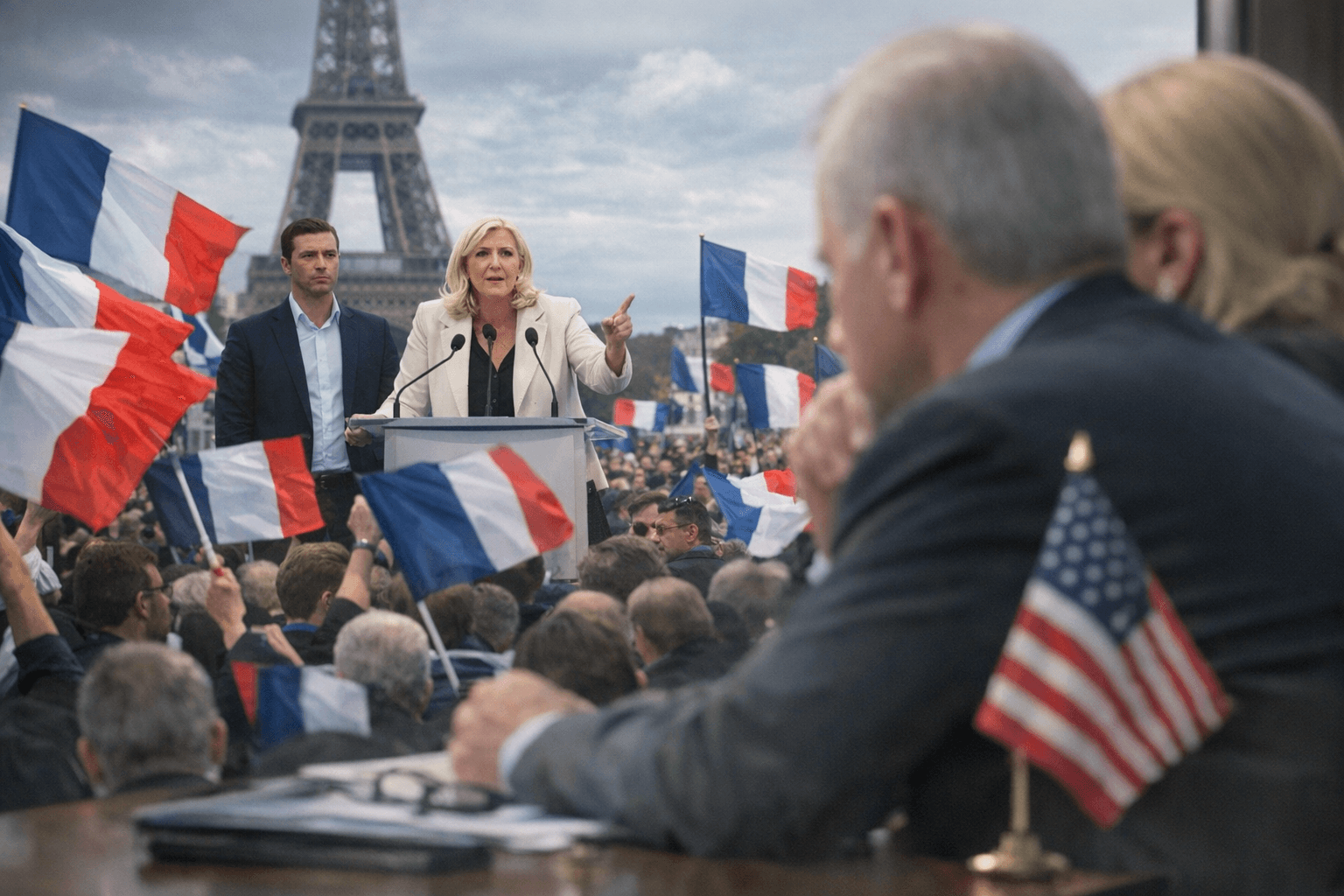
U.S. officials who met leaders of France’s National Rally came away unconvinced that the far-right party has a serious economic plan, a warning sign for a movement trying to sell itself as a credible governing force ahead of the 2027 presidential race.
The doubts cut to the heart of National Rally’s effort to look market-ready. Diplomats were not persuaded by answers on how the party would narrow France’s yawning deficit, attract U.S. investment or revive growth in one of Europe’s largest and most indebted economies. That skepticism matters because National Rally won 123 seats in the 2024 National Assembly, making it France’s largest parliamentary group and a plausible contender for power in 2027.
Charles Kushner and his team met most of the likely French contenders across the political spectrum, including Marine Le Pen and her protégé Jordan Bardella. The takeaway from those talks was that National Rally was not especially convincing on the hard policy questions that matter to Washington and to markets. The party has long paired a hard line on immigration with promises to defend jobs and purchasing power, but that message has not yet been matched by a detailed governing program. The U.S. State Department declined to comment on private diplomatic exchanges.
The criticism lands at a delicate moment for France’s public finances. INSEE said on March 27, 2026 that the public deficit stood at 5.1% of GDP in 2025. The European Commission has forecast a deficit of 5.5% of GDP in 2025, 4.9% in 2026 and 5.3% in 2027, while projecting public debt to climb to 120% of GDP by 2027 from 113.2% in 2024. France’s Cour des comptes said in February that the deficit was expected to reach €161.0 billion in 2025, equal to 5.4% of GDP, and warned that the effort to reduce it was weaker than initially planned.
National Rally’s own ambiguity adds to the uncertainty. The party said it is still developing its economic program, including politically sensitive pension reforms, even as it has signaled a desire to roll back the 2023 reform that raised the retirement age. French business leaders have voiced similar concerns about whether the party has the expertise to manage public finances and restore growth.
The political picture is unsettled as well. Emmanuel Macron’s snap legislative elections in 2024 left National Rally as the largest force in parliament, and the next presidential vote is expected in April 2027. Marine Le Pen’s March 31, 2025 conviction and five-year ineligibility ruling has raised the prospect that Bardella, born Sept. 13, 1995 and now 30, could become the party’s standard-bearer if the ban holds. For investors, diplomats and French voters, the central question remains the same: whether National Rally’s makeover is a real governing alternative or only a rebrand.
This article was produced by Prism’s automated news system from verified source data, official records, and press releases, then run through automated quality and moderation checks before publishing. The system is built and supervised by the people who set the standards it runs under. Read our full AI policy.
Did this article answer your question?