U.S. employers cut 23,000 jobs in surprise July report
Employers cut 23,000 jobs in July as mortgage rates climbed to 6.58%, leaving households squeezed between a weaker labor market and costly borrowing.

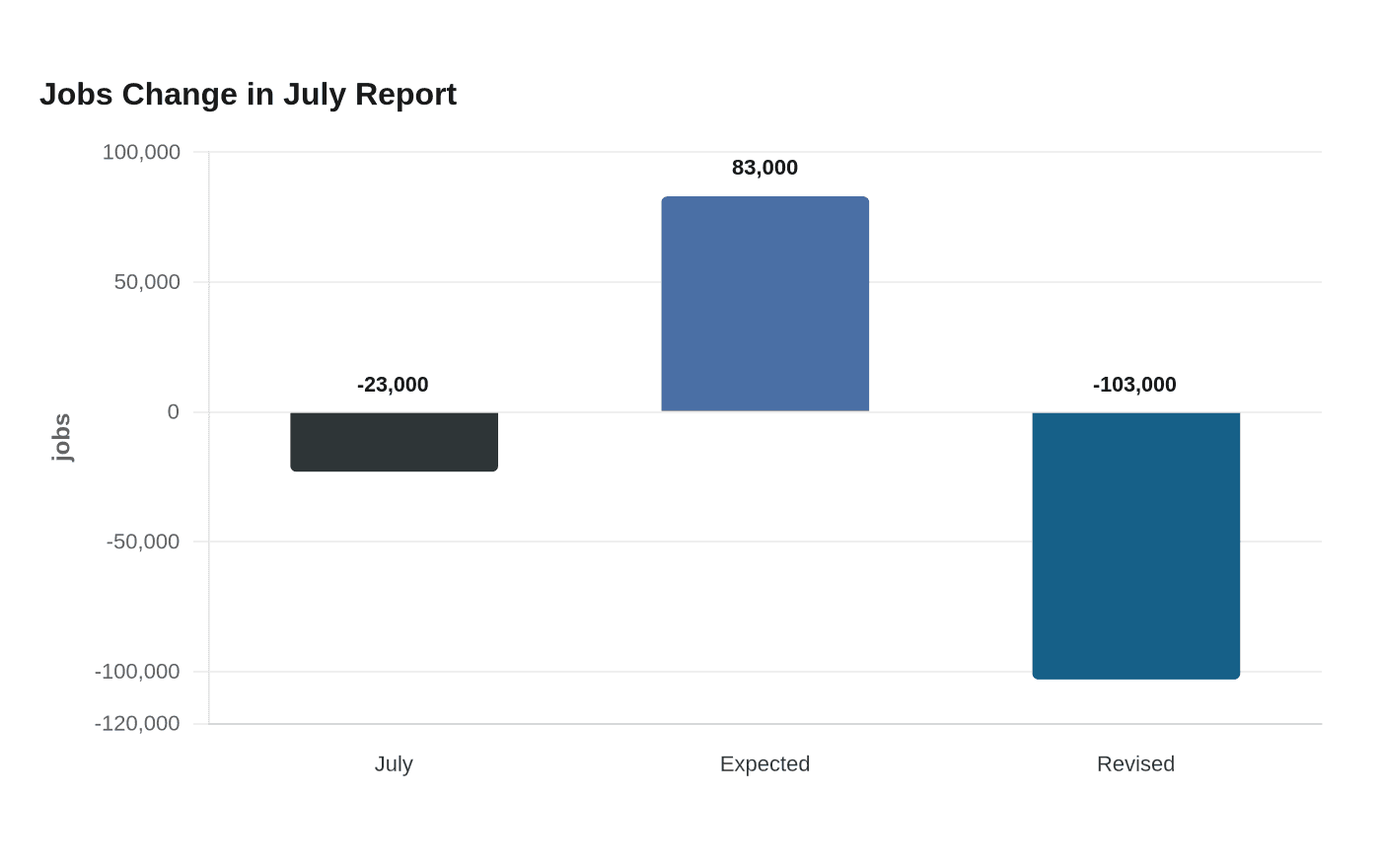
U.S. employers cut 23,000 jobs in July while the average 30-year mortgage rate climbed to 6.58%, a one-two punch that left job seekers and first-time buyers facing a tighter economy at the same time. The Labor Department’s payroll count was a sharp disappointment after economists had expected gains of about 83,000 jobs.
The report became more troubling after the government revised May and June payrolls down by a combined 103,000 jobs. The unemployment rate slipped to 4.1% from 4.2% in June, but that improvement came largely because 264,000 people left the labor force. The labor-force participation rate fell to 61.4%, the lowest in about 5-1/2 years.
The weakness was not confined to one corner of the economy. Employment was little changed in construction and manufacturing, two sectors that often signal whether businesses are still willing to invest and expand. A negative payroll number can point to hiring freezes, cost-cutting or softer demand, and the July reading landed at a moment when households were already under pressure from expensive borrowing.
Mortgage costs added to that strain. The 30-year rate’s rise to 6.58% pushed borrowing to a near-year high and left buyers with larger monthly payments just as the job market showed signs of cooling. For families trying to buy their first home, the combination makes it harder to qualify for a loan and harder to absorb any setback in income. Existing homeowners also face fewer opportunities to refinance into cheaper debt.
Financial markets moved quickly on the labor data, dialing back expectations for more rate increases from the Federal Reserve. Slower hiring can ease some inflation pressure, but a sudden payroll drop also raises the risk that the economy is losing momentum faster than policymakers want. That is why a single jobs report can move Treasury yields, mortgage rates and stock prices in the same morning.
The report also carried political consequences for President Donald Trump, adding fresh evidence that labor-market weakness can turn quickly into a broader economic and policy problem. For Washington, Wall Street and ordinary households, the July numbers pointed to the same concern: the cost of money remains high just as the job market turns less forgiving.
This article was produced by Prism’s automated news system from verified source data, official records, and press releases, then run through automated quality and moderation checks before publishing. The system is built and supervised by the people who set the standards it runs under. Read our full AI policy.
Did this article answer your question?