U.S. faces shifting but persistent threat from domestic violent extremism
The violence has changed shape, not vanished. Fewer people were killed in 2024, but threats to elections, officials, and democratic institutions remain deeply embedded.
How the threat is defined
The federal government’s definition matters because it draws a bright line between protected speech and violence. The Department of Homeland Security and the FBI use the term domestic violent extremism for threats that involve violence, not mere advocacy, rhetoric, or constitutionally protected activism. That distinction is more than semantic: it determines how officials collect intelligence, warn the public, and decide where law enforcement attention should go.
The FBI, the National Counterterrorism Center, and DHS reinforced that framework in 2025 with a booklet on violent-extremism mobilization indicators. The point of the guide is practical, not theatrical: it is meant to help law enforcement and the public spot warning signs that someone is moving toward violence. In an era when political anger is often loud but not always criminal, the challenge is to distinguish protected dissent from behaviors that signal preparation for attack.
The data point to a shifting threat, not an
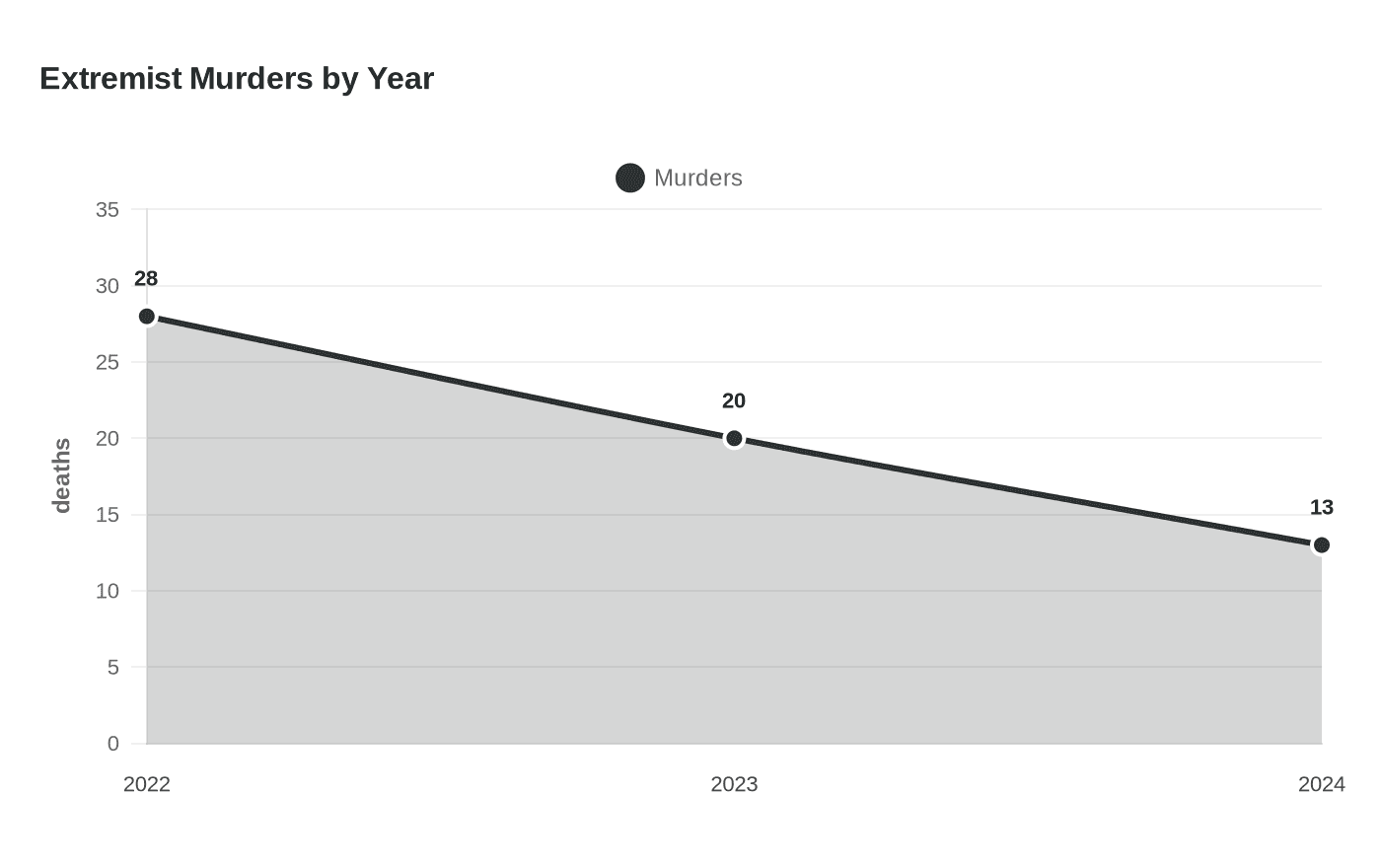
The latest body counts show a decline, but not a disappearance. The Anti-Defamation League says domestic extremists killed at least 13 people in the United States across 11 separate incidents in 2024, down from 20 in 2023 and 28 in 2022. That is a meaningful drop, yet it still leaves a steady stream of deadly violence tied to extremism.
The 2024 pattern also matters. The ADL says all extremist-related murders that year were committed by right-wing extremists, including eight killings tied to white supremacists and five tied to far-right anti-government extremists. It also says 2024 had no extremist-related mass shooting events, which helped keep the total lower. That combination suggests the threat did not simply shrink; it changed form, with fewer high-casualty attacks but continued lethal violence from motivated actors.
The ADL’s year-to-year trend also warns against complacency. It says the decline in killings over the last three years was driven partly by fewer deadly incidents tied to domestic Islamist extremists and far-left extremists, but that the pattern may not hold. By early 2025, the organization had already documented 15 extremist-related murders, 14 of them tied to the New Orleans New Year’s Day vehicular attack. That single event showed how quickly the statistics can change when one attack kills at scale.
Jan. 6 still anchors the national conversation
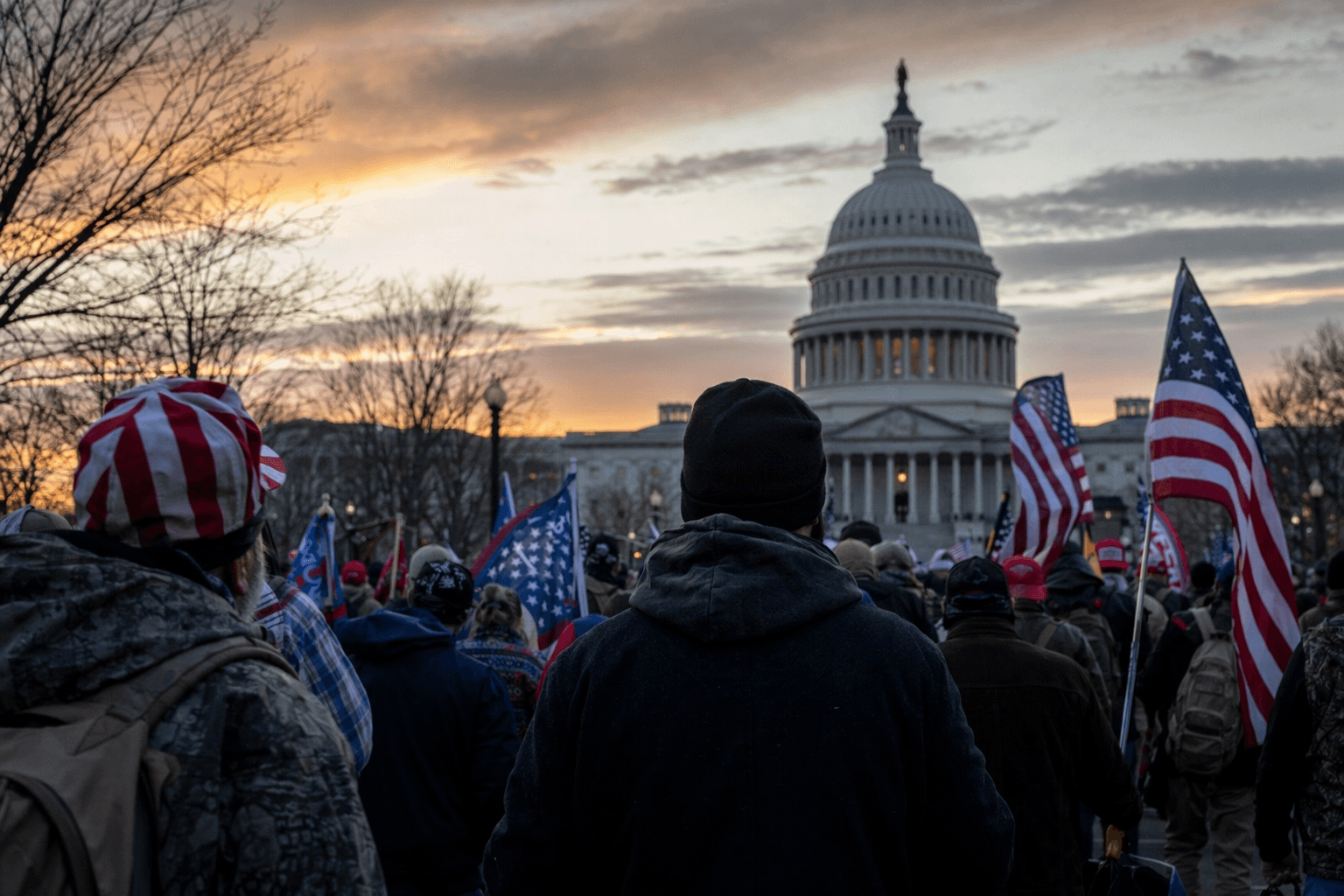
No discussion of political violence in the United States is complete without Jan. 6, 2021. The Associated Press has tracked nearly 1,500 Capitol riot cases brought by the Justice Department, a number that captures both the breadth of the prosecution effort and the scale of the violence that unfolded in Washington, D.C. The riot temporarily halted certification of Joe Biden’s victory and became one of the darkest days in modern American politics.
That benchmark still shapes how experts think about the threat. Jan. 6 was not an isolated outburst in the abstract; it showed how mobilized anger, online organizing, and real-world violence can converge around election outcomes and democratic procedures. The continuing caseload also matters for governance, because prosecutions, sentencing, and appeals keep the event present in the legal system even as the public moves through later crises.
The risk now reaches beyond headline attacks
The most important institutional lesson is that domestic violent extremism is not only about mass casualty events or spectacular plots. It also shows up as intimidation, threats, and pressure on the people who run government and elections. Brennan Center surveys found that more than 40 percent of state legislators and more than 18 percent of local officeholders reported threats or attacks within the past three years.
That same strain has spread into election administration. Brennan Center reported that 92 percent of local election officials had taken steps since 2020 to increase security for voters, election workers, and infrastructure. In March 2025, the organization said it had confirmed at least 227 bomb threats targeting polling places, election offices, and tabulation centers around Election Day 2024 and the days after. Those threats did not just aim at buildings; they targeted confidence in the vote-counting process itself.
This is where public experience and official threat levels can diverge. Agencies may define domestic violent extremism narrowly to keep the focus on violence, but officeholders, election officials, and their staffs live with a wider field of intimidation. A threat does not need to become an attack to alter behavior, harden security, raise costs, and make public service less attractive.
Why officials say domestic terrorism still ranks high
The broader strategic assessment from the Center for Strategic and International Studies is blunt: in 2025, domestic terrorism represents a greater threat to the United States than international terrorist organizations. CSIS says most domestic terrorist attacks are carried out by lone actors or small groups motivated by ideologies that range from white supremacy to partisan extremism and Salafi-jihadism. That matters because it undercuts the old assumption that the main danger comes from a single organized network.
The implication for policy is straightforward. If the threat is increasingly driven by lone actors and small cells, then prevention depends less on watching for one centralized command structure and more on identifying mobilization indicators, online radicalization, and offline steps toward violence. That is why intelligence sharing, local reporting, and trained election security protocols matter as much as traditional counterterrorism tools.
What the public should take from the numbers
The best reading of the current evidence is not that the country has entered a completely new era of violence, but that domestic violent extremism remains persistent, adaptive, and deeply corrosive to democratic life. Killing totals fell in 2024, yet the targets widened to include election infrastructure and officeholders, and the legal legacy of Jan. 6 still hangs over the system. The attack patterns may shift, but the underlying threat remains a live test of whether institutions can protect participation without blurring the line between security and political speech.
That is the core challenge for policymakers: measure violence accurately, protect constitutional activity, and respond early enough to keep threats from becoming bloodshed. The data do not support panic; they do support sustained vigilance.
This article was produced by Prism’s automated news system from verified source data, official records, and press releases, then run through automated quality and moderation checks before publishing. The system is built and supervised by the people who set the standards it runs under. Read our full AI policy.
Did this article answer your question?