U.S. firms eye Congo mining assets, including rebel-held Rubaya area
U.S. firms are probing Congo’s mineral assets, even as rebel-held Rubaya still funds M23 and sits inside a fragile peace process.
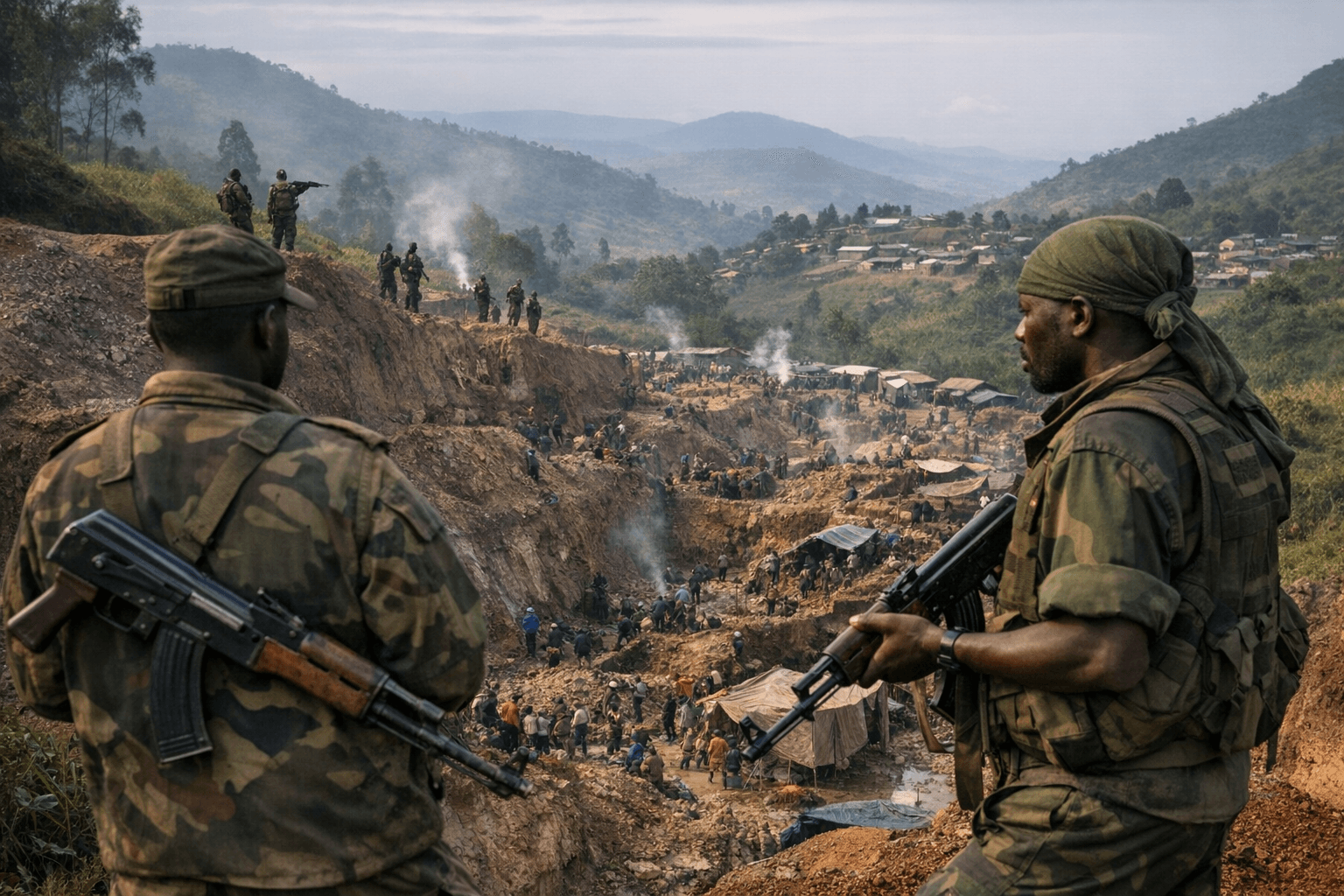
American companies are weighing a push into some of Congo’s most valuable mining assets, including the coltan-rich Rubaya area in North Kivu, even as the site remains under rebel control and tied to a war economy that helps finance AFC/M23. A State Department official said U.S. investors were reviewing a shortlist of strategic assets Congo sent to Washington earlier this year, and the administration was now seeking private-sector feedback.
The effort is anchored in the U.S.-DRC Strategic Partnership Agreement signed on December 4, 2025, which linked minerals cooperation to peace, stability, transparency and U.S. supply-chain security. In a February 5 joint statement, the U.S.-DRC Joint Steering Committee said Congo had designated its initial Strategic Asset Reserve assets and that U.S. companies would receive preferential access. The same statement said the partnership could not be dissociated from peace, security, territorial integrity and stability in eastern DRC.
Rubaya exposes the tension at the center of that strategy. The United Nations said in September 2024 that trade from the area was estimated to supply more than 15 percent of global tantalum production and was generating about $300,000 a month for M23. M23 seized Rubaya in April 2024, then tightened control over production and trade, making any commercial deal there inseparable from the conflict that has killed thousands and displaced many more in eastern Congo.
The shortlist under review reportedly includes manganese, copper-cobalt, gold and lithium projects, all part of a wider U.S. effort to build more secure access to critical minerals and reduce dependence on China. Those minerals are central to electric vehicles, aerospace systems, electronics and defense manufacturing, which has made Congo’s deposits strategically important well beyond Central Africa.
Washington has tried to pair investment talks with diplomacy. Congo and Rwanda signed a U.S.-brokered peace agreement in Washington on June 27, 2025, and the State Department said on March 18 that the U.S., Congo and Rwanda were advancing the Washington Accords. U.S. officials have also said the Sakania-Lobito Corridor is part of the broader discussion on regional trade and infrastructure connectivity.
For Kinshasa, deeper U.S. investment could bring capital, diplomatic support and a foothold in global supply chains. But in the east, where armed groups still shape access to land, labor and transport routes, any promise of supply-chain security will depend on whether commercial ambition can be separated from the violence that still governs Rubaya.
This article was produced by Prism’s automated news system from verified source data, official records, and press releases, then run through automated quality and moderation checks before publishing. The system is built and supervised by the people who set the standards it runs under. Read our full AI policy.
Did this article answer your question?


