U.S. forces fire on and seize Iranian cargo ship amid Hormuz standoff
U.S. forces disabled and seized the Iranian-flagged Touska near Hormuz, raising the risk that a blockade turns into a wider clash over shipping.
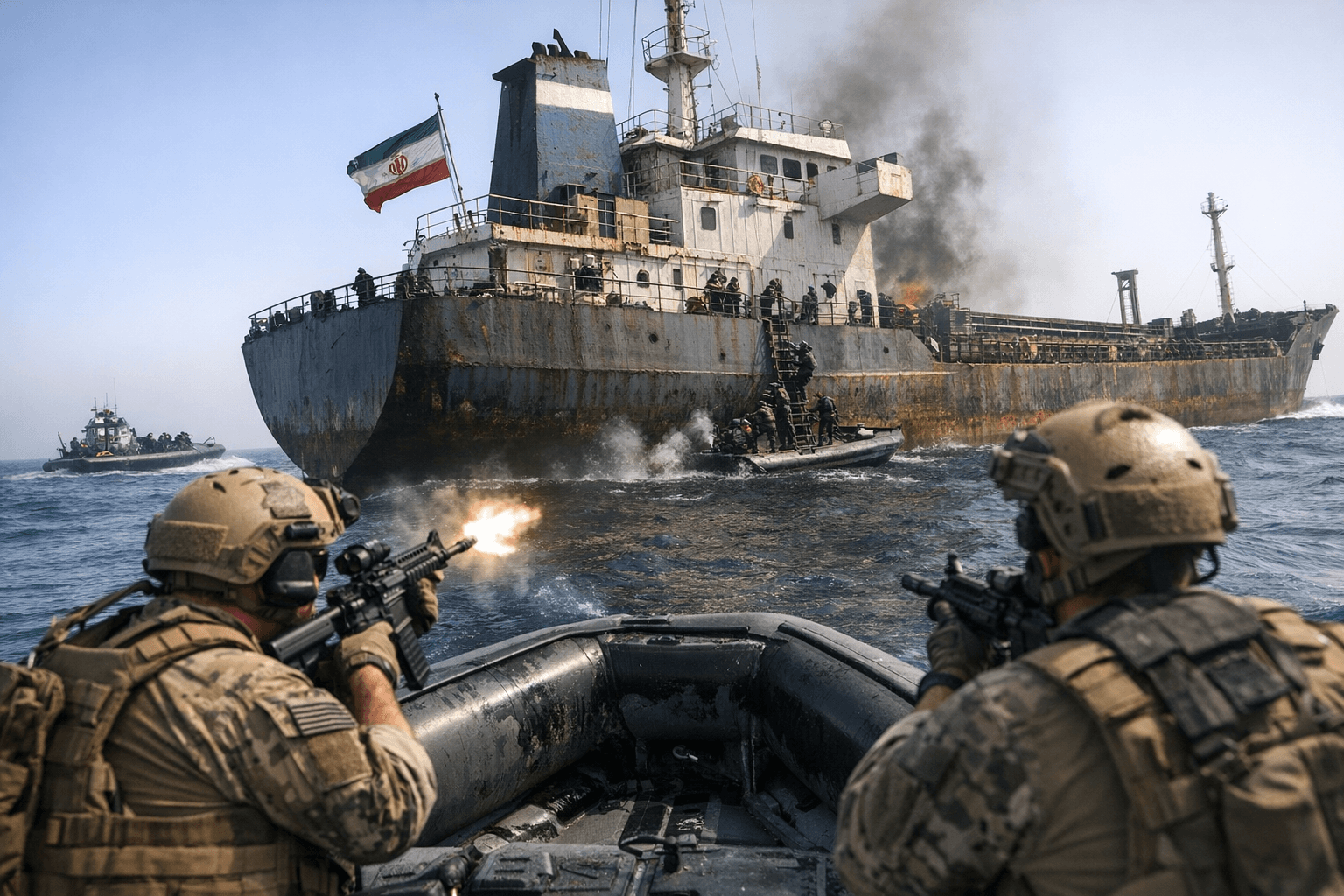
U.S. forces fired into the engine room of the Iranian-flagged cargo ship M/V Touska and seized it near the Strait of Hormuz, a move that sharply raised the military and diplomatic stakes in one of the world’s most dangerous waterways. President Donald Trump said the USS Spruance fired several rounds before Marines boarded the vessel, turning a blockade that had relied on warnings and pressure into a direct armed interception.
U.S. Central Command said the ship was stopped in the north Arabian Sea and Gulf of Oman while heading toward Bandar Abbas, Iran, after its crew ignored repeated warnings over a six-hour period. Officials said the operation was part of an ongoing U.S. naval blockade of Iranian ports and marked the first time U.S. forces had fired on or seized an Iranian-linked ship since that campaign began. The Touska was also described as being under U.S. Treasury sanctions because of prior illegal activity.
The seizure lands in a corridor that carries enormous economic weight. The U.S. Energy Information Administration says about 20 million barrels of oil a day, roughly a quarter of global seaborne oil trade, move through the Strait of Hormuz. Roughly 20% of global LNG trade also transits the strait, according to U.S. energy data, and the International Energy Agency and U.N. Conference on Trade and Development have both described it as a critical chokepoint for oil and gas flows. Any disruption there can jolt shipping schedules, insurance costs and energy markets far beyond the Persian Gulf.
Tehran has already shown it is willing to push back at sea. Iran previously fired on commercial vessels trying to transit the strait, then declared the waterway closed again, blaming the U.S. blockade for the escalation. After the Touska seizure, Iran condemned the move as a violation of the ceasefire and vowed retaliation. It also said it would not send negotiators to planned talks in Islamabad, adding another layer of uncertainty to an already fragile diplomatic track.
The two sides now face narrow but consequential choices. Washington can keep tightening the blockade and intercepting vessels, but that risks inviting a broader confrontation in the Gulf. Tehran can answer with more maritime harassment, a diplomatic rupture, or a calibrated strike meant to show resolve without triggering a larger war. Vessel-tracking reports already showed some ships turning around after the latest flare-up, a sign that even a single seizure can ripple through commercial traffic and test whether this remains an isolated interdiction or a threshold moment in the U.S.-Iran confrontation.
Know something we missed? Have a correction or additional information?
Submit a Tip