US Forces Rescue Downed Airman from Hostile Iranian Territory in Complex Operation
A US Air Force colonel hid for 36 hours in an Iranian mountain crevice, armed only with a handgun, before a CIA-backed rescue mission brought him home alive.
A colonel from the US Air Force survived more than 36 hours hiding in a crevice along a 7,000-foot mountain ridgeline in southwestern Iran, armed with nothing but a handgun, before US special operations forces extracted him in one of the most complex rescue missions in American military history.
The weapons systems officer was the second crew member aboard an F-15E Strike Eagle belonging to the 48th Fighter Wing, the "Liberty Wing," normally based at RAF Lakenheath approximately 80 miles north-east of London, when Iranian forces shot the aircraft down on April 3, 2026. It was the first US military aircraft downed by Iranian fire since the United States and Israel launched surprise airstrikes on Iran on February 28, beginning a war that assassinated Supreme Leader Ali Khamenei and set off a global energy crisis that has largely shuttered the Strait of Hormuz, a conduit for roughly a fifth of the world's oil and gas supply.
The pilot from the stricken jet was rescued in a separate daylight operation shortly after the April 3 shootdown, but Iranian forces fired on the rescue aircraft, striking an A-10 Thunderbolt II and at least one helicopter. The A-10 pilot flew his damaged plane out of Iranian airspace before ejecting safely. The White House deliberately withheld public confirmation of that first rescue to avoid alerting Iran that a second crew member remained unaccounted for.
While the colonel evaded capture in the Zagros Mountains, Iran's Islamic Revolutionary Guard Corps and affiliated Basij militia units combed the terrain. Iranian state media broadcast appeals to civilians to join the search, Tehran placed a $60,000 bounty on the airman's head, and local Bakhtiari nomadic tribesmen with deep knowledge of the mountain landscape added to the closing pressure.
The CIA turned that search against Iran. Operatives spread disinformation inside the country claiming both crew members had already been found and were being exfiltrated, buying time as CIA intelligence assets pinpointed the colonel's exact location in the mountain crevice. The agency shared that precise fix in real-time with the Pentagon, the US military, and the White House.
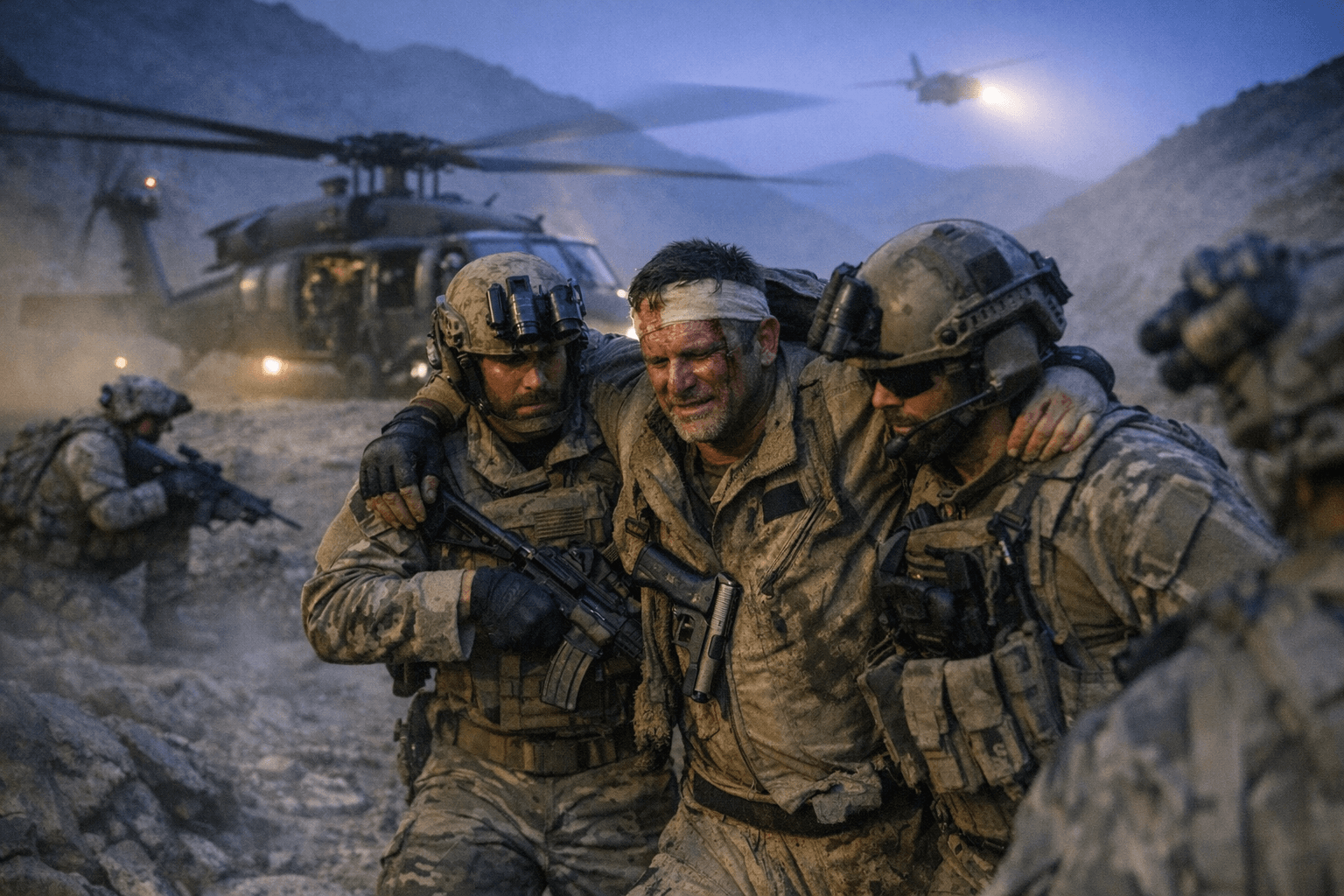
President Trump, monitoring the operation from the White House Situation Room alongside Joint Chiefs Chairman Gen. Dan Caine and Defense Secretary Pete Hegseth, personally ordered an immediate rescue mission. What followed involved hundreds of special operations troops, dozens of US warplanes and helicopters, and a temporary forward staging base established at an abandoned airport in southern Isfahan, deep inside Iranian territory. As US commandos closed in on the colonel's position, attack aircraft dropped bombs on approaching Iranian convoys. Two UH-60 Black Hawk helicopters sustained multiple hits from ground fire before exiting Iranian airspace.
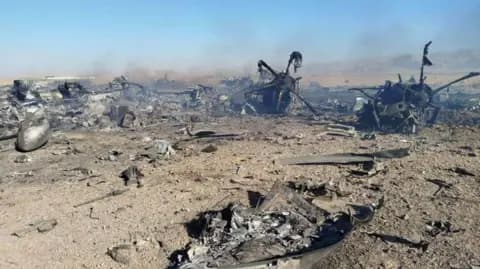
The mission's material losses were significant. Two MC-130J Hercules transport planes became stuck at the forward base and could not take off; US forces deliberately destroyed them to prevent capture, and Iran's Revolutionary Guards released images of the burning aircraft. Two small special operations helicopters were also destroyed on the ground. Three replacement aircraft ultimately flew the rescue teams out to Kuwait in close succession.
The colonel was extracted in the early hours of April 5, wounded but alive, and evacuated to Kuwait for medical treatment. He is expected to make a full recovery. Trump confirmed no Americans died in either rescue operation, posting "WE GOT HIM!" on Truth Social and calling the mission "one of the most daring Search and Rescue Operations in U.S. History." He described it to NBC News as "an Easter miracle," adding, "The Iranians thought they had him, but it wasn't even close."
Military analysts noted the operation is reportedly the first known instance in modern military history of two aircrew from the same downed aircraft being recovered separately, deep inside enemy territory. Israel confirmed it contributed intelligence assistance throughout. With diplomatic talks stalled and Oman attempting last-ditch negotiations over the Strait of Hormuz, the completed rescue stands as one of the few unambiguous American victories in a war now entering its sixth week.
Sources:
Know something we missed? Have a correction or additional information?
Submit a Tip