U.S. gas prices fall below $4 as July 4 travel sets record
Gas slipped to $3.99 a gallon as a record 72.2 million Americans prepared to travel for July 4, but tight supplies could still lift prices again.
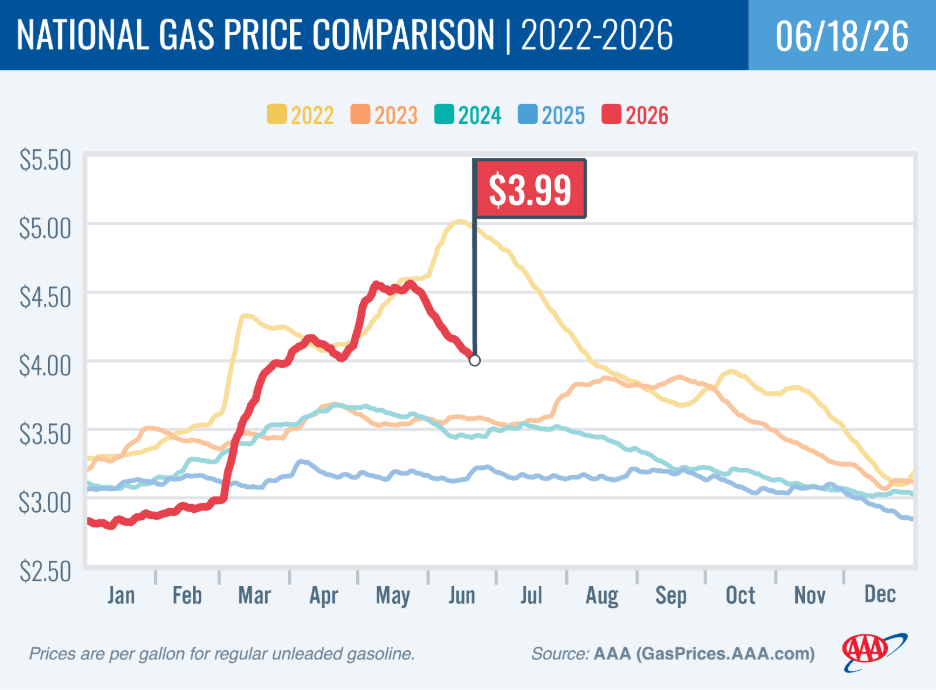
The question for motorists is simple: what would need to happen for cheaper gas to last through the summer? For now, the answer starts with crude oil staying soft and refineries avoiding fresh disruptions, because gasoline has fallen to its lowest national average since late March just as holiday travel is set to hit a record.
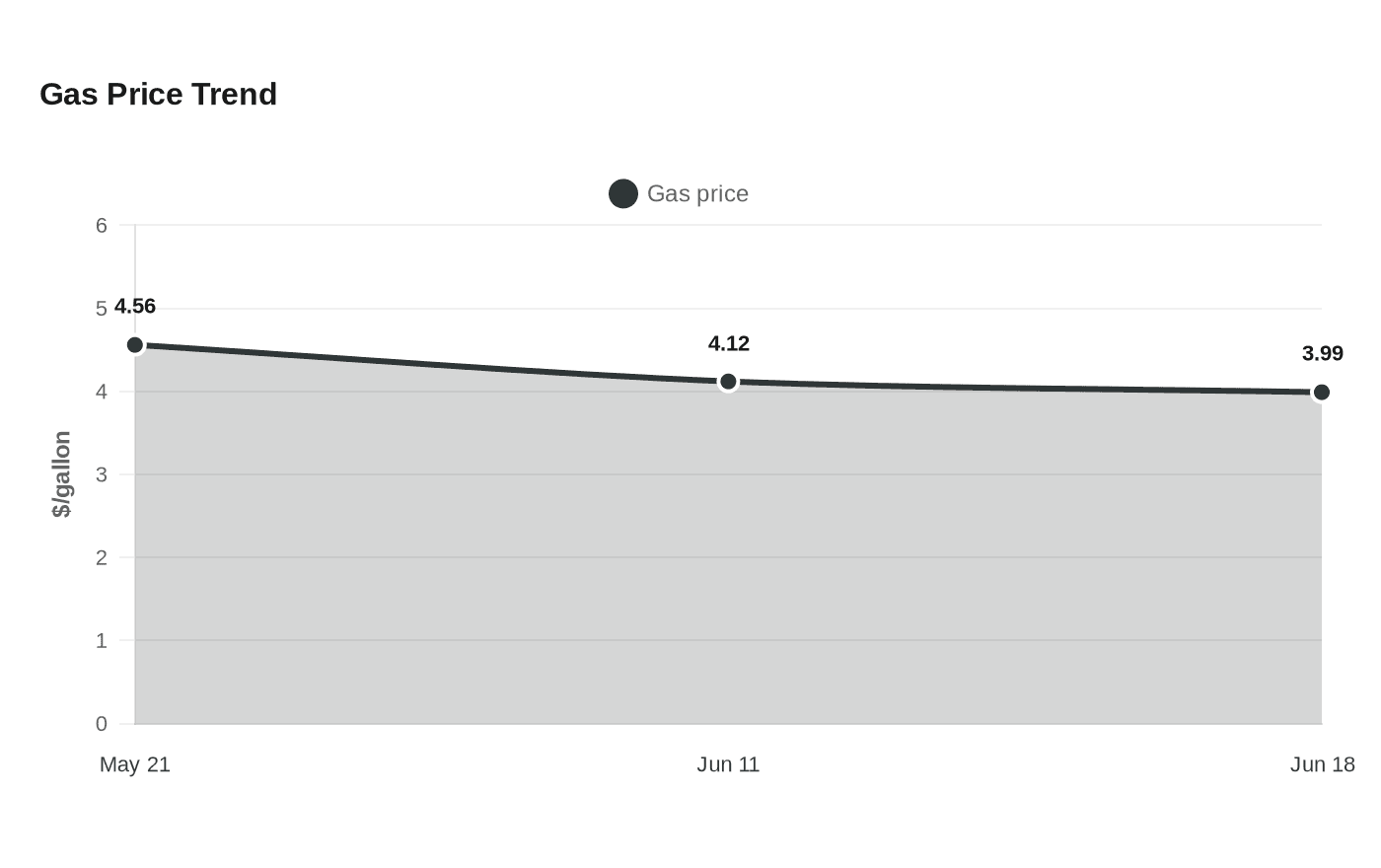
AAA said the national average for regular gasoline dropped to $3.99 a gallon on June 18, the first time below $4 since March 30. That marked nearly four straight weeks of declines, extending a slide that had already taken prices from $4.56 on May 21 to $4.12 by June 11, after an 18-cent weekly drop reported on June 4. Even with the recent pullback, prices remain far above the pre-2022 norm and well below the mid-2022 peak of about $5 a gallon.
The biggest reason for the decline has been crude oil. AAA tied the latest drop to lower oil prices after the United States and Iran reached a deal to reopen the Strait of Hormuz, a critical shipping lane for global energy flows. But the relief may be fragile. The U.S. Energy Information Administration said retail gasoline prices were expected to fall 6% in 2026 before rising 1% in 2027, while warning that lower crude costs could be partly offset by reduced refinery capacity, especially on the West Coast and in California.

That refinery constraint matters because gasoline demand is heading into its strongest stretch of the year. AAA projected 72.2 million Americans would travel at least 50 miles from home for Independence Day between June 27 and July 5, surpassing last year’s record of 71.8 million travelers. The EIA said crude oil has accounted for slightly more than half of retail gasoline prices on average over the past decade, but it expects crude’s share to fall below 45% in 2026 and 2027 as refining, transportation and distribution costs take up more of the total.
The supply picture is still tight enough to keep the market vulnerable to spikes. U.S. gasoline inventories fell to 215.1 million barrels in early June, the lowest seasonal level in a decade, and were down more than 34 million barrels since the Iran war began. Analysts also warned that summer demand could reach 9.5 million barrels a day, above current fuel-maker capacity of about 9.2 million barrels a day. Add in export demand, refinery outages or a major storm, and the recent drop could reverse quickly.
For now, cheaper gas has a path to last through the next 30 to 60 days if crude stays contained, refineries keep running and the Atlantic hurricane season stays quiet. If any one of those variables turns, motorists could be back above $4 before the summer travel surge is over.
This article was produced by Prism’s automated news system from verified source data, official records, and press releases, then run through automated quality and moderation checks before publishing. The system is built and supervised by the people who set the standards it runs under. Read our full AI policy.
Know something we missed? Have a correction or additional information?
Submit a Tip