U.S. Hiring Cools Sharply as Revisions Trim Prior Job Gains
The Labor Department’s December employment release on Jan. 9 showed payrolls rising just 64,000 and unemployment climbing to 4.6 percent, with deep downward revisions that erased tens of thousands of previously reported jobs. The figures underscore a broader cooling trend across hiring, openings and wages that complicates the Federal Reserve’s policy calculus and could slow growth in 2026.
The U.S. labor market showed clearer signs of softening in December as the Labor Department’s employment report revealed payroll gains well below expectations and sizable backward revisions to earlier months. Payrolls rose by 64,000 in December, while the unemployment rate ticked up to 4.6 percent, the highest level in roughly four years. Revisions to October and November sliced previously reported job gains, including a net loss of 105,000 jobs in October after adjustments, producing the third month of job declines in the last six.
The downward revisions follow a run of weaker monthly readings through 2025 and a delayed data calendar that was affected by a six-week government shutdown. Earlier in the year, an August publication showed nonfarm payrolls climbed by only 22,000 against consensus expectations near 75,000 and private payrolls were up 38,000. Revisions trimmed about 21,000 jobs from prior estimates and pushed June into negative territory at roughly minus 13,000, marking the first outright monthly payroll contraction since December 2020.
The pattern is not uniform across the economy. Growth has been concentrated in acyclical sectors, with healthcare and social assistance accounting for much of the headline gains, while cyclical areas such as manufacturing, construction and trucking have weakened. Over recent three-month stretches, cyclical sectors shed about 14,000 jobs per month on average; construction alone fell by roughly 7,000 jobs in August. Those sectoral divergences suggest a labor market that is patchwork rather than broadly overheated.
Other labor indicators reinforce the picture of cooling demand. The Labor Department’s Job Openings and Labor Turnover Survey for November showed declines in openings and hiring, and measures of quits and hires have fallen, consistent with slowing turnover. Private payroll estimates from ADP signaled a partial rebound in December, a contrast to the BLS numbers, and online job postings data have recently ticked higher even as longer-term posting trends remain subdued.
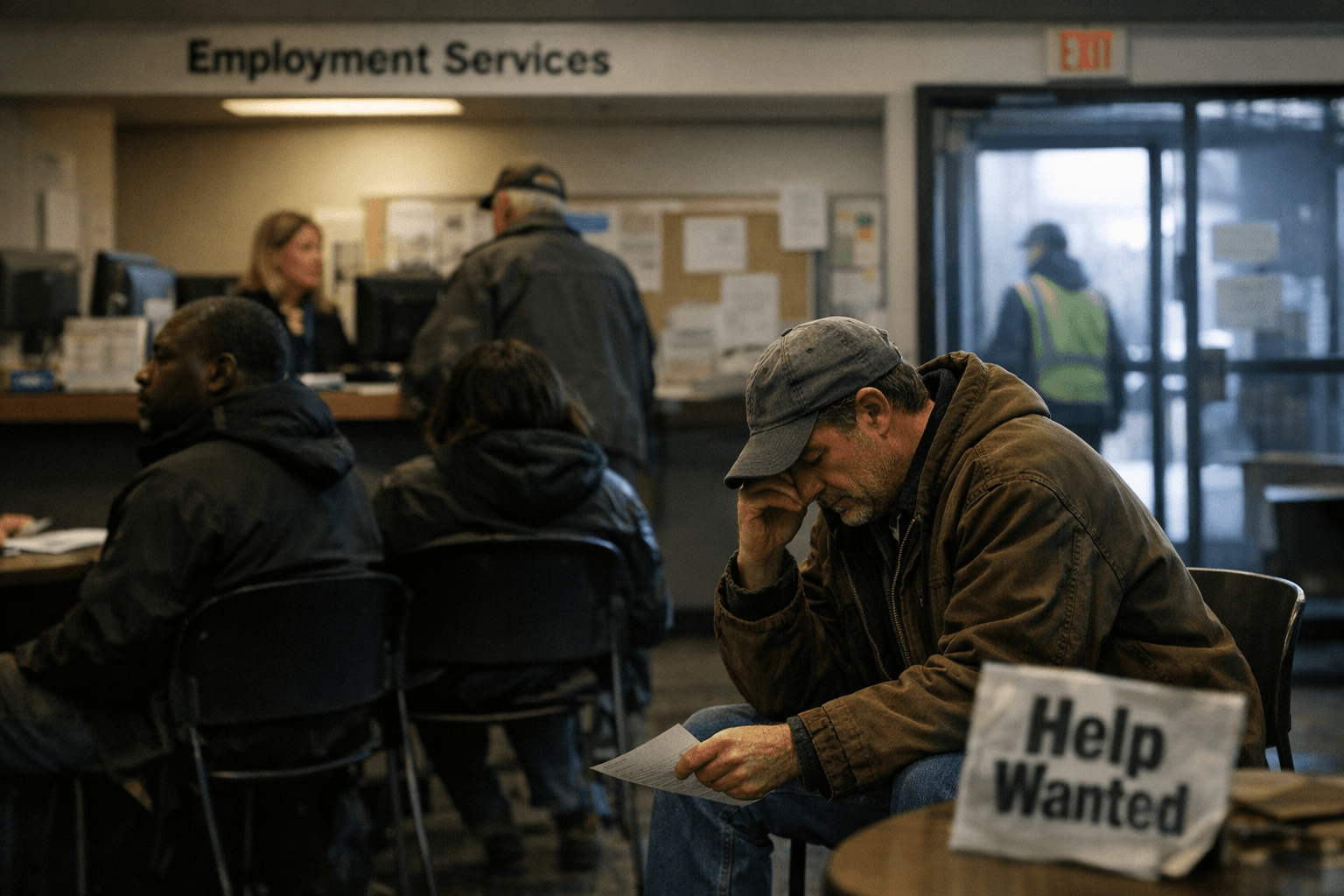
Analysts point to a mix of demand and supply forces. Some firms cite tighter immigration and weaker labor-force growth as factors that have masked the underlying weakness in hiring, helping to keep unemployment from rising even as job creation falters. Wage growth has moderated, and several observers characterize the market as moving toward a low-hire, low-fire equilibrium where firms retain staff but avoid new hiring.
Market and policy implications are immediate. The softer-than-expected payrolls and the breadth of downward revisions reduce near-term pressure on the Federal Reserve to tighten further, though the central bank will weigh whether the softness reflects slower demand or structural supply constraints. Some strategists forecast private payrolls stabilizing around 50,000 per month through much of 2026, while others warn that persistent weakness could increase recession risk and prompt the Fed to shift its forward guidance.
Investors and policymakers will be watching upcoming monthly BLS releases, further JOLTS data, weekly unemployment claims and regional Beige Book reports for confirmation of whether December marks a turning point or another step in a drawn-out cooling.
This article was produced by Prism’s automated news system from verified source data, official records, and press releases, then run through automated quality and moderation checks before publishing. The system is built and supervised by the people who set the standards it runs under. Read our full AI policy.
Did this article answer your question?

