U.S., Iran Clash at U.N. Over Conditions for Restarting Nuclear Talks
At a United Nations meeting on December 23, United States and Iranian representatives publicly clashed over whether a revived nuclear agreement must bar Iranian uranium enrichment, a core disagreement that blocks any immediate return to the negotiating table. The dispute matters for global markets and regional security because it sustains the risk of renewed sanctions, higher energy price volatility, and a prolonged arms competition across the Middle East.
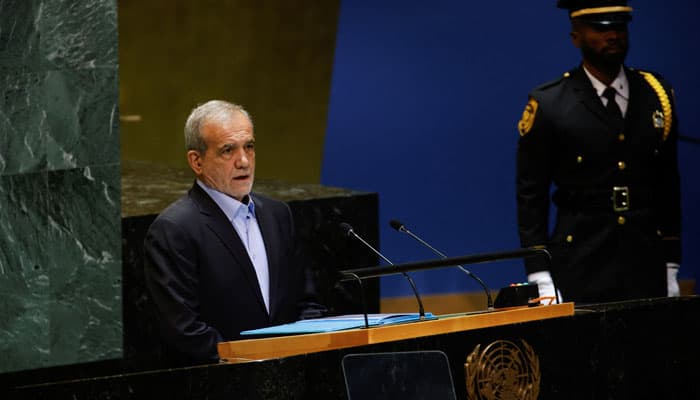
U.S. officials at a United Nations meeting on December 23 reiterated that any revival of nuclear negotiations must include a prohibition on Iranian uranium enrichment, a demand Tehran rejected in blunt terms during the public exchanges. The confrontation underscored a widening diplomatic impasse that has hardened since strikes on Iranian nuclear and missile infrastructure in June 2025 and the reinstatement of U.N. related sanctions in late September 2025.
Iranian leaders framed the U.N. clash as one more episode in a campaign of coercion by Washington and its partners. President Masoud Pezeshkian told a gathering of political elites in Tehran that Iran rejects what he called "humiliating conditions" proposed by the United States for resuming talks. He warned against "coercion, bullying, or any process that undermines Iran's military capacities in the face of Israel," and said Iran seeks peace but "will not accept humiliating impositions." He added that the United States "disrupted the deal by resorting to war" and that Iran "will not submit to humiliation nor accept a weak and fragmented country."
A senior adviser to Iran's supreme leader reiterated that Tehran will resume negotiations only if they are conducted with respect and if Washington accepts the "original terms" Iran held before the June strikes. Hossein Kharrazi, speaking for other senior officials, set clearer red lines, saying uranium enrichment will continue to supply fuel for power plants and medical isotopes and that the ballistic missile program is off the table. "It is only the nuclear issue we will discuss with the United States," he said. Former nuclear agency chief Ali Akbar Salehi offered a possible face saving formulation, suggesting talks could be reframed around the mutual objective "Iran should not have nuclear weapons" as a way to reopen technical discussions.
The technical terrain is complex. Satellite imagery taken in December shows that Iran has deployed panels over a destroyed enrichment hall at Natanz, providing cover for the damaged site while operations elsewhere expand. International Atomic Energy Agency engagement has been intermittent. IAEA Director General Rafael Grossi met with Iranian officials on September 9, 2025 to reestablish inspection modalities, but Tehran provided only limited access, slowing the confidence building steps that negotiators had hoped would precede full talks.

The diplomatic deadlock has concrete market implications. The late September reinstatement of U.N. related sanctions removed a major element of the 2015 deal that had normalized Iranian trade flows, and the renewed uncertainty raises a persistent risk premium for oil markets and investors with exposure to the region. Energy traders, sovereign risk analysts, and defense markets will be watching whether Washington and Tehran can bridge the fundamental gap over enrichment capability, a gap that so far is political as much as technical.
For now the positions remain sharply at odds in public forums. Policymakers face a strategic choice between pressing Tehran to accept a renunciation of enrichment or shifting negotiation framing to salvage inspections and limits on weaponization. How that choice is resolved will influence regional security dynamics, sanctions regimes, and long term energy market stability.
This article was produced by Prism’s automated news system from verified source data, official records, and press releases, then run through automated quality and moderation checks before publishing. The system is built and supervised by the people who set the standards it runs under. Read our full AI policy.
Did this article answer your question?