U.S.-Iran talks in Islamabad end after 21 hours without deal
A 21-hour marathon in Islamabad ended with no deal, leaving Washington weighing sanctions, force and diplomacy as the Strait of Hormuz stays contested.
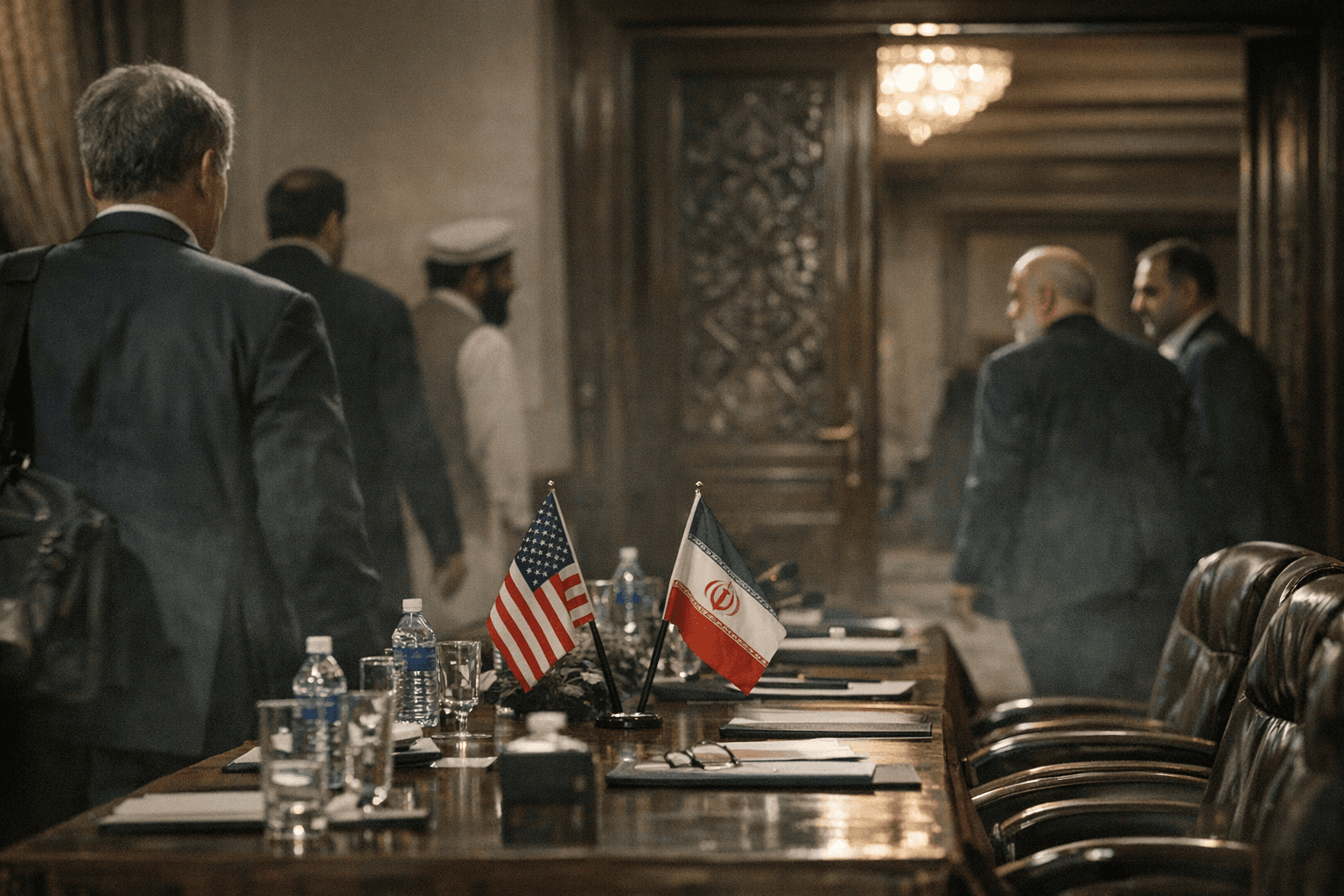
A 21-hour marathon in Islamabad ended with no deal, leaving Washington with a narrowing set of choices and a fragile ceasefire hanging over one of the world’s most volatile flashpoints.
Vice President J.D. Vance led the U.S. delegation, joined by Special Envoy Steve Witkoff and adviser Jared Kushner, while Iran sent Parliament Speaker Mohammad Bagher Ghalibaf and Foreign Minister Abbas Araghchi. The talks, held with Pakistani mediation after a two-week ceasefire announced on April 7, were the highest-level direct U.S.-Iran encounter in decades, but they broke down over the same issue that has shadowed earlier rounds in Muscat, Rome and Geneva: whether Tehran would give a long-term commitment not to seek or develop a nuclear weapon.
Vance said the United States needed an affirmative guarantee that Iran would not pursue a bomb, and that the delegations had stayed in contact with President Donald Trump throughout the talks. He said bluntly, “The bad news is that we have not reached an agreement.” Trump tried to project confidence even as the talks failed, saying the result “makes no difference” to him and that the United States had already come out ahead.
Iran’s foreign ministry described the talks as intensive and accused Washington of making excessive and unlawful demands. Tehran also signaled that it expected further contact, but officials made clear that no one in either delegation believed a single session could settle the nuclear issue, the ceasefire, sanctions relief and the future of the Strait of Hormuz all at once.
That strait is now the central pressure point. Before the crisis, roughly 150 vessels crossed it each day; during the fighting, traffic fell to a handful, leaving hundreds of ships and thousands of seafarers stranded. The United Nations and the International Maritime Organization have warned about the humanitarian and economic costs, while U.S. warships transited the waterway and American forces began mine-clearing operations even as diplomats were still talking.
With the Islamabad talks stalled, the Trump administration now faces a hard choice. It can intensify military pressure and try to secure the strait by force, a step that raises the odds of direct confrontation with Iran. It can tighten sanctions and financial pressure, which may increase leverage but also deepen the economic pain without producing a deal. Or it can keep negotiating through Pakistan, Oman or other intermediaries, hoping for incremental concessions on nuclear limits and maritime access. Each path carries a cost, but the failure in Islamabad makes the risk of a wider conflict harder to ignore.
Sources:
Know something we missed? Have a correction or additional information?
Submit a Tip