U.S.-Iran talks in Islamabad end without deal, Vance says terms rejected
After 21 hours in Islamabad, J.D. Vance said Iran rejected the U.S. “best and final offer,” leaving nuclear and Strait of Hormuz disputes unresolved.

After 21 hours of negotiations in Islamabad, J.D. Vance said the U.S. and Iran walked away without a deal because Tehran “chose not to accept our terms.” The vice president called Washington’s proposal its “best and final offer,” turning the talks into a test of whether Iran would accept limits that the U.S. believed were necessary to keep it from moving quickly toward a nuclear weapon.
Vance said the core American demand was an affirmative, long-term Iranian commitment not to seek a nuclear weapon and not to pursue the tools that would allow it to obtain one rapidly. He said that condition was not met. The stalemate also exposed a second fault line: control of the Strait of Hormuz, where the U.S. wanted immediate reopening to all maritime traffic, while Iranian officials said reopening would come only after a final peace deal.
That disagreement carries consequences far beyond the negotiating table. The Strait of Hormuz is one of the world’s most sensitive energy chokepoints, and any uncertainty there can quickly ripple through shipping schedules, insurance costs and oil markets. The talks in Islamabad were framed as part of a broader effort to stabilize a fragile ceasefire and reduce the risk that a wider confrontation could disrupt trade through the Gulf.
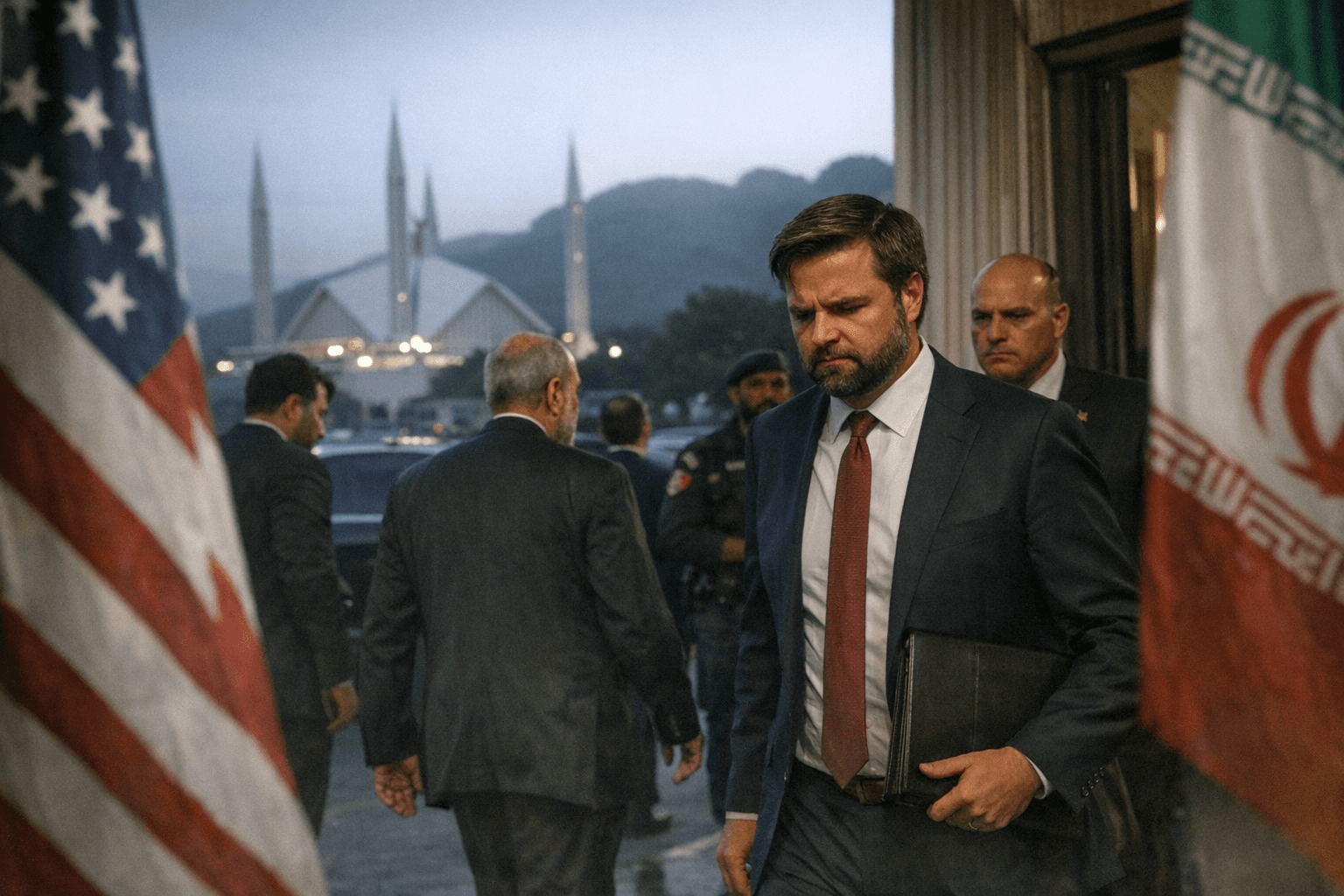
Pakistan was trying to keep that diplomatic channel open. Foreign Minister Ishaq Dar urged both sides to uphold ceasefire commitments after the talks ended without agreement, and Vance thanked Pakistan for hosting the discussions and trying to bridge the gap. Islamabad’s role gave the meeting regional weight, reflecting weeks of diplomacy aimed at preventing escalation rather than producing an immediate breakthrough.
The U.S. delegation left Pakistan without a deal, including senior envoy Steve Witkoff and Jared Kushner alongside Vance. Iran’s side had already signaled publicly that it did not expect a breakthrough from the first session and viewed the process as continuing, not concluded. That leaves both governments with different political needs at home: Washington can argue it pressed for firm nuclear limits and maritime access, while Tehran can present itself as resisting terms it sees as too rigid. For now, the next moves are likely to come through sanctions pressure, military signaling, and backchannel diplomacy, with the Strait of Hormuz remaining the most dangerous pressure point.
Know something we missed? Have a correction or additional information?
Submit a Tip