US-Iran talks in Pakistan end without deal after 21 hours
Iran and the United States left Islamabad empty-handed after 21 hours, with J.D. Vance saying Tehran would not accept Washington’s terms on a nuclear commitment.
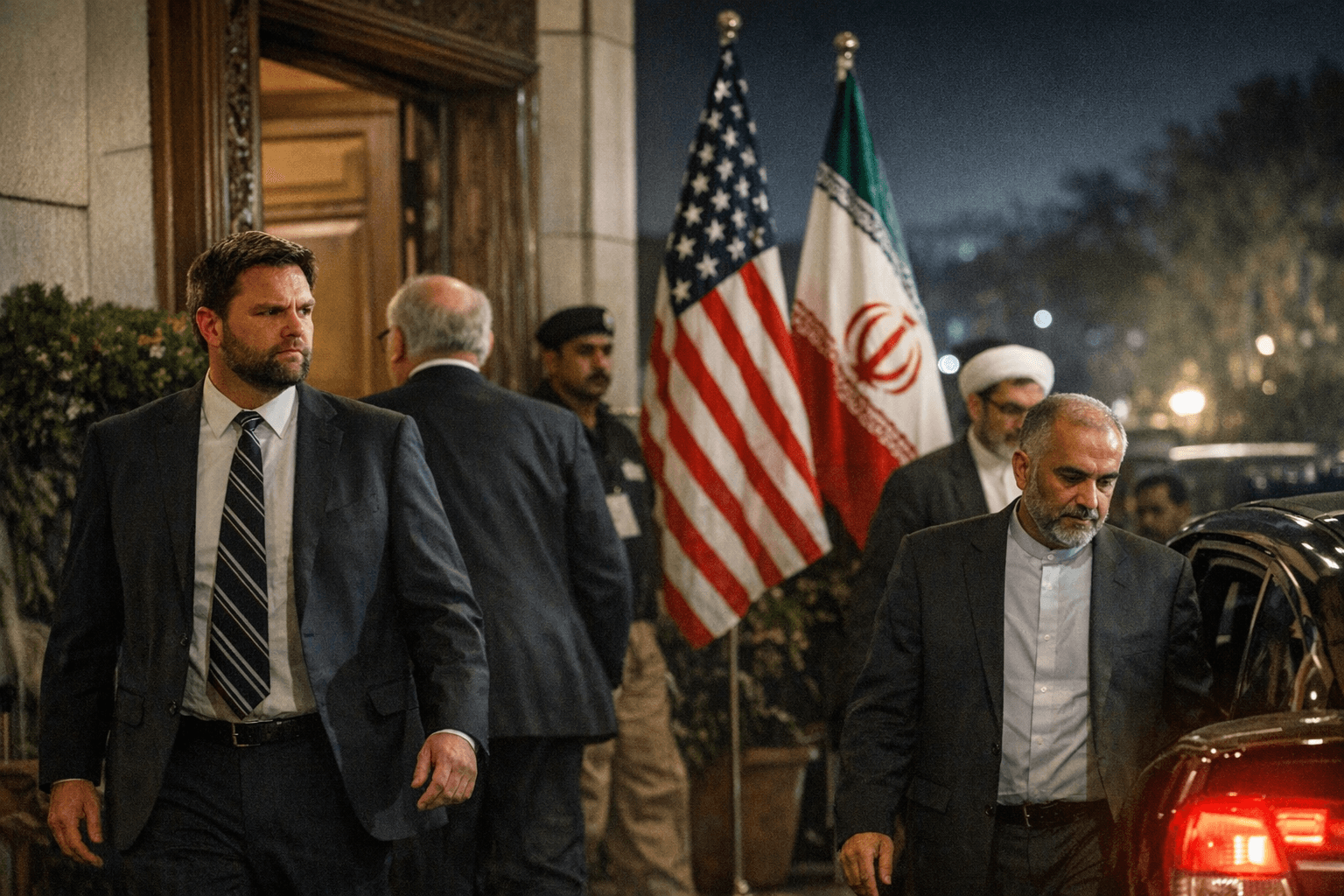
The longest face-to-face push yet between the United States and Iran ended in Islamabad with no deal, no joint announcement and no visible bridge over the core dispute: Tehran’s nuclear path. After about 21 hours of negotiations, Vice President J.D. Vance departed the Pakistani capital on Air Force Two as U.S. officials said Iran would not accept the terms on offer.
The breakdown turned on a single question with broad consequences: whether Iran would commit to not developing a nuclear weapon. Vance said Iran refused that شرط, and American officials framed that refusal as the deal-breaker after talks that had been aimed at preserving a fragile ceasefire and lowering the risk of wider regional escalation. The failure left uncertainty hanging over shipping routes, energy markets and the already-tense Strait of Hormuz.
Iranian officials and state media offered a different account, saying the U.S. side pressed “excessive” or “unreasonable” demands. Even so, Tehran signaled that diplomacy was not closed off, saying it was natural not to finish an agreement in one day and that negotiations could continue. That left both capitals publicly claiming the door remained open, even as the gap between them proved wide enough to collapse the meeting.
The U.S. delegation in Islamabad was led by Vance and included special envoy Steve Witkoff and Jared Kushner. The venue, Serena Hotel in Islamabad, became the unlikely center of a high-stakes diplomatic session under heavy security, with the Pakistani capital heavily locked down and security forces deployed around the city. Pakistan’s role as host gave Islamabad unusual leverage, but it also made the government a public witness to the limits of its mediation.
Foreign Minister Ishaq Dar moved quickly after the talks ended, urging both sides to stay committed to the ceasefire. That appeal underscored Pakistan’s stake in preventing a wider conflict that could spill across borders, rattle trade and deepen pressure on a region already absorbing the costs of war.
For now, the outcome is a pause without breakthrough. The United States wants an Iranian commitment that rules out a nuclear weapon; Iran wants relief from demands it views as excessive and a path that preserves its strategic options. Neither side walked away with that balance, and the talks in Islamabad ended where they began, with the ceasefire intact but the underlying dispute unresolved.
Sources:
Know something we missed? Have a correction or additional information?
Submit a Tip