U.S. job openings dip in March, hiring rises as labor market steadies
Job openings fell to 6.866 million, but hires jumped 655,000, a sign employers were still hiring even as they became pickier.
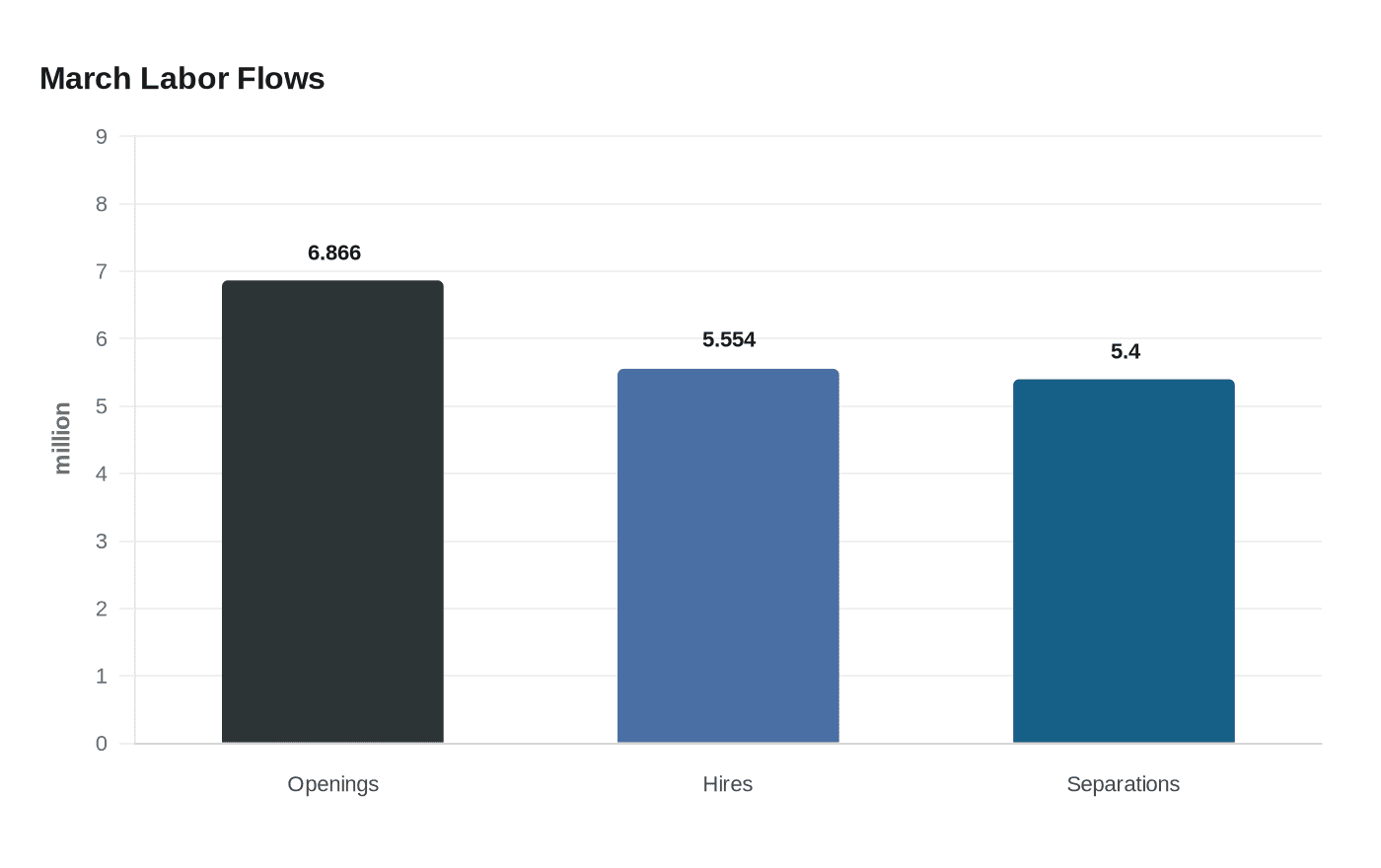
Job openings fell in March even as hiring jumped sharply, a mix that suggested U.S. employers were pulling back on demand without freezing the labor market. The Labor Department said openings declined by 56,000 to 6.866 million, while hires rose by 655,000 to 5.554 million, pushing the hires rate to 3.5% from 3.1%.
For workers, that means fewer posted vacancies than in the post-pandemic boom, but better odds of getting hired once they get in front of an employer. The openings rate slipped to 4.1% from 4.2%, and March openings remained far below the record 12.3 million peak set in March 2022. Even so, the rise in hires showed companies were still filling jobs rather than simply waiting out uncertainty.
The report, released by the U.S. Bureau of Labor Statistics on May 5, 2026 at 10:00 a.m. ET, also said total separations were little changed at 5.4 million, with the separations rate steady at 3.4%. Layoffs and discharges were little changed overall, but other separations increased to 339,000. That points to a labor market that has cooled from its hottest stretch but remains orderly rather than deteriorating.
Sector detail showed that demand was shifting rather than collapsing. Job openings fell in professional and business services by 318,000, but rose in finance and insurance by 98,000. Hires increased in transportation, warehousing and utilities by 108,000, in professional and business services by 165,000, and in accommodation and food services by 124,000. Hires fell in federal government by 7,000.
The JOLTS data fit with March’s broader employment report, which showed payrolls rising by 178,000 and unemployment edging down to 4.3%. Health care, construction, and transportation and warehousing added jobs, while federal government employment continued to decline. Together, the two reports painted a picture of a labor market that had cooled from earlier peaks but was still generating enough jobs to keep unemployment in check.
The steady tone of the data also matters for policy. The Federal Reserve left its benchmark rate unchanged at 3.50% to 3.75% at its March 17-18 meeting, and the firmer hiring numbers could reinforce bets that officials will stay on hold. At the same time, economists are watching new risks from the U.S.-Israeli war with Iran, which has disrupted shipping through the Strait of Hormuz and lifted prices for oil, fertilizer, aluminum and other commodities. Higher input costs could squeeze companies and consumers, making a still-resilient labor market more vulnerable if inflation pressures spread.
This article was produced by Prism’s automated news system from verified source data, official records, and press releases, then run through automated quality and moderation checks before publishing. The system is built and supervised by the people who set the standards it runs under. Read our full AI policy.
Did this article answer your question?

%3Amax_bytes(150000)%3Astrip_icc()%2FCertificate-of-deposit-2301f2164ceb4e91b100cb92aa6f868a.jpg&w=1920&q=75)
