U.S. meets Russia in Geneva, plans talks with China on multilateral arms control
U.S. State Department officials met a Russian delegation in Geneva on Feb. 23 and said they would meet a Chinese delegation on Feb. 24 to pursue a broader P5 arms control framework.
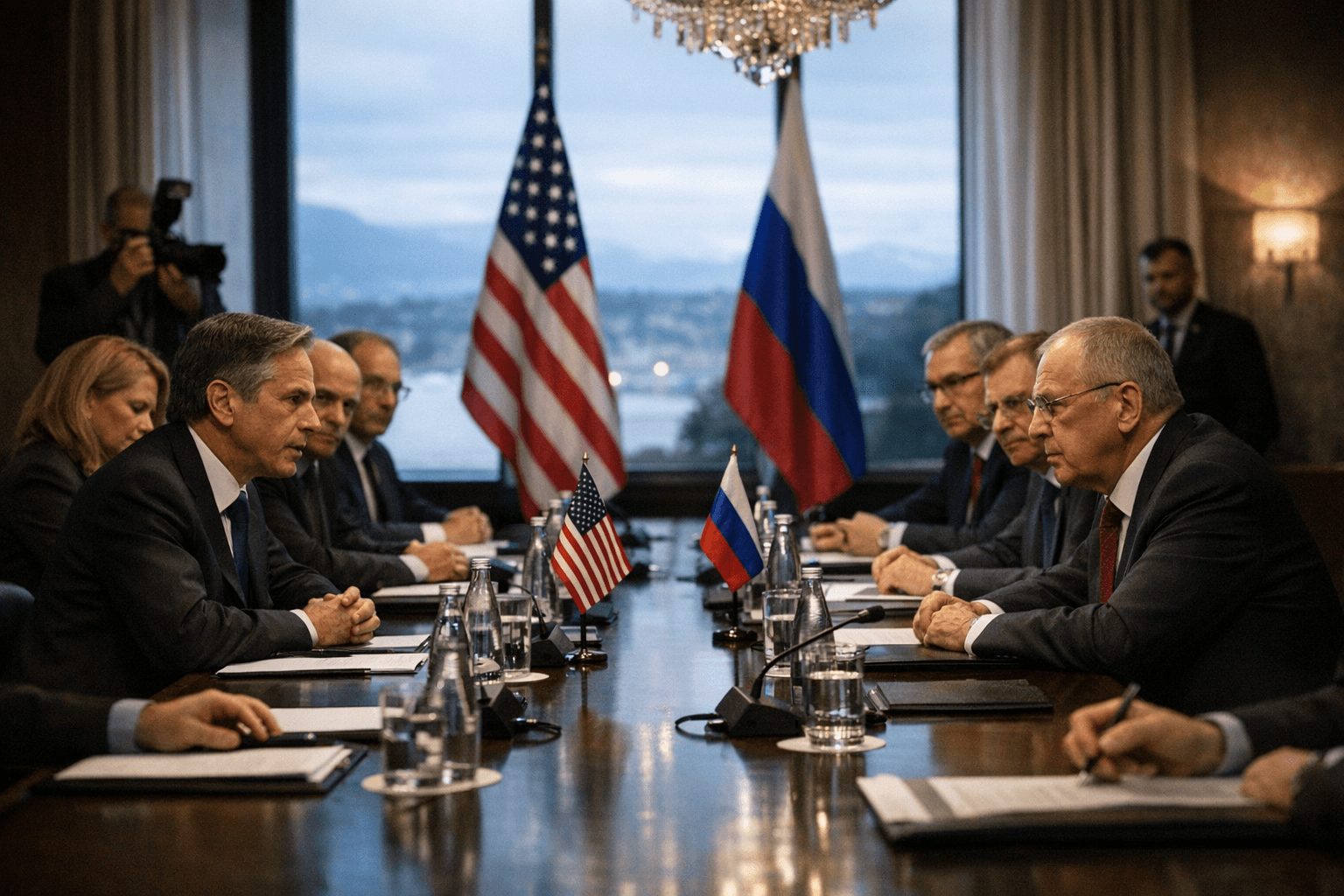
U.S. State Department officials met a Russian delegation in Geneva on Feb. 23, 2026, and said they would meet a Chinese delegation the following day as Washington pushed to expand arms control after the lapse of New START. A senior U.S. State Department official, speaking to reporters in Geneva on condition of anonymity, said: "Today, I met with the Russian delegation. Tomorrow, we'll meet with the Chinese delegation, among others."
The meetings are intended to explore a broader multilateral arrangement that would include China as well as Russia and to bring discussions among the five permanent members of the United Nations Security Council, which the U.S. official described as "the next logical step." U.S. officials also said they have held preparatory sessions in Washington with both Moscow and Beijing since New START expired earlier in February, and have held "good bilateral talks" with the United Kingdom and France.
Washington has framed the outreach as an attempt to build a modern, multilateral architecture to replace or supplement New START, which had limited the United States and Russia to 1,550 deployed nuclear warheads each. Russian state media and officials have cast the treaty's lapse as Washington's responsibility, saying it expired on Feb. 5 and was "not extended through the fault of the United States," while other accounts place the expiration on Feb. 4. Those discrepancies remain unresolved.
The prospective Geneva talks come amid sharply divergent public lines. China has repeatedly rejected calls to join trilateral negotiations, with Shen Jian, China's ambassador for disarmament, saying China "would not participate in new negotiations for nuclear arms control with Moscow and Washington at this stage" and denying U.S. allegations of a secret Chinese nuclear test in June 2020. Christopher Yeaw, the U.S. assistant secretary of state for arms control and non-proliferation, told the Conference on Disarmament in Geneva that New START was "seriously flawed" and "did not account for the unprecedented, deliberate, rapid and opaque nuclear weapons build-up by China." Yeaw also asserted that "Beijing is on track to have the fissile material necessary for more than 1,000 nuclear warheads by 2030."
Moscow has its own conditions. Gennady Gatilov, Russia's permanent representative in Geneva, urged that if China is to be made part of any multilateral conversation then the United Kingdom and France "should also take part in the process." Russian President Vladimir Putin, meanwhile, used a national holiday speech to underscore Moscow's priorities, saying "the development of the nuclear triad, which guarantees Russia’s security and ensures effective strategic deterrence and a balance of forces in the world, remains an absolute priority."
U.S. officials said format remains open - bilateral, multilateral or plurilateral options are on the table - and declined to commit to whether the Geneva sessions with China would amount to formal negotiations. The senior U.S. official added they were optimistic about the process but gave no public timetable for any treaty text, verification regime, or enforcement mechanism.
With New START no longer in force, diplomats warn the absence of a binding ceiling between Washington and Moscow raises risks of renewed strategic competition and complicates efforts to craft a broader P5 framework. The coming days in Geneva will test whether political will and technical verifiers can bridge deep mistrust among the major nuclear powers.
This article was produced by Prism’s automated news system from verified source data, official records, and press releases, then run through automated quality and moderation checks before publishing. The system is built and supervised by the people who set the standards it runs under. Read our full AI policy.
Did this article answer your question?