U.S. military buildup eclipses diplomacy, pushing Tehran and Washington toward conflict
Reuters reports U.S. deployments have overtaken talks, raising the risk of strikes that could threaten the Strait of Hormuz, the route for a fifth of global oil.
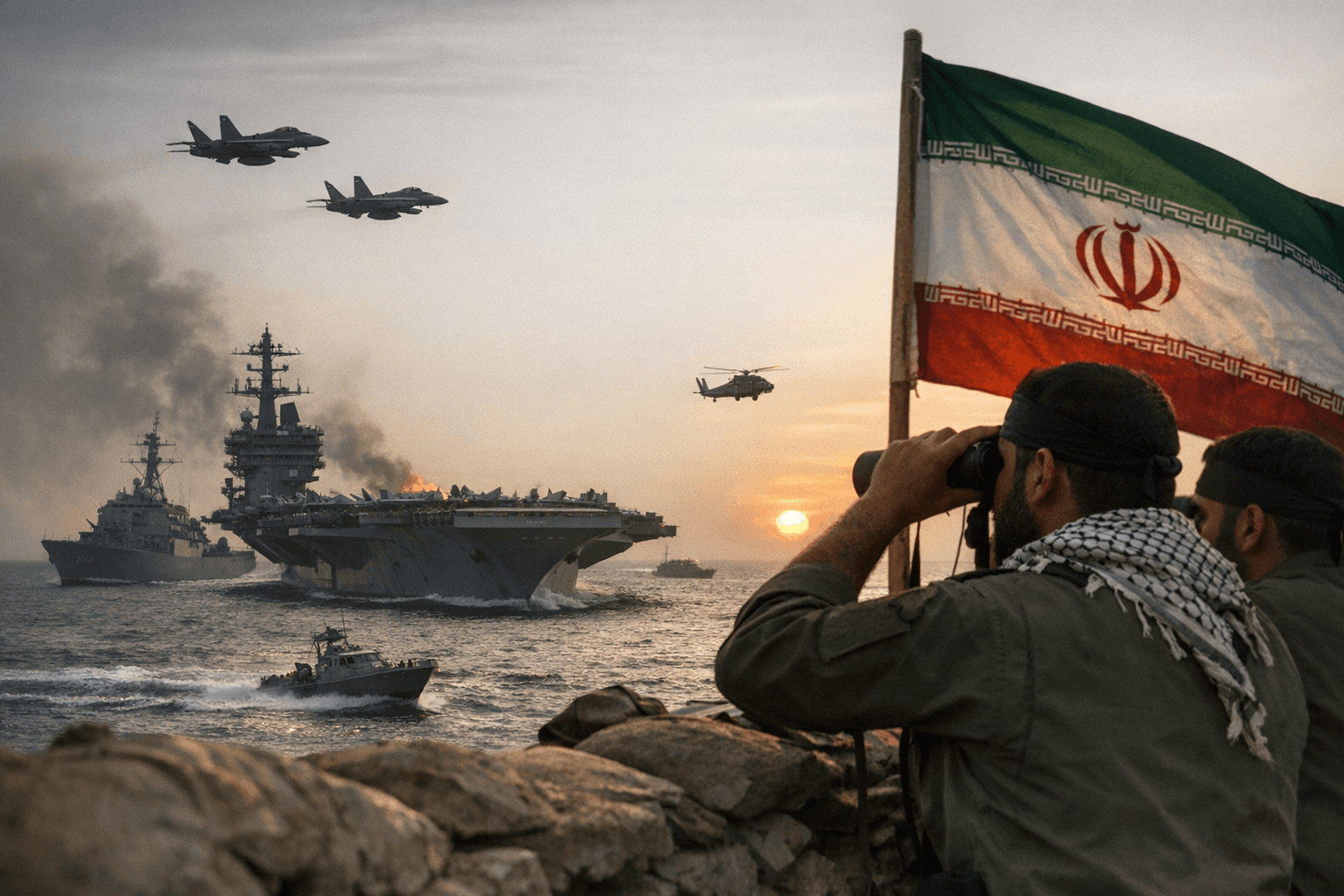
U.S. military deployments have overtaken diplomatic channels and are propelling Washington and Tehran toward a possible military showdown, Reuters reported from Dubai on Feb. 20, citing officials and diplomats across the Gulf and Europe. The buildup has hardened postures on both sides and left European and Arab governments unsure what President Donald Trump’s endgame would be if strikes occur.
Defense analyst David Des Roches told Reuters: "If talks fail ... U.S. activity in the Gulf already signals how any strike would begin: blind Iran’s air defence and then hit the Revolutionary Guards Navy, the force behind years of tanker attacks and threats to close the Strait of Hormuz, the route for a fifth of global oil." That scenario underscores the immediate economic stakes for global energy markets and shipping.
European and Arab officials, Reuters reported, want Washington to clarify whether any strikes would aim to degrade Iran’s nuclear and missile capabilities, deter escalation or pursue something more ambitious such as "regime change." Many express doubt that military action would quickly alter the resilience of Iran’s ruling establishment, led by Supreme Leader Ayatollah Ali Khamenei and protected by the Islamic Revolutionary Guards Corps.
Diplomatic backchannels are simultaneously fragile. News outlets reported that U.S. special envoy Steve Witkoff and Iranian foreign minister Abbas Araghchi were expected to meet in Istanbul on Feb. 2 to discuss a potential nuclear deal and de-escalation, a planned engagement framed by the specter of a "massive U.S. military buildup in the Gulf," according to WaPo and Axios as cited in reporting. Iranian officials and analysts remain divided over the signal the deployments send.
Mohammad Soltaninejad warned via Entekhab that "If the negotiations fail or the US position changes, as happened before the 12-day war and in the middle of negotiations, it is possible that war could break out." By contrast, former Iranian ambassador Jalal Sadatian told ILNA that "The balance is still tilted somewhat more toward negotiation than toward war," adding that Trump appears "more focused on threats and exercising pressure." International relations professor Gholamreza Haddad told Eco Iran, quoted by Iran International, that the scale of U.S. deployments suggests "real preparedness for military conflict."
Hard-line Iranian outlets close to senior security officials have floated limited U.S. options that would aim to signal strength without full-scale war. A Nour News editorial said, "This scenario would symbolically test Iran’s deterrence and demonstrate America’s power," and warned "the scene stands on the brink of crisis."
Think-tank analysts warn that initiating strikes carries risks the United States may struggle to manage. Jon Hoffman at Cato wrote that "After ordering a massive military buildup in the Middle East, President Donald Trump appears intent on initiating war with Iran, a conflict the Pentagon anticipates could last weeks, if not months." Cato added that roughly "40,000 US troops scattered across the region" would be vulnerable and that "Airpower alone is not sufficient to collapse the regime."
The domestic backdrop in Iran compounds the danger. A Council on Foreign Relations excerpt cited in reporting noted that late December 2025 unrest spread across all 31 provinces, with the government imposing a nationwide internet blackout; it said the crackdown killed "over 6,400 protesters, with more than 11,000 additional death reports under investigation." Reuters also reported Iranian leaders fear that an attack could reignite protests.
Public reaction captured on Facebook reflected sharp anxiety and polarization. One user, Ivana Smorgon, wrote "Hoping for peace and stability between the United States and Iran," while Mark Mac Donald said the president was "pretty desperate" and accused him of using foreign policy to distract from domestic scandals. Another commenter, Said Ait Bensaid, warned that America's past interventions do not guarantee success against Iran.
Officials in Europe and the Gulf are asking for clarity. As one senior diplomat observed in reporting, "Military action may be easier to start than to control, and much harder to translate into a strategic outcome, they say." With deployments already in motion and talks fragile, that uncertainty may determine whether the crisis is contained or escalates.
This article was produced by Prism’s automated news system from verified source data, official records, and press releases, then run through automated quality and moderation checks before publishing. The system is built and supervised by the people who set the standards it runs under. Read our full AI policy.
Did this article answer your question?


