US Military Has Consumed Nearly 1 Million Gallons of Coffee, General Says
Nearly 950,000 gallons of coffee and 2 million energy drinks powered U.S. forces through 39 days of combat operations against Iran, Gen. Dan Caine revealed Wednesday.

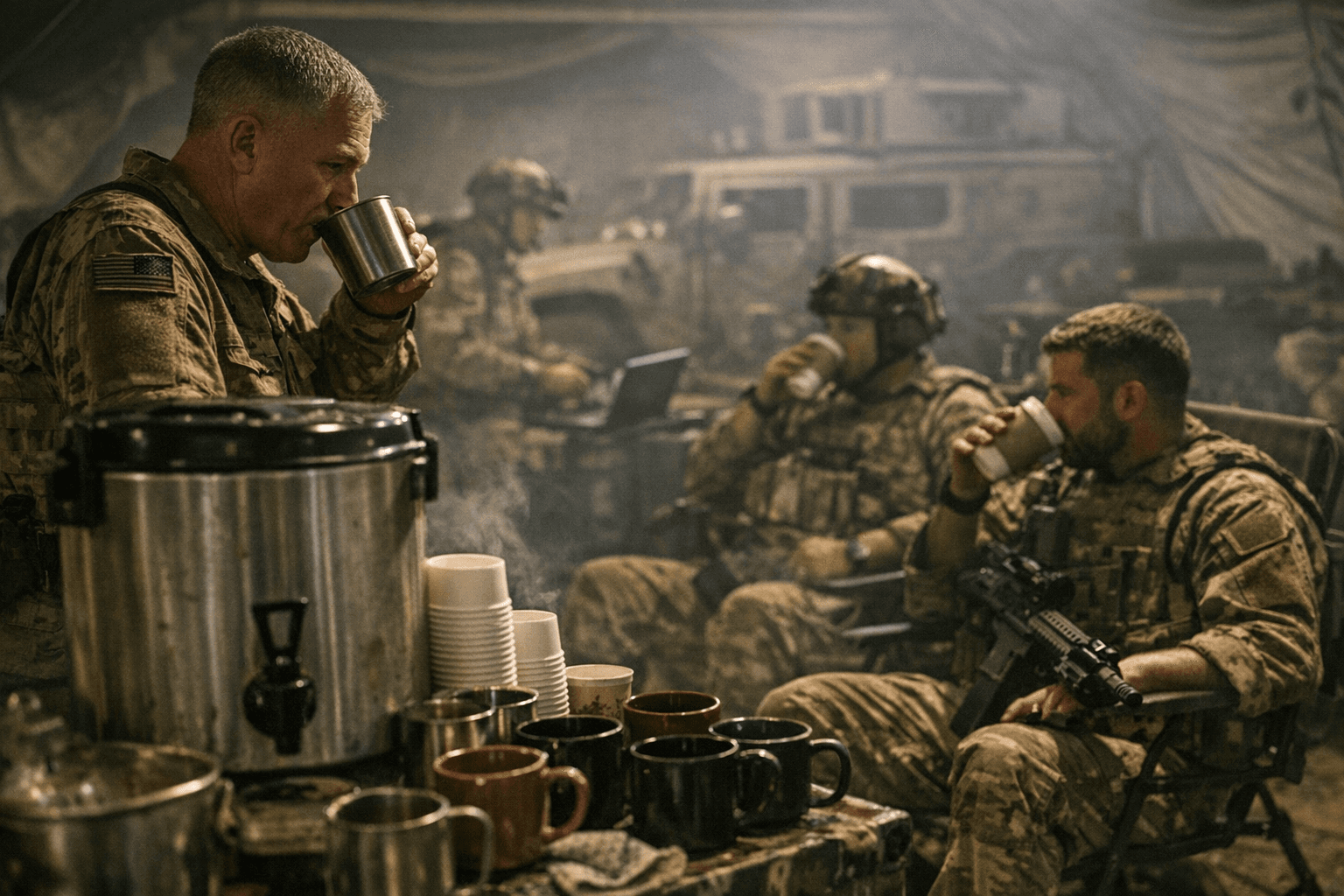
The numbers Gen. Dan Caine rattled off at a Pentagon press briefing Wednesday captured the sheer physical toll of nearly six weeks of sustained combat: more than 13,000 targets struck, 150 Iranian ships sunk, and, almost as an aside, a consumption figure that put Operation Epic Fury's operational tempo into visceral human terms. "More than 6 million meals, and by my estimate, more than 950,000 gallons of coffee, 2 million energy drinks and a lot of nicotine," Caine told reporters, sketching the fuel behind the force that had just accepted a fragile ceasefire with Iran.
Operation Epic Fury commenced on February 28, 2026, when U.S. and partner forces began striking targets to dismantle the Iranian regime's security apparatus, a campaign that ran without pause for 39 days before a two-week ceasefire, brokered by Pakistan, was announced just hours before President Trump's self-imposed deadline for Iran to reopen the Strait of Hormuz. The coffee statistic, offered almost as color commentary, is in practice a logistics data point: nearly a million gallons of caffeinated liquid distributed across forward operating positions, carrier strike groups, command centers, and air bases throughout the region reflects a force operating at a pace that precludes normal sleep cycles.
Military research has consistently documented the relationship between sustained high-alert operations and stimulant reliance. Studies of soldiers in Afghanistan found that caffeine was used to mitigate the inevitable degradation in physical and cognitive function associated with reduced sleep during night operations and the increased operational demands of the combat environment. Moderate doses offer measurable performance benefits, but the picture is more complicated across extended campaigns where sleep debt accumulates faster than caffeine can compensate.
At least 348 U.S. military personnel had been wounded in the Iran war as of March 31, a figure that predates the final week of operations. Caine honored the lives of the 13 service members killed in the operation before outlining U.S. achievements in Iran. The human cost, alongside the stimulant arithmetic, illustrates a force that was running hard and running long.
Caine said more than 13,000 targets were struck, destroying 80% of Iran's air defense systems and attacking 90% of its weapons factories. He added that more than 90% of Iran's regular naval fleet had been sunk, "including all major surface combatants," with 150 ships now "at the bottom of the ocean."
Defense Secretary Pete Hegseth, speaking alongside Caine, declared a "decisive military victory" and said the Pentagon "for now, for now, has done its part." "We stand ready in the background to ensure Iran upholds every reasonable term," Hegseth said. Caine echoed that posture, welcoming the ceasefire while making clear the military remained ready to resume strikes if called upon.
The 950,000-gallon coffee figure will likely be absorbed as a memorable headline from a briefing dense with military statistics. But behind it sits a more consequential question about whether a force sustaining that pace across 39 consecutive days of combat operations is being systematically monitored for the cognitive and physiological costs that caffeine can only partially offset, and what protocols govern performance readiness as the ceasefire's two-week clock begins.
This article was produced by Prism’s automated news system from verified source data, official records, and press releases, then run through automated quality and moderation checks before publishing. The system is built and supervised by the people who set the standards it runs under. Read our full AI policy.
Did this article answer your question?