U.S. Narrows Universal Childhood Vaccine Recommendations, Shifts Four Shots
Federal health officials on Jan. 5 restructured the childhood immunization schedule, moving four vaccines out of blanket universal recommendation and into targeted or shared decision categories. The change will alter routine practice for pediatric care, raising public health, access and equity concerns for families and communities.
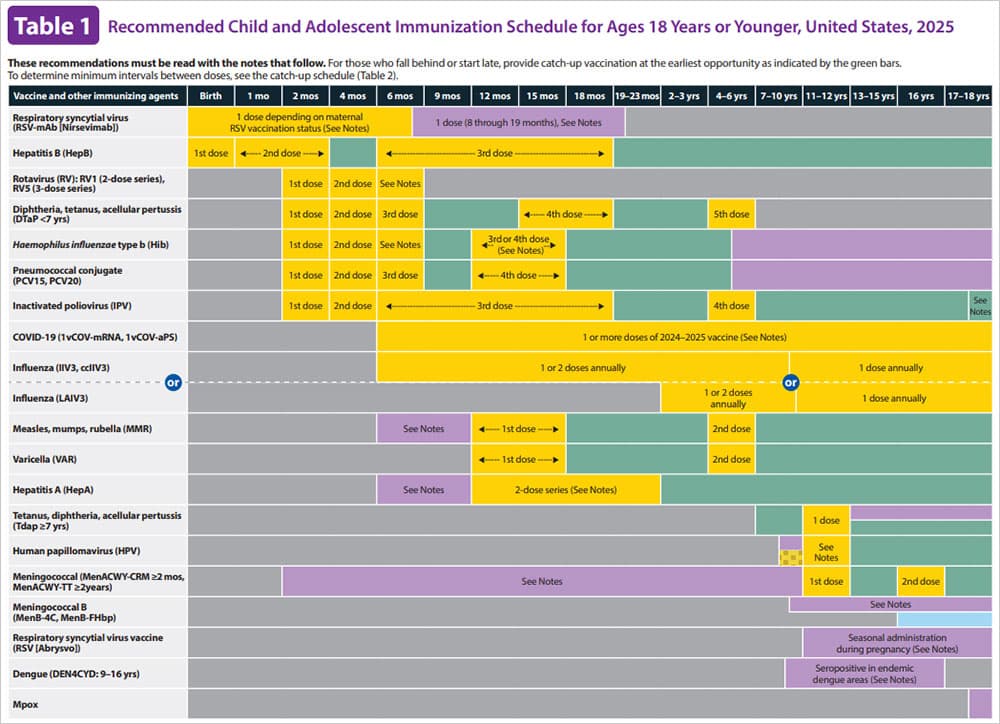
Federal health officials announced a substantial revision to the childhood immunization schedule on Jan. 5, 2026, directing that vaccines be reorganized into three categories: those recommended for all children, those recommended for specific high‑risk groups, and those given after shared clinical decision‑making between clinicians and families. The change was made effective immediately by a memo signed by HHS Deputy Secretary Jim O’Neill in his role as acting agency leader.
The agencies removed universal every‑child recommendations for four vaccines named in the implementation: influenza, rotavirus, meningococcal disease and hepatitis A. Under the new structure, some of those vaccines will be offered to children based on individualized conversations with health care providers, while vaccines such as respiratory syncytial virus, or RSV, will be recommended only for defined high‑risk populations. Several core vaccines including measles, mumps and rubella; polio; pertussis; tetanus and diphtheria; human papillomavirus; and varicella remain on the schedule as routine immunizations for all children, a move federal officials said aligns with international consensus for many of those diseases.
The policy shift follows a recent meeting of the Centers for Disease Control and Prevention advisory committee on immunization practices, which had voted primarily to remove the universal recommendation for the hepatitis B dose given at birth. That vote focused narrowly on hepatitis B, and public health officials and clinicians have noted a clear distinction between the advisory committee action and the broader schedule changes implemented by HHS and the CDC in the Jan. 5 directive.
Officials framed the reorganization as an effort to harmonize U.S. practice with peer countries by distinguishing populationwide recommendations from those better suited to individual risk assessment or targeted use. The CDC also reported nine pediatric deaths from influenza so far this winter, underscoring ongoing disease risk as officials rework guidance.

The abruptness and scope of the change has generated concern among physicians and public health experts who say the broader revisions were implemented without the additional deliberation and public discussion that have historically accompanied major shifts in federal vaccine policy. Clinicians warn the new shared decision model will place added burdens on already strained pediatric practices, requiring more clinician time per patient to assess risk, explain benefits and document individualized recommendations. Public health advocates caution that families with limited access to primary care, inconsistent insurance coverage, language barriers or mistrust of the health system may be disproportionately affected, potentially widening existing inequities in vaccine uptake and disease protection.
Policy implications extend beyond clinic workflow. State immunization programs, school-entry requirements and insurance coverage rules are likely to require rapid clarification. Without clear operational guidance and investments in communication and primary care capacity, the change risks generating confusion among parents, interrupting established vaccine delivery systems and amplifying disparities for marginalized communities.
Federal agencies have not published a single consolidated tally of how many routine shots were removed, and characterizations of the scale of reduction have varied. As implementation proceeds, public health leaders and community advocates are urging transparent rationale, robust outreach to clinicians and families, and resources to ensure that individualized decision-making does not become a barrier to equitable protection against preventable childhood diseases.
This article was produced by Prism’s automated news system from verified source data, official records, and press releases, then run through automated quality and moderation checks before publishing. The system is built and supervised by the people who set the standards it runs under. Read our full AI policy.
Did this article answer your question?