U.S. Navy deploys drone mine hunters as Iran threat looms in Strait of Hormuz
Drone mine hunters are moving into the Strait of Hormuz, where a 29-nautical-mile chokepoint still carries about 20 million barrels a day of oil and products.

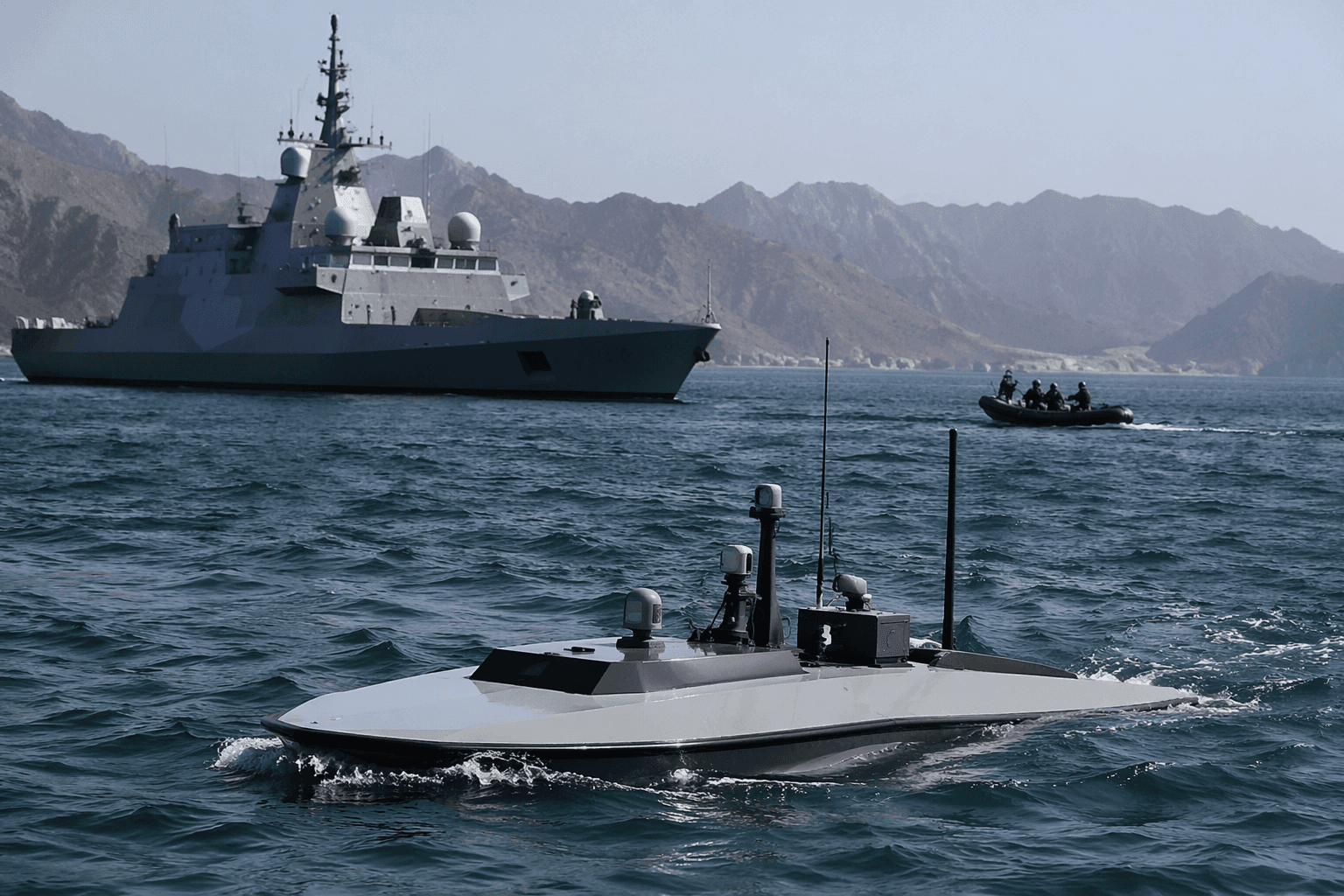
A new generation of U.S. Navy drone mine hunters is being sent into the Strait of Hormuz as commanders race to clear any Iranian sea mines before shipping lanes, energy flows and insurance costs spike again. The mission reflects a grim reality: even if the fighting eases, a handful of hidden mines can keep one of the world’s most important trade routes under pressure.
The Strait of Hormuz is only 29 nautical miles wide at its narrowest point, with just 2-mile-wide navigable channels and a 2-mile buffer zone. In 2025, about 20 million barrels a day of crude oil and oil products moved through it, roughly 20% to 25% of global oil trade depending on the measure used. The U.S. Energy Information Administration said oil flow through the strait averaged 20 million barrels a day in 2024, equal to about 20% of global petroleum liquids consumption, and warned that even brief interruptions can push up shipping costs and energy prices.
The danger is not limited to tankers. The International Energy Agency says 93% of Qatar’s LNG exports and 96% of the United Arab Emirates’ LNG exports transit the strait, tying the region’s instability directly to global gas markets. The International Maritime Organization says more than 20,000 seafarers are affected by the turmoil, including crews stranded on vessels unable to leave, and has called for uninterrupted water, food, fuel and other essentials for trapped ships.
U.S. officials and analysts say Iran’s mine stockpile has not been fully destroyed and that some mines may already have been deployed. The Navy is using surface ships, helicopters and underwater drones to hunt them. One retired Navy officer described the task as like “picking dandelions” or mowing a lawn, because areas can be re-mined quickly. Adm. Brad Cooper, the CENTCOM commander, said the military had begun setting conditions for a new passage and would share a safe pathway with the maritime industry soon.
A recent war game by Bryan Clark of the Hudson Institute found transit lanes could likely be cleared within a few weeks using new technologies, and in only a few days if the waterway had not been mined. But the historical warning remains sharp. On April 14, 1988, the USS Samuel B. Roberts hit an Iranian mine in the Persian Gulf, injuring 10 sailors. Four days later, the U.S. launched Operation Praying Mantis, the largest of five major U.S. Navy surface actions since World War II, sinking two Iranian ships, destroying two surveillance platforms and severely damaging another. That record is why mine warfare still matters far beyond the Gulf: it is cheap, hard to see and capable of disrupting global trade long after the guns fall silent.
This article was produced by Prism’s automated news system from verified source data, official records, and press releases, then run through automated quality and moderation checks before publishing. The system is built and supervised by the people who set the standards it runs under. Read our full AI policy.
Know something we missed? Have a correction or additional information?
Submit a Tip