US Navy Leads Maritime Blockade of Iran as Talks Collapse
Six merchant ships were turned back in the first 24 hours as U.S. warships sealed Iran’s sea lanes. Crude prices jumped above $100 a barrel as talks collapsed.
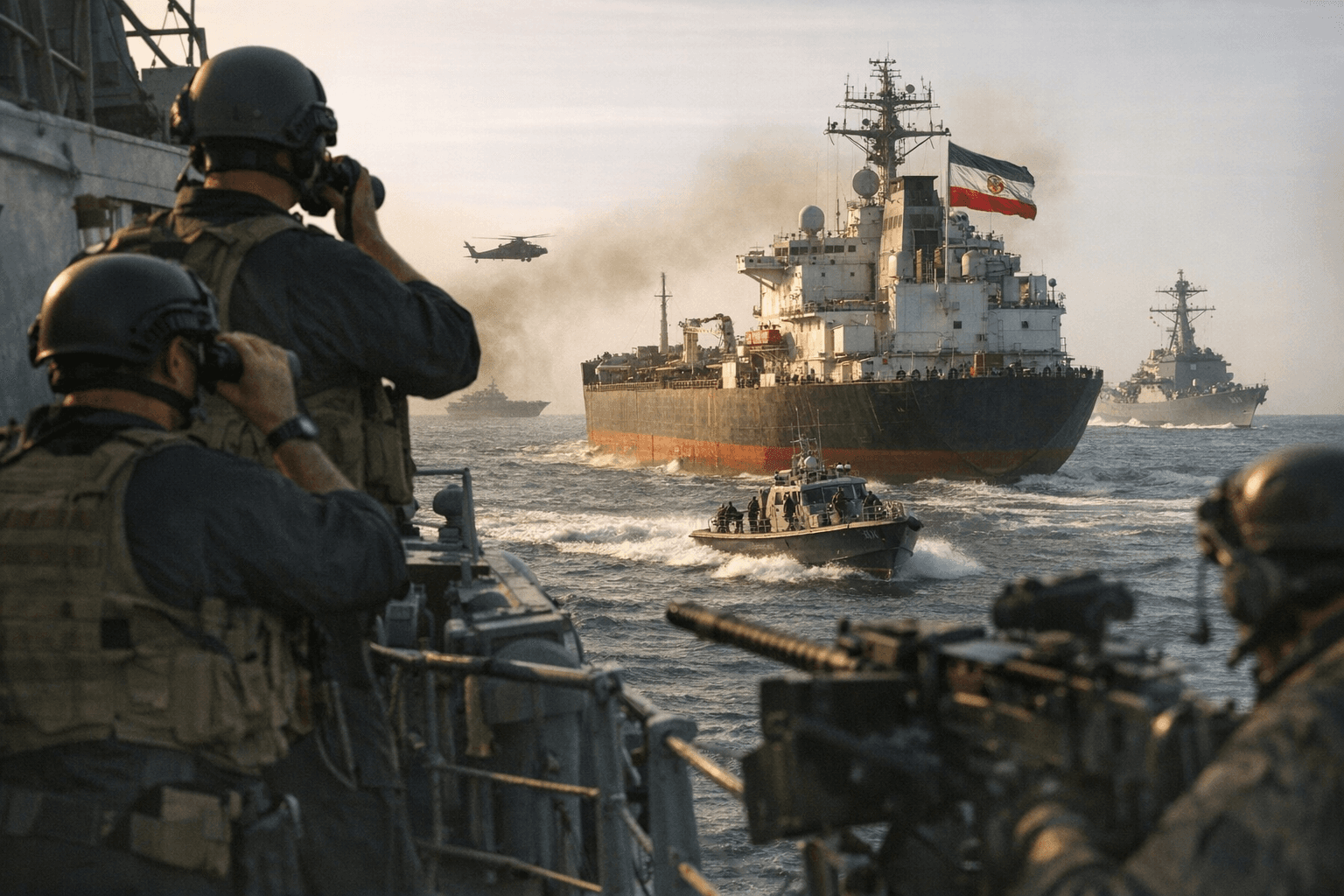
The Trump administration had moved more than 10,000 sailors, Marines and airmen into the region as it turned failed talks with Tehran into a maritime blockade aimed at choking off Iranian trade by sea. The escalation went beyond pressure: warships and aircraft were meant to deter Iranian moves at sea, while the arrival of Army troops signaled the U.S. was also preparing for the chance that enforcement could slide into direct conflict.
U.S. Central Command said the USS Tripoli, carrying about 3,500 sailors and Marines, was in the Arabian Sea as part of the operation. Pentagon planning in late March called for about 3,000 troops from the 82nd Airborne Division to deploy to the Middle East, adding to thousands of Marines already headed there. Other reports said the broader buildup could eventually include more than 10,000 U.S. personnel, supported by more than a dozen warships and dozens of aircraft.
The blockade began Monday, April 13, after peace talks in Islamabad collapsed over the weekend. U.S. officials said the operation extended beyond the Strait of Hormuz into the Gulf of Oman and the Arabian Sea, widening the pressure on Iranian shipping routes rather than merely holding the narrow waterway itself. In the first 24 hours, six merchant vessels were ordered to turn back to an Iranian port, and no ships were reported to have made it through.
The stakes were immediate because the Strait of Hormuz carries roughly one-fifth of the world’s oil shipments. Crude prices rose above $100 a barrel after the blockade took effect, showing how quickly a military move in the Persian Gulf can hit global markets. Iran called the blockade illegal and threatened retaliation. Iranian officials warned that military vessels in the strait would violate the ceasefire and face a strong response, while some Gulf states, including Saudi Arabia, worried about wider retaliation. European countries declined to join the operation, leaving Washington to enforce the blockade largely on its own and increasing the risk that a campaign meant to squeeze Tehran could draw the United States closer to open confrontation.
This article was produced by Prism’s automated news system from verified source data, official records, and press releases, then run through automated quality and moderation checks before publishing. The system is built and supervised by the people who set the standards it runs under. Read our full AI policy.
Did this article answer your question?


