US Navy Seizes Iranian Ship in Gulf of Oman Blockade Enforcement
Crude surged after U.S. forces seized an Iranian cargo ship near Hormuz, stoking fears of higher gas prices and a fresh inflation jolt.
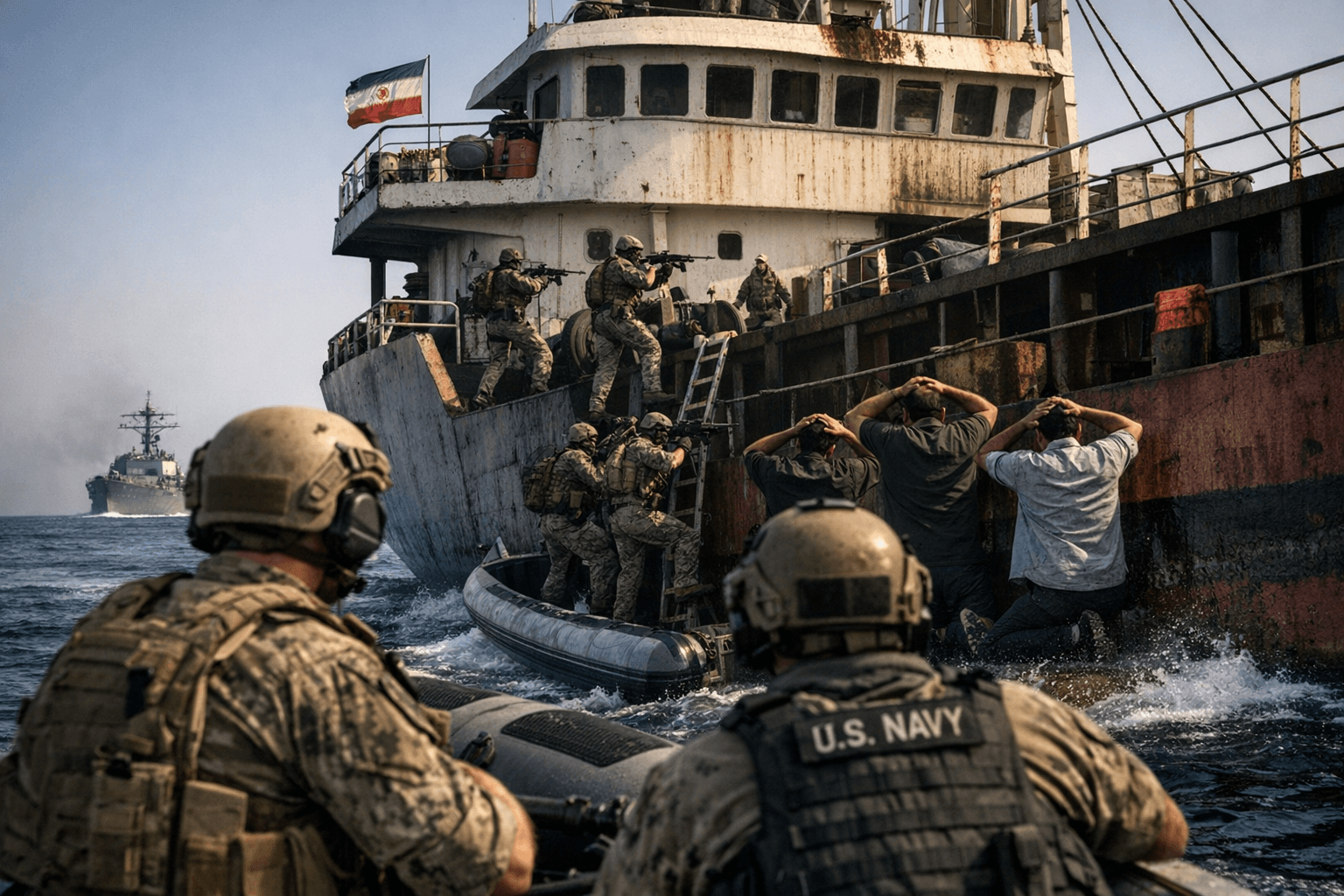
Crude prices jumped sharply after U.S. forces seized an Iranian-flagged cargo ship near the Strait of Hormuz, a move that could reach U.S. drivers quickly if shipping disruption lingers. Brent crude climbed to about $94.66 a barrel and West Texas Intermediate rose to about $88.55, while one separate market read showed Brent briefly up as much as 7.9% and European gas prices rising 11%.
President Donald Trump said U.S. forces intercepted the vessel, identified by U.S. officials as the M/V Touska, in the Gulf of Oman after it ignored repeated warnings to stop. U.S. Central Command said the guided-missile destroyer USS Spruance enforced naval blockade measures against the ship as it transited the north Arabian Sea at 17 knots and headed toward Bandar Abbas, Iran. Trump said Marines boarded the vessel after the destroyer disabled its propulsion, leaving U.S. forces with full custody.
The seizure marked the first interception since the blockade of Iranian ports began last week. That timing mattered to oil traders, because the Strait of Hormuz is one of the world’s most important energy chokepoints and typically carries about 20% of global oil supply. Even a limited confrontation there can add a risk premium to crude markets, and the effect can pass through to gasoline at U.S. pumps if shippers and refiners begin to build in longer delays or possible attacks.
The episode also revived fears from the military flare-up that began on February 28, when U.S. and Israeli strikes on Iran prompted some tanker owners, oil majors and trading houses to suspend shipments through Hormuz. Those moves showed how quickly commercial decisions can tighten supply even before any formal closure occurs. In that kind of market, traders do not wait for a full shutdown to reprice risk.
Tehran responded by calling the seizure an act of “armed piracy” and warning of retaliation. Iranian state media also cast doubt on the cease-fire and the blockade, with one report saying Iran would not send its team to planned talks unless the United States lifted the blockade. For now, the price action reflects a simple calculation: any threat to Hormuz can move crude first, and American consumers often feel the consequences next.
This article was produced by Prism’s automated news system from verified source data, official records, and press releases, then run through automated quality and moderation checks before publishing. The system is built and supervised by the people who set the standards it runs under. Read our full AI policy.
Did this article answer your question?

