U.S., Philippines launch major combat drills amid Middle East war distractions
U.S. and Philippine forces opened Balikatan with more than 17,000 troops, while Japan fired a bigger signal: Asia deterrence still has to hold as the Middle East war competes for U.S. attention.
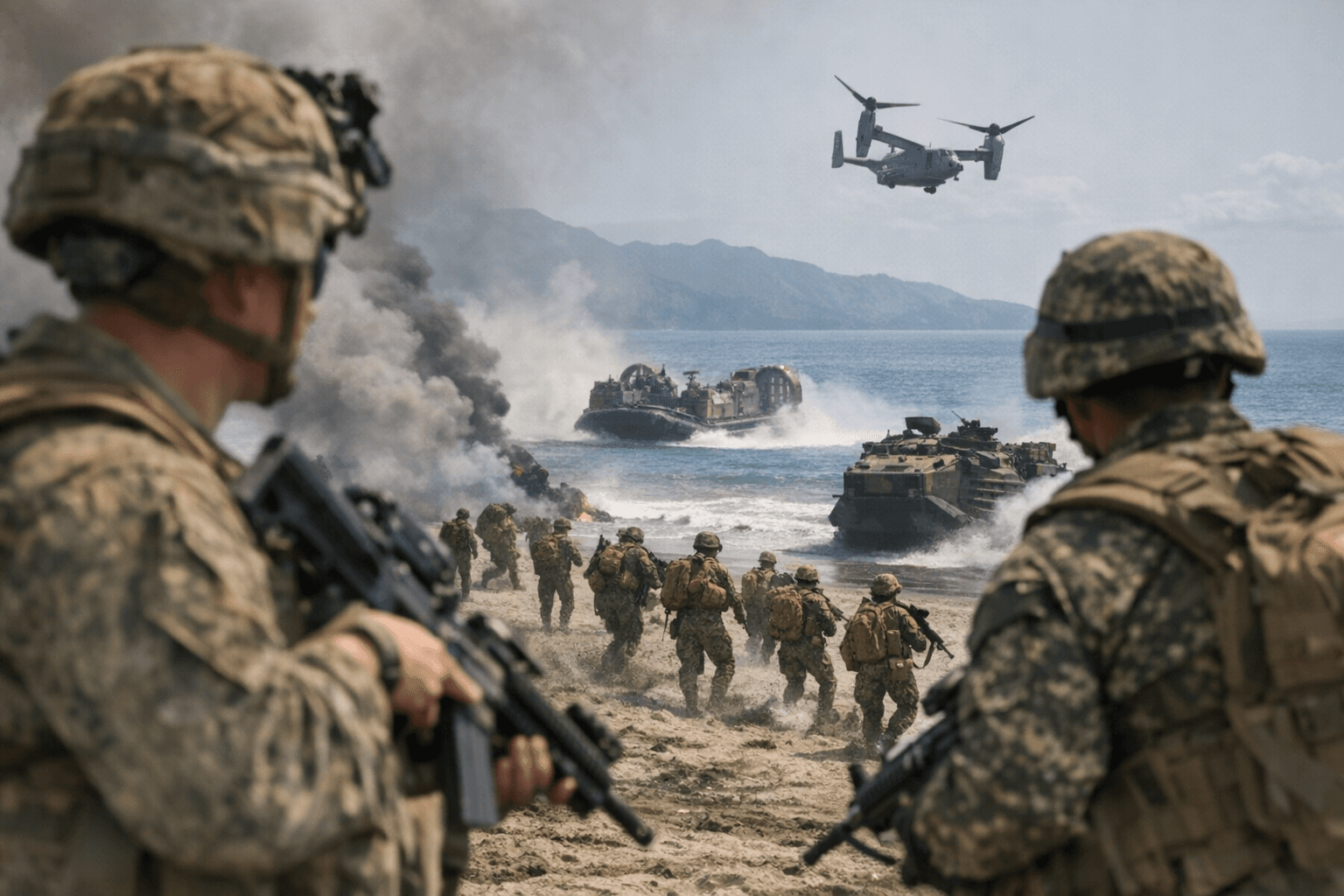
The United States and the Philippines opened Balikatan 41-2026 with more than 17,000 American and Filipino troops, turning the annual drill into a public test of whether Washington can keep its Indo-Pacific commitments visible while the Middle East war absorbs attention and resources.
The exercise runs from April 20 to May 8 across the Philippine archipelago, and Philippine and U.S. officials said it has become the most expansive Balikatan to date. What began as a bilateral show of force has widened into a coalition event, with forces from Japan, Australia, Canada, New Zealand and France taking part, along with observers from 17 other nations.
Manila has been watching the drill for more than military spectacle. In a region where tensions with China continue in the South China Sea, the scale of Balikatan is meant to show that the alliance still has teeth. Philippine officials said the training has moved toward “joint all-domain operations,” covering land, air, sea, cyber and space-related activity, a sign that the exercise is no longer limited to conventional battlefield maneuvers.
Japan’s role carried particular weight. About 1,400 Japanese troops joined the exercise, and Japan planned to fire a Type 88 anti-ship missile in a ship-sinking drill in northwestern Philippine waters facing the disputed South China Sea. That marked a first for Japan as an active participant in Balikatan and underscored how far the Philippines has gone in broadening its defense partnerships.
Canada also announced its first active participation, another signal that the exercise is drawing in Indo-Pacific and NATO partners as Manila seeks deeper support against maritime pressure. Philippine military officials said missile-defense drills and live-fire training were part of the package, and transport of equipment across the country had already begun ahead of the opening.
The drills were formally set at the Daniel Z. Romualdez Airport complex in Tacloban, where officials said preparations were in place for the 41st iteration of the exercise. U.S. Indo-Pacific Command and the U.S. Marine Corps described the event as a visible demonstration of alliance readiness, while Philippine officials stressed that the drills were not aimed at any country.
That distinction matters in a year when Washington is trying to prove it can sustain deterrence in Asia without letting other crises dilute its commitments. In Manila, the message being measured is simple: presence, readiness and follow-through.
This article was produced by Prism’s automated news system from verified source data, official records, and press releases, then run through automated quality and moderation checks before publishing. The system is built and supervised by the people who set the standards it runs under. Read our full AI policy.
Did this article answer your question?