U.S. producer prices jump as energy shock fuels inflation worries
Wholesale gasoline jumped 23.4% in May, pushing producer prices up 6.5% from a year earlier. The spike raised fresh worries that energy costs will bleed into consumer bills.

A surge in energy prices jolted the U.S. inflation pipeline in May, lifting wholesale costs at the fastest annual pace since November 2022 and raising the risk that factory, freight and fuel shocks will filter into household bills over the coming months. The move comes as the summer driving season gets underway, keeping gasoline-sensitive industries on alert and complicating the Federal Reserve’s path on rates.
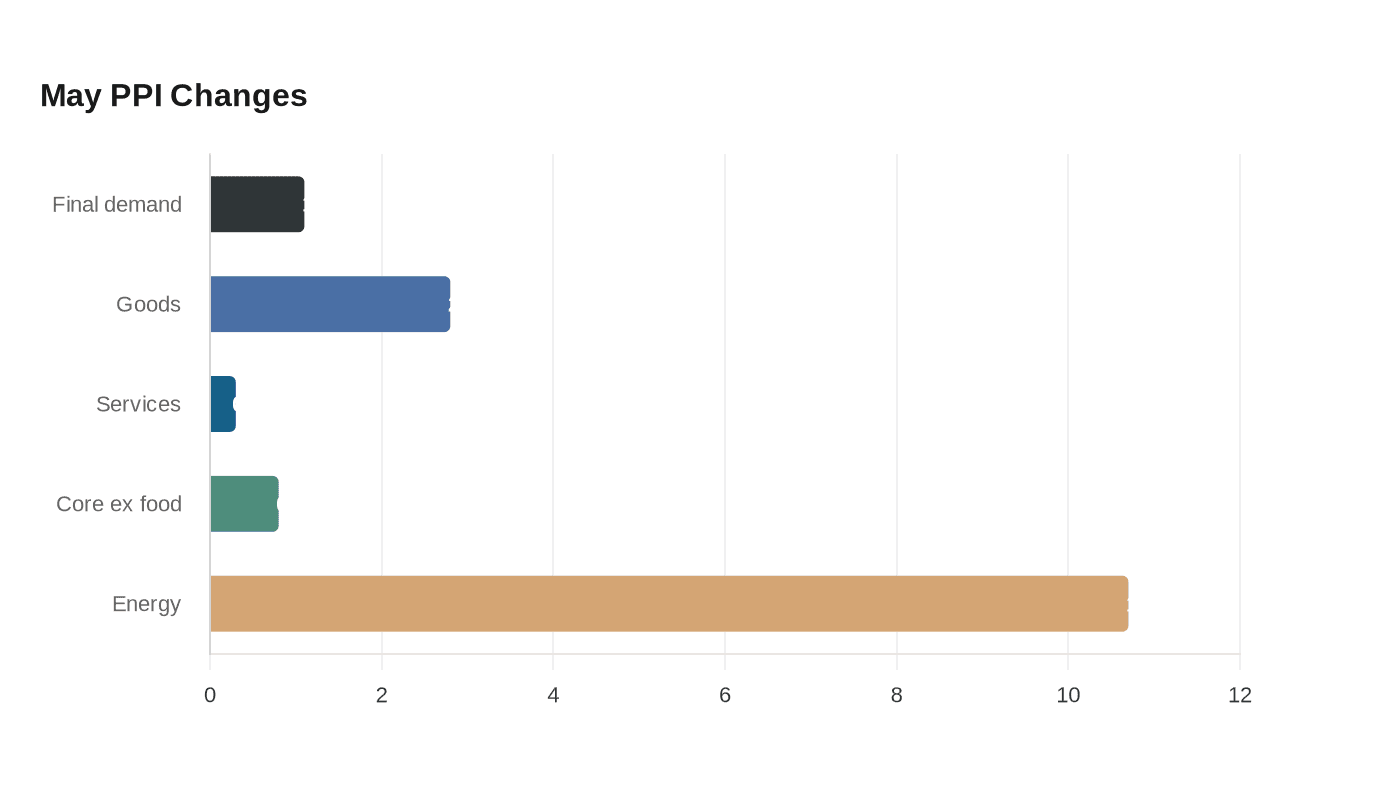
The Labor Department said the producer price index for final demand rose 1.1% in May and 6.5% from a year earlier, the largest 12-month increase since November 2022. Final-demand goods jumped 2.8% in the month, the biggest increase since the series began in December 2009, while final-demand services rose 0.3% after a 0.7% rise in April. Nearly 80% of the monthly advance came from a 10.7% surge in final-demand energy prices, with gasoline alone up 23.4% in May and nearly 70% above its level a year earlier.
The breadth of the report suggested the inflation pulse was not limited to fuel. Final demand less foods, energy and trade services climbed 0.8% in May, the largest increase since March 2022, and was 5.1% higher than a year earlier, the strongest 12-month gain since October 2022. Along with gasoline, prices rose for diesel fuel, jet fuel, plastic resins and materials, industrial chemicals and natural gas liquids, while pork fell 10.1%.
The jump in producer prices matters because some of the components feed directly into the Personal Consumption Expenditures index, the Federal Reserve’s preferred inflation gauge. The Federal Reserve targets 2% inflation over the longer run as measured by the annual change in the PCE price index, and the Bureau of Economic Analysis says most PCE price indexes are derived by extrapolating consumer and producer price data from the Labor Department. The BEA’s current schedule shows the May 2026 Personal Income and Outlays report, which includes the PCE price index, is due June 24.
Consumer prices were already reported at 4.2% in May from a year earlier, the sharpest annual gain in three years, leaving policymakers with little room for error if energy costs continue to move higher. Inflation has also taken on political weight in Washington, with voters still feeling the pinch roughly five months before midterm elections that will decide control of Congress.
The spike has been tied to the Iran war and disruptions around the Strait of Hormuz, a chokepoint for global energy flows. For the Fed, the question is no longer whether energy has reignited inflation pressure, but how much of that pressure will reach consumers before policymakers can respond.
This article was produced by Prism’s automated news system from verified source data, official records, and press releases, then run through automated quality and moderation checks before publishing. The system is built and supervised by the people who set the standards it runs under. Read our full AI policy.
Did this article answer your question?