U.S. rushes thousands of Marines and sailors to Middle East for Iran blockade
Thousands of Marines and sailors were rushed toward the Middle East as a U.S. blockade of the Strait of Hormuz began disrupting shipping and raising the risk of war with Iran.
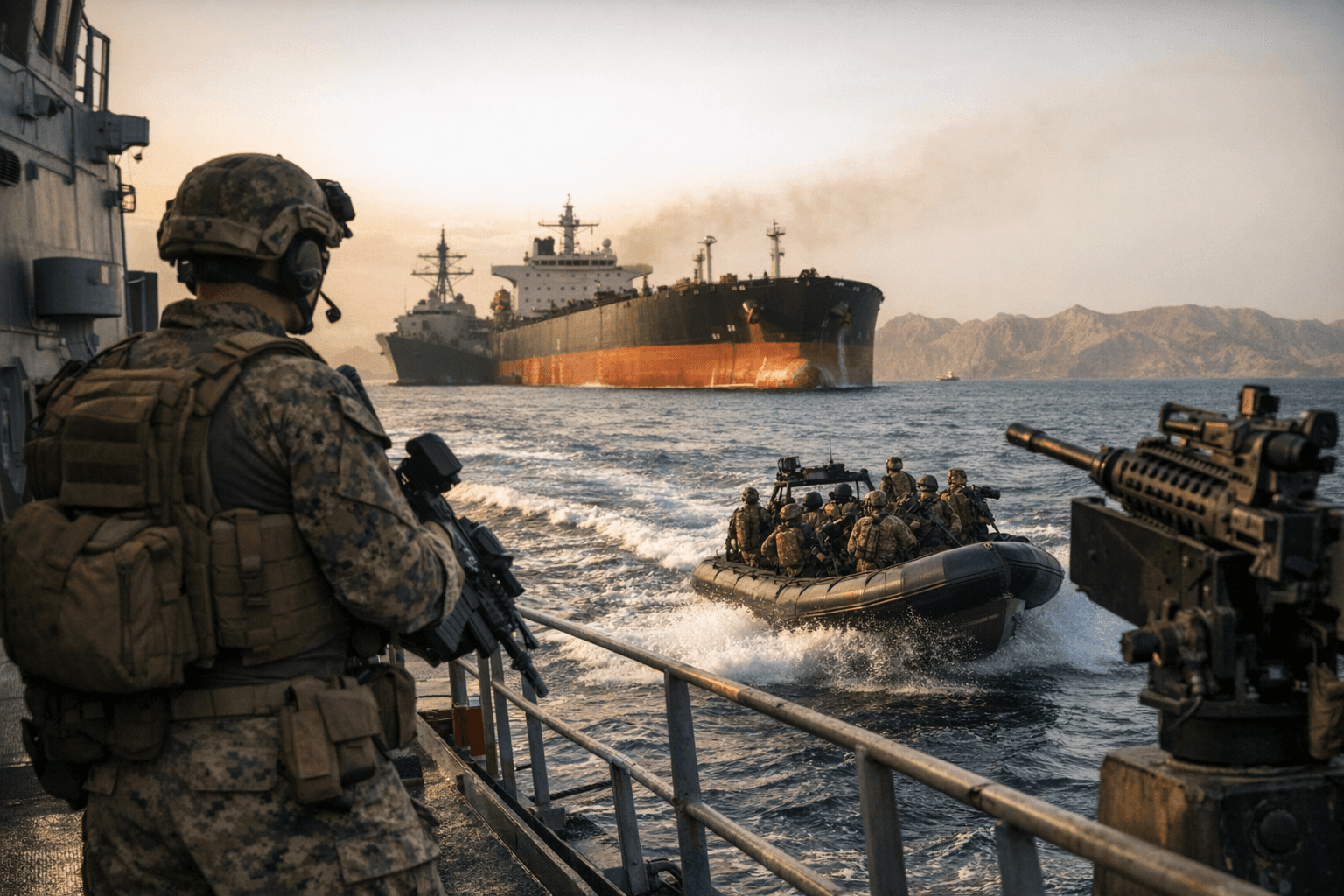
Thousands of Marines and sailors were being rushed into the Middle East as Washington tried to turn a blockade of the Strait of Hormuz into leverage against Tehran, a move that immediately forced merchant vessels to turn back and pushed the standoff closer to open confrontation.
The Pentagon accelerated the deployment of the 11th Marine Expeditionary Unit aboard the USS Boxer and another Marine expeditionary unit aboard the Japan-based USS Tripoli, while a second Marine expeditionary unit was also moving toward the region. CBS News reported that hundreds of Special Operations Forces, including Navy SEALs and Army Rangers, were already in the Middle East, alongside thousands of Marines and Army paratroopers. Reuters-reported details put the earlier influx at more than 3,500 U.S. troops, including about 2,500 Marines aboard the USS Tripoli, with a separate Army contingent from the 82nd Airborne Division of under 1,500 troops also expected.
The buildup came as President Donald Trump announced a naval blockade of the Strait of Hormuz after peace talks with Iran collapsed. U.S. Central Command said the blockade began Monday at 10 a.m. ET and would not block vessels moving to or from non-Iranian ports, drawing a line that showed the operation was aimed at Iran’s maritime access, not general traffic through the waterway. By April 14, Reuters reported, no ships had gotten through and six merchant vessels had turned back after U.S. military warnings.
That distinction mattered because the Strait of Hormuz carries about one-fifth of the world’s oil. A blockade there is not just a signal to Tehran; it is a global energy shock with immediate consequences for shipping insurance, tanker routes and crude prices. The administration has said roughly 50,000 U.S. personnel are involved in operations countering Iran, underscoring how far the confrontation had already moved beyond deterrence and into sustained pressure.
The decision point now is whether the force is meant to stop at maritime coercion or expand into something far riskier. Analysts warned that using Marines and sailors to enforce a blockade could entrench the United States further in a foreign war, especially if the mission widened to ground operations on Iran’s shoreline or to strategic sites such as Kharg Island and Iran’s enriched-uranium stockpile. The war was already in its fifth week, with a fragile two-week ceasefire set to expire around April 22.
Iranian officials, including the Islamic Revolutionary Guard Corps, warned that military vessels approaching the strait would be treated as a cease-fire violation. Iranian state media framed the U.S. move as coercion and threatened responses across the Persian Gulf and Gulf of Oman, leaving both sides positioned for a confrontation in which a single boarding, seizure or strike could widen the conflict fast.
This article was produced by Prism’s automated news system from verified source data, official records, and press releases, then run through automated quality and moderation checks before publishing. The system is built and supervised by the people who set the standards it runs under. Read our full AI policy.
Did this article answer your question?


