U.S. sanctions network recruiting Colombian mercenaries for Sudan war
U.S. sanctions exposed a Colombian mercenary pipeline feeding Sudan’s RSF, linking Bogotá, Panama and the UAE to a war that has killed more than 150,000.
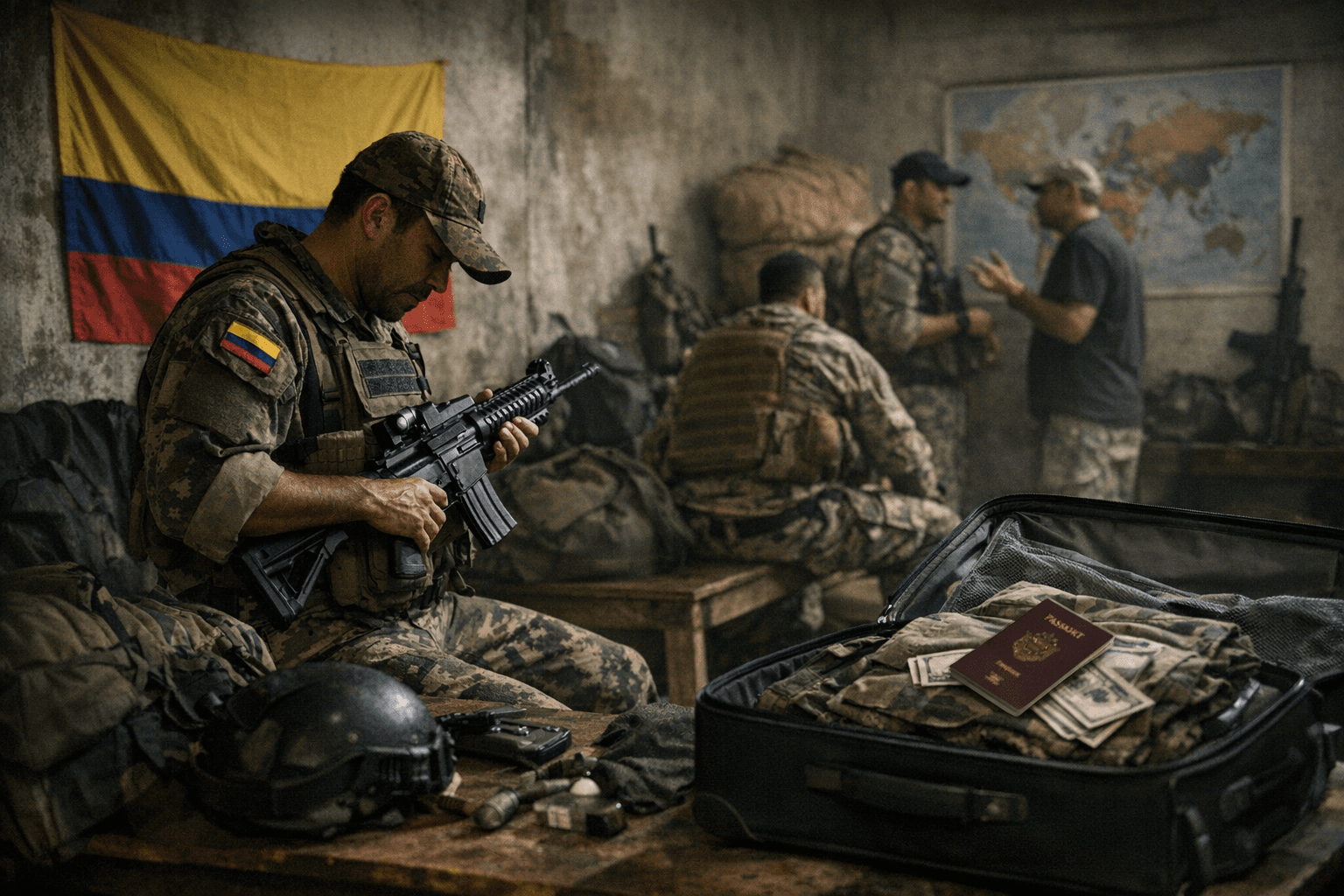
The latest U.S. sanctions exposed a mercenary pipeline that moved former Colombian soldiers through Bogotá, Panama and the United Arab Emirates into Sudan’s war, where the Rapid Support Forces have drawn foreign manpower to keep fighting. Treasury said on April 17 that it targeted three people and two firms for recruiting and deploying former Colombian military personnel, and it paired the action with an urgent call for a three-month humanitarian truce as the war entered its fourth year, with more than 150,000 people killed, more than 14 million displaced and conditions worsening for famine and for terrorist groups seeking to expand.
This was not an isolated case. Treasury sanctioned a Colombian-led network on December 9, 2025, saying it was led by Álvaro Andrés Quijano Becerra, a retired officer based in the United Arab Emirates. The earlier action identified Bogotá’s International Services Agency S.A.S., or ISA, as the recruitment hub and Panama-based Talent Bridge S.A. as the company that signed contracts and moved funds, while Sudan Tribune reported that hundreds of former Colombian soldiers had traveled to Sudan since September 2024 and fought in Khartoum, Omdurman and El Fasher.
The diplomatic fallout reached Cairo in December 2024, when Colombia apologized to Sudan through Ambassador Anne Melania de Gaviria after meeting Sudanese Ambassador Emad El-Din Mustafa Adawi over reports that Colombian citizens were fighting for the RSF. Later reporting said some recruits were lured with promises of guarding oil sites or doing security work, only to be pushed into combat in Darfur, a sign of how the pipeline blended recruitment, deception and Gulf-linked logistics into a transnational supply chain for war.
Washington has steadily widened its pressure on the Sudan war’s principal actors. Treasury sanctioned RSF leader Mohammad Hamdan Daglo Mousa, known as Hemedti, on January 7, 2025, and SAF leader Abdel Fattah al-Burhan on January 16, 2025, before turning back to the private networks that keep fighters moving, paid and deployed. The pattern shows a conflict that is no longer sustained only by battlefield commanders; it is also being outsourced through recruiters, shell firms and cross-border financial channels that have turned Sudan’s civil war into a global mercenary business.
This article was produced by Prism’s automated news system from verified source data, official records, and press releases, then run through automated quality and moderation checks before publishing. The system is built and supervised by the people who set the standards it runs under. Read our full AI policy.
Did this article answer your question?