US says Iranian ports blockade fully implemented as Trump hints peace talks
A U.S. naval blockade of Iranian ports has frozen sea trade and jolted oil prices, even as Trump signals a possible return to talks in Pakistan.
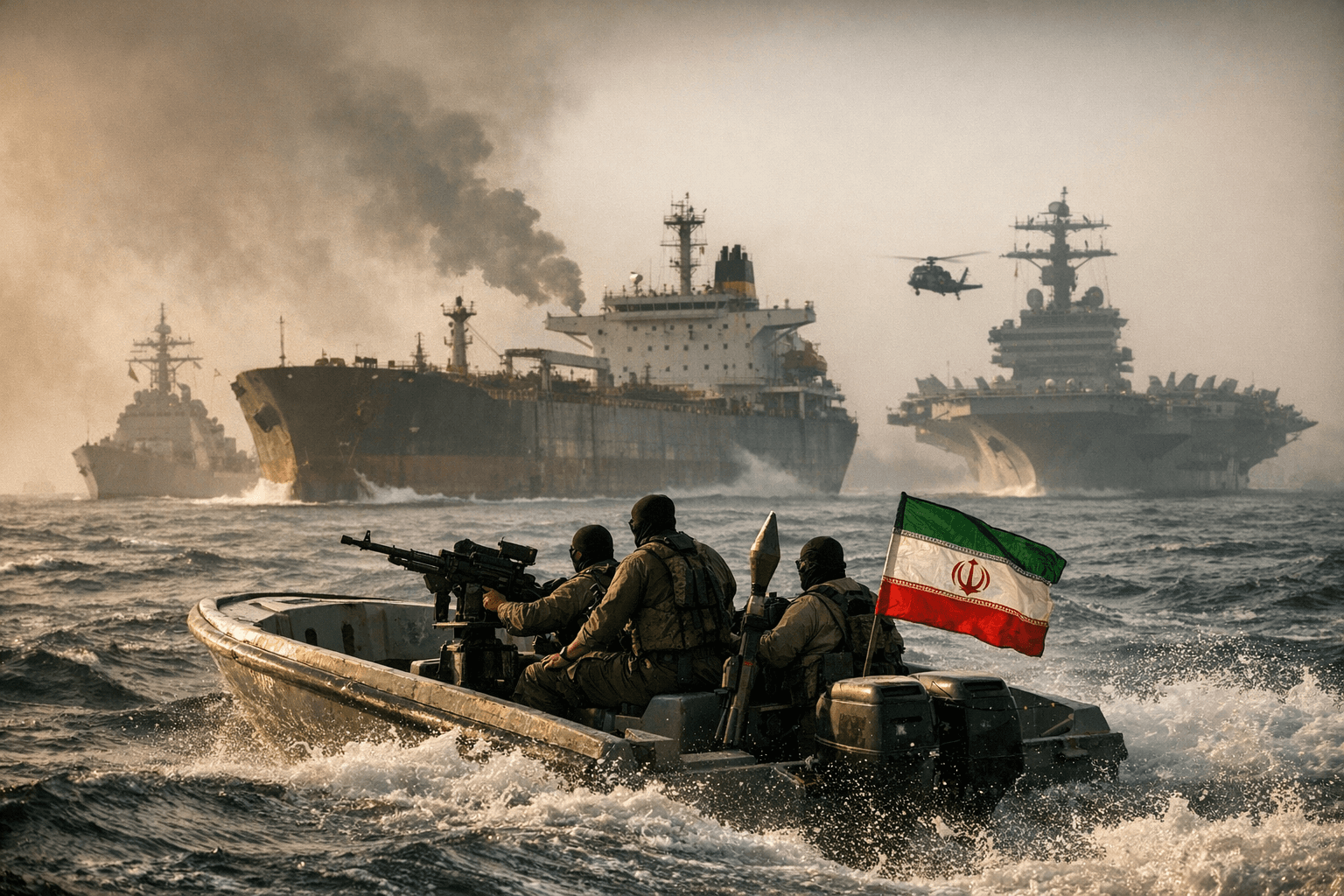
The U.S. military said its blockade of Iranian ports was fully implemented after weekend peace talks collapsed in Pakistan, turning a diplomatic breakdown into a live test of force in one of the world’s most dangerous waterways. President Donald Trump warned the United States would sink Iranian “fast attack ships” that came near the blockade, while also hinting the war could be “close to over” and that a second round of face-to-face talks could follow in the coming days.
Washington has said the blockade is meant to stop traffic in and out of Iranian ports in the Strait of Hormuz while still allowing vessels to pass through the strait to and from non-Iranian ports. It says the action has “completely halted economic trade going into and out of Iran by sea.” Iran, for its part, has warned that the blockade threatens the fragile ceasefire and said any approaching military vessels would be breaching it.
The stakes are enormous because the Strait of Hormuz is one of the world’s most important oil chokepoints. The U.S. Energy Information Administration said about 20.9 million barrels per day moved through the strait in the first half of 2025, equal to about 20% of global petroleum liquids consumption and roughly one-quarter of global maritime oil trade. The International Energy Agency says the waterway is only 29 nautical miles wide at its narrowest point, with two 2-mile-wide shipping lanes and a buffer zone, a layout that leaves little room for error if military pressure escalates.
Markets have already reacted. U.S. crude rose above $104 a barrel after the blockade announcement, while Brent climbed above $102. The International Energy Agency has said the Iran war has produced the most severe oil supply shock in history and projected global oil demand could fall by 80,000 barrels per day in 2026 instead of rising. Energy and shipping firms are now watching whether the blockade becomes a sustained choke point or a bargaining chip.
Commercial traffic is already adjusting in real time. Several ships reversed course after the announcement, and one report said six merchant vessels turned around in the first 24 hours. A sanctioned Chinese tanker also turned back toward the Strait of Hormuz after initially leaving the Gulf, underscoring how quickly commercial operators are rerouting to avoid being caught near Iranian waters.
The political signal is just as important as the military one. Former U.S. Ambassador to the United Nations Nikki Haley called the standoff a “game of chicken,” and Pakistan’s army chief was in Tehran on April 15 in a bid to restart U.S.-Iran talks. That leaves Washington balancing coercion and negotiation while Iran warns the pressure could widen the conflict beyond the strait, with global oil markets and shipping lanes already feeling the strain.
This article was produced by Prism’s automated news system from verified source data, official records, and press releases, then run through automated quality and moderation checks before publishing. The system is built and supervised by the people who set the standards it runs under. Read our full AI policy.
Did this article answer your question?