U.S. Seizes Iranian Cargo Ship as Oil Prices Surge Near Strait of Hormuz
Oil jumped toward $96 a barrel after the U.S. seized an Iranian cargo ship near Hormuz, stoking fears of higher shipping costs and inflation.
Oil markets reacted within minutes to the seizure of an Iranian-flagged cargo ship, with Brent crude climbing to about $95.48 a barrel and West Texas Intermediate rising to about $88.93. Traders were jolted by the prospect that shipping through the Strait of Hormuz, one of the world’s most important energy chokepoints, could slow further or even be disrupted, pushing up freight costs and renewing inflation fears far beyond the Gulf.
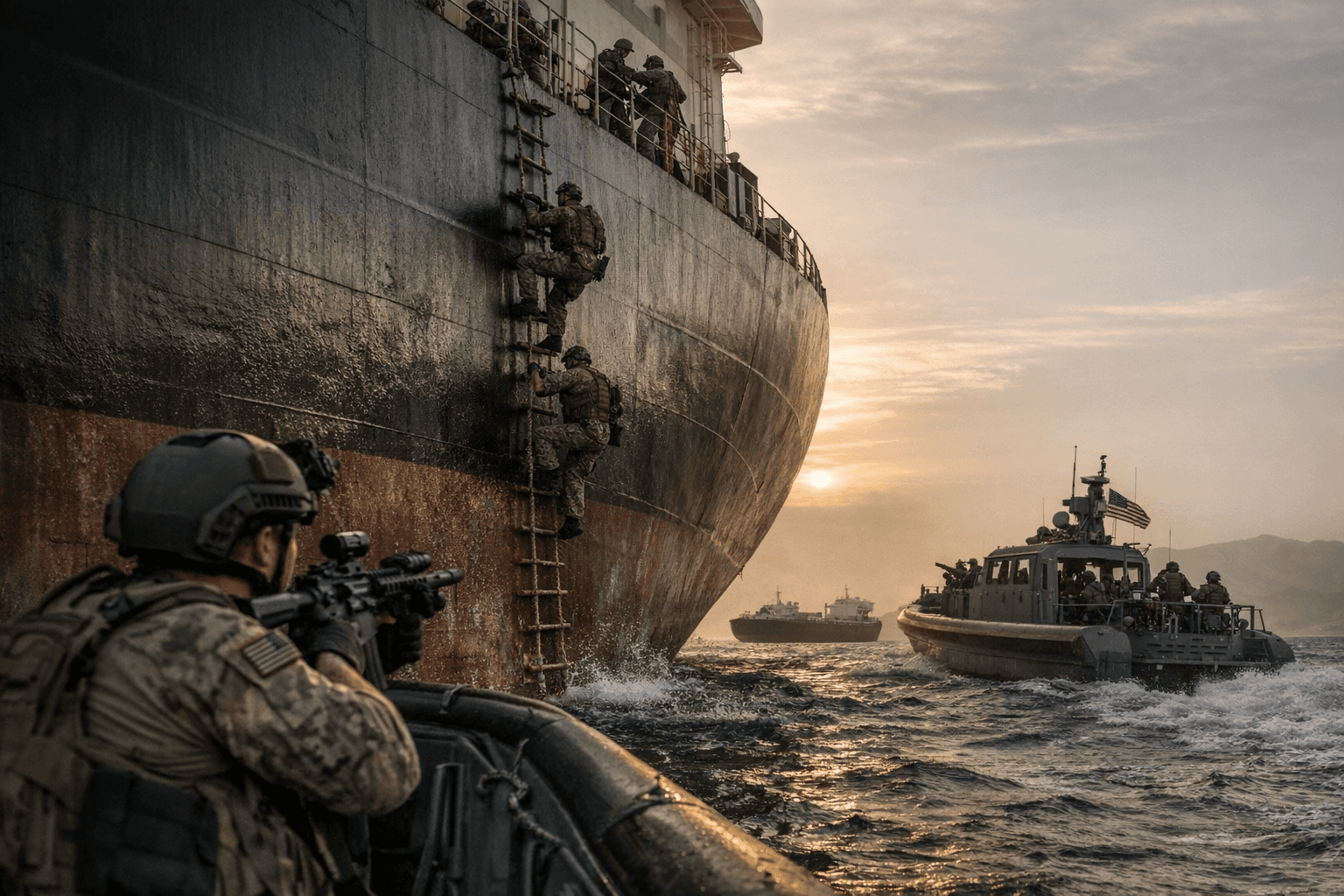
The U.S. seized the vessel after the Navy fired on it when it ignored repeated warnings to stop, then Marines boarded and took custody of the ship. Reporting identified the vessel as the M/V Touska, and U.S. Central Command released video said to show the firing and boarding. The seizure took place in the Gulf of Oman, near the waterway that connects the Arabian Sea to the strait, where tankers and container ships move daily through some of the busiest oil lanes on earth.
The escalation followed fresh violence at sea. Iran’s Revolutionary Guard fired on a tanker in the Strait of Hormuz on Saturday, and a separate container ship was struck by an unknown projectile, according to the United Kingdom Maritime Operations Centre. That incident left the crew accounted for and safe, but it deepened concern that commercial shipping could be caught in a widening confrontation.
The military clash came as Washington and Tehran were already under strain over a fragile ceasefire that was nearing expiration within days. President Donald Trump said American negotiators were heading to Pakistan for more peace talks, but Iran’s state news agency said Tehran would not attend a second round, citing the U.S. naval blockade, shifting positions and excessive demands. Trump also threatened further strikes on Iranian infrastructure if Tehran refused a deal.
Iranian officials warned that security in the Strait of Hormuz was not free and tied any stability in global fuel prices to an end to pressure on Iran. That message underscored how quickly a single ship seizure can move from a military confrontation into a market shock, with oil prices, shipping costs and inflation expectations all rising together as traders weighed whether this was a brief panic or the opening of a sustained energy crisis.
Know something we missed? Have a correction or additional information?
Submit a Tip