U.S. strikes alleged drug boat in Caribbean, killing two people
A U.S. airstrike on a suspected drug boat in the Caribbean killed two men, but Washington has not publicly shown the evidence behind its expanding campaign.
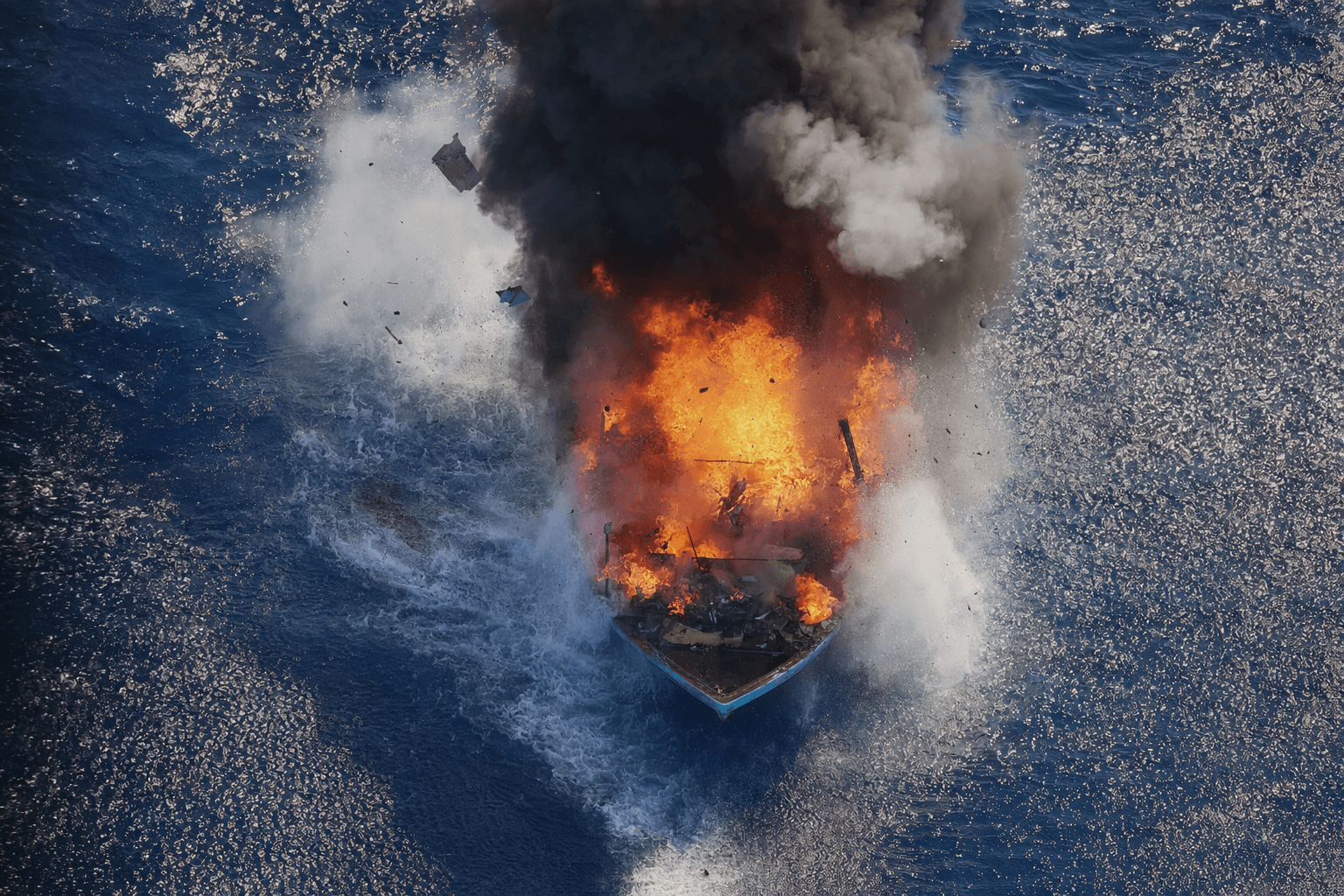
What authority allowed U.S. forces to blow apart a suspected drug vessel in the Caribbean and kill two people, and what evidence supports the Pentagon’s account? That question now sits at the center of an expanding campaign that has put American military power into counternarcotics work with little public explanation of the legal basis or the targeting standards.
U.S. Southern Command said Joint Task Force Southern Spear carried out a "lethal kinetic strike" on May 4 under the direction of Gen. Francis L. Donovan, the SOUTHCOM commander. The military said the vessel was operated by designated terrorist organizations, and intelligence showed it was transiting along known narco-trafficking routes in the Caribbean and engaged in narco-trafficking operations. SOUTHCOM said two male "narco-terrorists" were killed and no U.S. military forces were harmed.
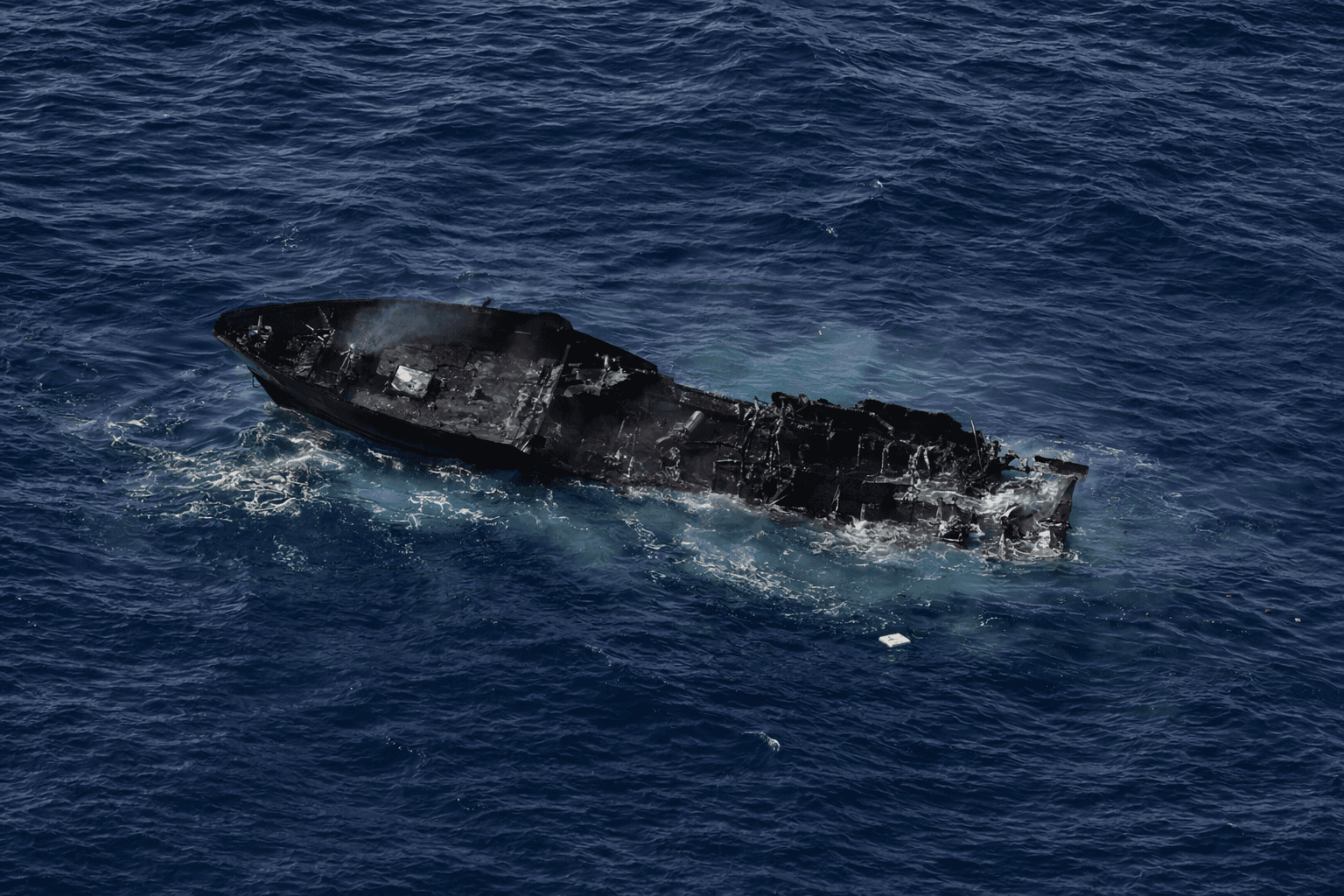
The command posted video of the strike on X, showing a small boat destroyed in the air attack. But the military has not publicly presented evidence that the vessel was carrying drugs, a gap that has sharpened scrutiny of the operation’s legal footing and its civilian-risk implications. Critics have questioned whether destroying suspected trafficking boats with lethal force fits the rules governing counternarcotics operations, especially when the government has not laid out the intelligence behind each strike.
The attack is part of Operation Southern Spear, the Trump administration’s campaign against alleged drug-trafficking vessels in Latin American waters. The strikes have continued since early September 2025 and have killed at least 189 people overall, according to contemporaneous reporting. The scale of the campaign has turned what began as a maritime security effort into a broader test of how far the Pentagon can go in using military force against civilian boats outside declared war zones.
The Pentagon has defended the strikes as lawful under U.S. and international law, saying military and civilian lawyers are vetting the operations and that the goal is to protect the United States from narcotics trafficking and overdose deaths. The United Nations Office of the High Commissioner for Human Rights has taken the opposite view, saying U.S. strikes on alleged drug boats violate international human rights law and must stop immediately. With each new strike, the administration is broadening a campaign that raises the same unresolved question: who authorizes these killings, and on what evidentiary standard?
This article was produced by Prism’s automated news system from verified source data, official records, and press releases, then run through automated quality and moderation checks before publishing. The system is built and supervised by the people who set the standards it runs under. Read our full AI policy.
Did this article answer your question?


