US Tomahawk Missile Stockpiles Strained as Iran Conflict Costs Soar Past $11 Billion
Close to 1,000 Tomahawks fired since June 2025, but the U.S. was building only ~60 per year — and each one takes up to 24 months to make.
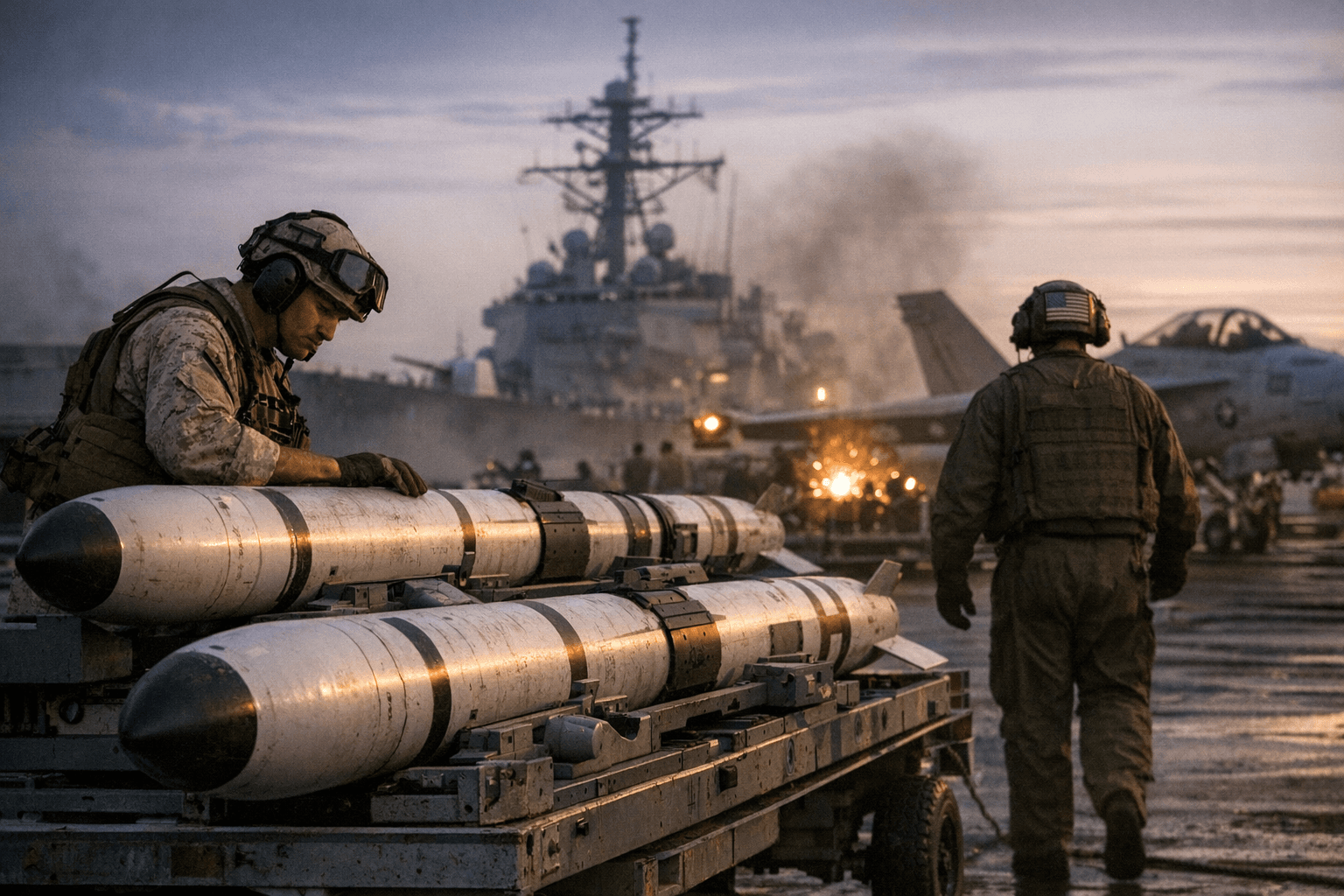
Sixty missiles a year. That was the pre-war production pace for the Tomahawk cruise missile, America's most-used standoff strike weapon, when Operation Epic Fury opened on February 28, 2026. The Center for Strategic and International Studies estimates that U.S. forces fired 168 Tomahawk missiles within the first 100 hours of the conflict alone — nearly three years' worth of production in less than five days. The U.S. military has fired more than 850 Tomahawk cruise missiles in four weeks of war with Iran, burning through the precision weapons at a rate that has alarmed some Pentagon officials and prompted internal discussions about how to make more available.
The arithmetic of replenishment is brutal. Raytheon's target for Tomahawk cruise missiles is to reach over 1,000 units annually, a more than 16-fold increase from the current rate of about 60 per year. From the moment the U.S. places an order, a missile usually takes 18 to 24 months to complete — a sprawling timeline that reflects the complexity of the system — and the United States has burned through them at an astonishing clip in Iran, with potential consequences elsewhere in the world. A U.S. lawmaker put it with blunt arithmetic: "It's a lot. And it will take years to replace."
The conflict, which began on February 28, had already cost more than $11 billion in its first six days, according to Pentagon officials briefing lawmakers in Washington. As of March 15, 16 days into the war, that figure had climbed to about $12 billion, according to Kevin Hassett, director of the National Economic Council. Each Tomahawk carries a price tag that makes the volume of launches especially jarring: the latest version costs about $3.6 million per missile. By March 19, the Pentagon requested an additional $200 billion for the war. Defense Secretary Pete Hegseth confirmed the figure, telling reporters: "It takes money to kill bad guys. So we're going back to Congress to ensure we're properly funded, for what's been done, what we may have to do in the future" — adding that the money was needed to ensure the country's stockpile of ammunition is "not just refilled, but above and beyond."
The supply alarm inside the Pentagon has grown urgent. U.S. officials told reporters that the number of missiles remaining in the Middle East had become alarmingly low. One official described the supply as closing in on "Winchester" — a rate of consumption that prompted the Department of Defense to hold internal discussions about transferring some stockpiles from other regions and accelerating production, especially since these missiles are manufactured at a limited annual rate.
The industrial bottleneck is not simply a matter of writing contracts. Unlike mass-produced munitions, the Tomahawk is a "semiautonomous aircraft" with complex turbofan engines and TERCOM guidance systems, making rapid replenishment nearly impossible. Raytheon in turn relies on a complicated network of subcontractors and smaller firms for the missile's thousands of components, making the production process slow and complex. Solid rocket motors, reliant on limited supply chains, have been a bottleneck for the production of cruise and air defense missiles. Manufacturing will be concentrated at Raytheon facilities in Tucson, Arizona; Huntsville, Alabama; and Andover, Massachusetts, with the challenge of scaling solid rocket motor production, expanding the Tucson manufacturing floor, and building supply chains across Pontiac, Michigan; Camden, Arkansas; and Huntsville, Alabama.
The February 2026 RTX agreement came roughly three weeks before Operation Epic Fury. The FY2026 President's Budget request included explicit funding lines for Tomahawk production expansion, the FY2026 National Defense Authorization Act directed the Secretary of Defense to develop a plan for increasing cruise missile production rates, and congressional testimony from the Under Secretary of Defense for Acquisition and Sustainment in 2024 had already specifically identified Tomahawk stockpile depth as a readiness concern. The war compressed a long-developing problem into a crisis measured in days.
Katherine Thompson, a senior fellow in defense and foreign policy studies at the Cato Institute, said that employment of munitions in campaigns like Operation Epic Fury could "limit optionality" for the U.S. That concern extends directly to allies. Japan has contracted to purchase 400 Tomahawk missiles through Foreign Military Sales in a contract valued at approximately $2.35 billion, while the United Kingdom is upgrading its Tomahawk inventory to Block V standard through a £265 million contract — both allies now competing for output from the same constrained production lines that the U.S. military is racing to replenish.
While the production expansion framework is positive, it is not the same as contracts, according to analysts. "The current prospect for ramping munitions is a bit less sanguine than meets the eye," said Tom Karako of CSIS. Congress, meanwhile, is pushing back on the pace of spending. Republican Sen. Lisa Murkowski warned Pentagon officials: "You've got to be able to provide us with information, as requested, and justification. Don't just take for granted that Congress' role is basically just to write the check."
The operational strain is also carrying a human cost that is still being investigated. On February 28, the Shajareh Tayyebeh girls' elementary school in Minab was hit by American attacks; the school was located close to the Sayyid al-Shuhada military complex. More than 175 people, mostly school children, were killed and 95 were wounded in the strike. Evidence assembled by U.S. investigators and the New York Times suggested that the attack was carried out by the U.S., and a video showed a U.S. Tomahawk missile hitting a building adjacent to the school. CENTCOM confirmed it was investigating internally.
The scale of depletion has no modern precedent. Since the Tomahawk entered service in the 1980s, the U.S. has procured only 9,000 of the missiles in total; it was thought there were around 4,000 in stockpiles by 2024. According to CSIS reporting, 319 Tomahawk missiles have been launched in the Iran war, representing about ten percent of the Tomahawk missiles the U.S. Navy has available — and the conflict is now in its fourth week with no end in sight. The gap between the burn rate and any realistic replenishment timeline is the central readiness question now confronting the Pentagon, Congress, and every ally whose security architecture depends on American magazine depth.
This article was produced by Prism’s automated news system from verified source data, official records, and press releases, then run through automated quality and moderation checks before publishing. The system is built and supervised by the people who set the standards it runs under. Read our full AI policy.
Know something we missed? Have a correction or additional information?
Submit a Tip